


Community Energy Storage Systems: Powering a Resilient and Sustainable Future
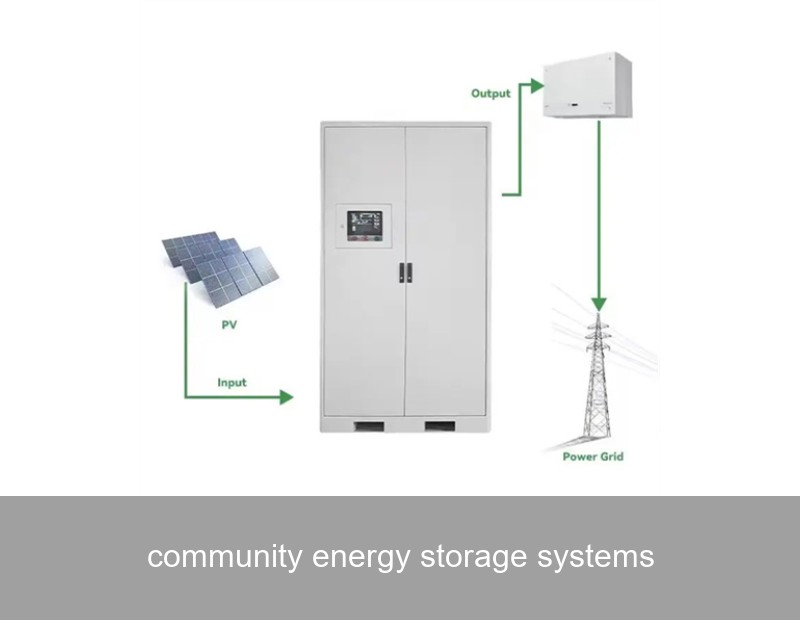
Imagine your neighborhood not just consuming electricity, but actively managing it—smoothing out price spikes, supporting local renewables, and keeping the lights on during an outage. This isn't a distant utopia; it's the reality being unlocked today by community energy storage systems. These shared battery storage solutions are transforming how communities interact with the grid, offering a powerful answer to energy volatility and the collective push for sustainability. For over 18 years, Highjoule has been at the forefront of this evolution, engineering advanced battery energy storage systems (BESS) that empower communities, businesses, and grids to achieve energy independence and resilience.
Table of Contents
The Problem: Grid Strain and Renewable Intermittency
Our energy landscape is undergoing a seismic shift. The rapid adoption of rooftop solar and wind power is decarbonizing our grids—a fantastic achievement. However, it introduces a new challenge: intermittency. The sun doesn't always shine, and the wind doesn't always blow, creating mismatches between when clean energy is generated and when it's needed most. This can lead to grid congestion, curtailment (wasting excess renewable energy), and reliance on fossil-fuel "peaker" plants during high-demand periods.
For the individual homeowner, a residential battery solves part of this puzzle. But what about renters, those with shaded roofs, or residents who can't afford a private system? This is where the community model shines. It democratizes access to storage benefits, ensuring the clean energy transition is equitable and inclusive.
The Solution: What Are Community Energy Storage Systems?
A community energy storage system is a centrally located, medium-to-large-scale battery storage installation that serves multiple end-users within a defined local area, such as a neighborhood, apartment complex, or small town. Think of it as a shared "energy bank" for the community.
- Virtual or Physical Sharing: It can be a single physical battery system that multiple households subscribe to, or a virtual aggregation of several smaller, behind-the-meter systems.
- Key Functions: These systems perform several critical roles:
- Peak Shaving: Reducing the community's draw from the grid during expensive peak hours.
- Renewable Integration: Storing excess local solar generation for use in the evening.
- Backup Power: Providing critical resilience during grid outages.
- Grid Services: In some markets, they can provide services like frequency regulation to stabilize the wider grid.

Image Source: Unsplash (Representative image of a community energy installation)
The Data: Why Shared Storage Makes Economic Sense
The logic for community storage is backed by compelling economics. The U.S. Department of Energy's National Community Solar Partnership highlights that shared systems can reduce the cost of going solar by 10-20% for subscribers. When you add storage, the value multiplies.
Consider this: the levelized cost of storage (LCOS) for a large, communal system is significantly lower than for numerous individual, smaller units due to economies of scale in hardware, installation, and maintenance. A study by the National Renewable Energy Laboratory (NREL) found that community storage models can increase the value of solar by 20-50% by optimizing when energy is used or sold back to the grid.
| Benefit | Individual Home Battery | Community Energy Storage System |
|---|---|---|
| Upfront Cost per Participant | High | Low (subscription/ownership share) |
| Grid Service Potential | Limited | High (aggregated capacity) |
| Accessibility | Homeowners only | Homeowners, renters, businesses |
| Overall System Efficiency | Good | Optimal (bulk management) |
Case Study: A Model in the European Union
Let's look at a real-world example from Germany, a leader in the Energiewende (energy transition). In the municipality of Wildpoldsried, Bavaria, a pioneering project called "IREN2" was implemented. The community, already producing 500% of its electricity needs from renewables, faced grid stability issues due to overproduction.
The solution was a community-scale battery storage system integrated with a sophisticated energy management platform. The 2.3 MWh battery system performs multiple functions:
- Stores excess wind and solar power locally.
- Provides primary control reserve (frequency regulation) to the national grid, generating revenue for the community.
- Enhances local voltage stability.
The results were impressive. The system helped reduce grid congestion, generated significant annual revenue from grid services, and increased the community's self-consumption of renewable energy to over 65%. This model demonstrates how community energy storage systems are not just cost-centers but can become revenue-generating assets that pay for themselves while bolstering grid resilience. You can read more about such innovative European projects through the European Commission's Joint Research Centre.
Highjoule's Role: Intelligent Systems for Community Power
Implementing a successful community storage project requires more than just batteries. It demands an intelligent, integrated system designed for safety, longevity, and seamless grid interaction. This is where Highjoule's expertise becomes critical.
Our CommunityPlus BESS is engineered specifically for shared energy applications. It's a containerized, all-in-one solution that combines:
- High-Efficiency, Long-Life LFP Batteries: Offering superior safety and over 6,000 cycles for a 20+ year operational life.
- Advanced Power Conversion System (PCS): Enables bidirectional flow and precise control for grid services.
- Highjoule Neuron Energy Management Software (EMS): The true brain of the operation. This AI-driven platform optimizes the system's operation for multiple objectives—maximizing self-consumption, participating in energy markets, and ensuring equitable allocation of benefits to community members through transparent virtual accounting.

Image Source: Unsplash (Representative image of a technician monitoring a BESS)
For a new housing development or an industrial park looking to establish a microgrid, Highjoule provides end-to-end service—from feasibility studies and system design to commissioning and long-term performance monitoring. We ensure the community energy storage system is a reliable, profitable cornerstone of the local energy infrastructure.
The Future of Community Energy
The trajectory is clear. As electricity demand grows with electrification of transport and heating, and as climate-induced extreme weather tests grid reliability, localized, resilient energy assets will become indispensable. Community energy storage systems represent a pragmatic, scalable, and socially beneficial step towards a decentralized energy future.
They turn passive consumers into active "prosumers," strengthen local economies by keeping energy spending local, and provide a tangible model for climate action. The technology is proven, and the economic models are maturing rapidly.
Is your community, municipality, or development project ready to explore how a shared energy storage system could lower costs, increase resilience, and accelerate your sustainability goals? What would be the first step in starting that conversation with your neighbors or local utility?
 Inquiry
 Online Chat