


Finding the Right Supplier of Mobile House Power Systems: Your Guide to Energy Independence
Imagine your mobile house—a cozy tiny home, a rugged adventure van, or a remote worksite cabin. Now, imagine it truly unplugged. Not just for a weekend, but for weeks, months, or even permanently. The dream of off-grid freedom hinges on one critical decision: choosing the right supplier of mobile house energy systems. It's not just about buying a battery; it's about investing in a reliable, intelligent power ecosystem that matches your nomadic lifestyle or stationary off-grid ambitions. As energy needs evolve, the market demands solutions that are compact, efficient, and seamlessly integrated. This is where expertise matters, and companies like Highjoule, with nearly two decades of experience in advanced energy storage, are redefining what's possible for mobile living.
Table of Contents
- The Mobile House Power Problem: More Than Just an Outlet
- By the Numbers: What Does a Mobile House Really Need?
- Case Study: Powering a Swiss Alpine Retreat
- Anatomy of a Top-Tier Mobile Power System
- The Highjoule Difference: Intelligent Power for Mobile Dwellings
- How to Choose Your Supplier of Mobile House Energy Systems
The Mobile House Power Problem: More Than Just an Outlet
The romantic idea of off-grid living often clashes with the practical reality of powering modern appliances. It's a common scene: a beautiful mobile home parked in a stunning location, but its occupants are nervously watching their battery indicator, debating whether to run the heater or the coffee maker. The core issue isn't a lack of solar panels or batteries; it's a lack of optimized integration. A haphazard assembly of components from different suppliers of mobile house equipment often leads to inefficiency, safety risks, and premature system failure. True energy independence requires a system where the battery management, solar charging, inverter, and monitoring communicate intelligently to maximize every watt-hour harvested from the sun or generator.
By the Numbers: What Does a Mobile House Really Need?
Let's move beyond guesswork. Data from the National Renewable Energy Laboratory (NREL) shows that a typical small, efficient dwelling's daily energy use can range from 5 to 20 kWh. For a mobile house, this varies dramatically:
- Basic Van Life (Lights, phone, laptop, fridge): 1-3 kWh/day
- Comfortable Tiny Home (Adds water pump, induction cooktop, occasional heating): 5-10 kWh/day
- Full-Time Off-Grid Cabin (Includes well pump, appliances, climate control): 10-20+ kWh/day
This demand must be met by a combination of solar generation and battery storage, sized correctly for your location's climate. A competent supplier of mobile house power solutions won't just sell you a pre-packaged kit; they'll help you analyze this usage to design a system with a 20-30% buffer for cloudy days, ensuring consistent power.

A well-designed mobile home integrates solar power seamlessly, a hallmark of a proficient supplier.
Case Study: Powering a Swiss Alpine Retreat Without Compromise
Consider a real-world example from the European Alps. A family built a stationary mobile home (a premium tiny house on wheels) at 1,800 meters altitude. Their primary challenge was extreme seasonal variation: abundant sun in summer, but long, cloudy periods and heavy snow in winter. Their previous lead-acid battery system failed repeatedly, couldn't handle the cold, and required constant maintenance.
They partnered with a supplier of mobile house systems who implemented a Highjoule solution:
- System: 8 kW rooftop solar array with snow-shedding design.
- Storage: A 15 kWh Highjoule H-Stack modular lithium iron phosphate (LiFePO4) battery system.
- Key Features: Integrated battery heating for sub-zero operation, a high-efficiency hybrid inverter, and the Highjoule Energy OS for smart management.
| Metric | Outcome |
|---|---|
| Energy Autonomy | Increased from 65% to 92% annually |
| Winter Reliability | 100% power availability even during a 5-day snowstorm |
| System Efficiency | Round-trip efficiency >96%, minimizing solar loss |
| User Satisfaction | Eliminated generator use, reduced energy anxiety to zero |
This case underscores that the right technology partner doesn't just provide hardware; they deliver resilience. The Highjoule system's ability to manage its own temperature and intelligently allocate power was the game-changer.
Anatomy of a Top-Tier Mobile Power System
When evaluating a supplier of mobile house equipment, ensure their core system includes these intelligent components:
1. The Battery: The Heart of the System
Lithium Iron Phosphate (LiFePO4) is now the undisputed standard for safety, longevity, and performance across a wide temperature range. Look for a modular design that allows for easy capacity expansion.
2. The Brain: Energy Management System (EMS)
This software is what separates a "dumb" battery bank from a smart power ecosystem. A good EMS, like Highjoule's Energy OS, prioritizes loads, learns usage patterns, and can be controlled remotely via an app.
3. The Muscle: Hybrid Inverter/Charger
This single device converts DC battery power to AC for your appliances, manages solar panel input, and can accept backup generator power. High efficiency (over 95%) is crucial to avoid wasting precious solar energy.
The Highjoule Difference: Intelligent Power for Mobile Dwellings
At Highjoule, we've spent years adapting our large-scale commercial energy storage expertise for robust, compact applications. As a leading supplier of mobile house and off-grid power systems, our approach is built on three pillars:
- Adaptable Modularity: Our H-Stack battery series is designed for mobile environments. Modules can be configured to fit irregular spaces common in vans and tiny homes, and you can start with a smaller bank, adding more capacity as your needs grow.
- Built for Real-World Conditions: Our systems are tested for vibration, temperature extremes, and humidity. The integrated battery heating and cooling management ensure you have power whether you're in the Arizona desert or the Norwegian fjords.
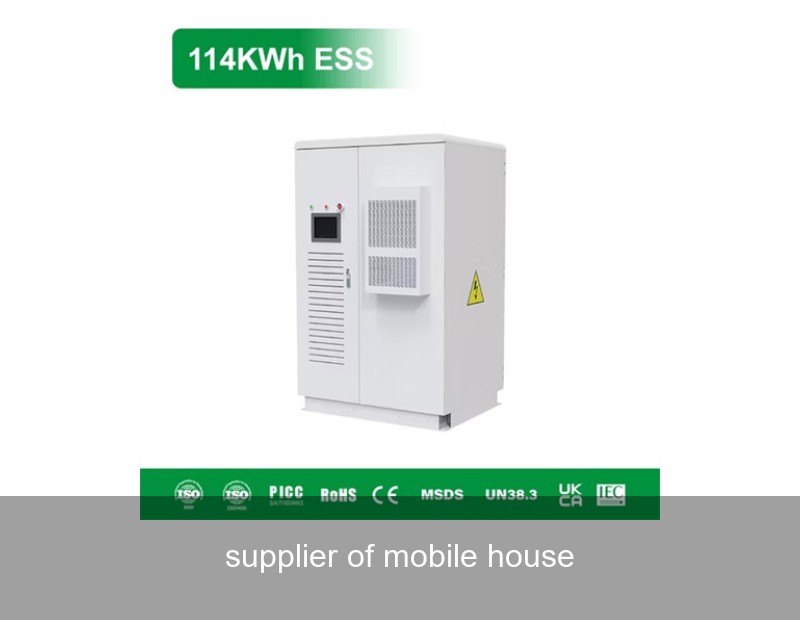
- Plug-and-Play Intelligence: We simplify complexity. Our pre-integrated power cabinets combine the battery, inverter, and safety systems into one sleek unit. Installation is faster, safer, and you get a single point of support and warranty from a trusted global provider, not a patchwork of component manufacturers.

Professional installation of a compact, high-density battery system is key for safety and performance.
How to Choose Your Supplier of Mobile House Energy Systems
Your choice of partner will determine your energy experience for the next decade. Here’s a checklist:
- Do They Offer a Holistic Design? Avoid vendors who just sell parts. The best suppliers provide a custom energy audit and system schematic.
- What’s the Warranty and Support Structure? Look for long warranties (10+ years on batteries) and clear, accessible technical support, crucial for mobile homes that may be in remote locations.
- Is the Technology Future-Proof? Can the system accept software updates? Is it compatible with emerging standards like vehicle-to-load (V2L) if you have an EV? Companies like Highjoule design with this forward compatibility in mind.
- Do They Understand Your Use Case? A supplier experienced with mobile houses will ask about travel patterns, winter vs. summer usage, and your critical loads—questions a generic solar retailer might overlook.
The journey to energy freedom for your mobile house is exciting. It begins by moving beyond viewing it as a simple purchase and seeing it as a strategic partnership. With the right system, your power worries fade into the background, letting you focus on the life you built your mobile home to live. What's the first appliance you'd run without a second thought about your battery level, if you knew your power supply was truly resilient?
 Inquiry
 Online Chat