


Supplier of MWh Solar: Your Partner for Utility-Scale Renewable Energy Independence
When businesses and communities talk about going solar today, the conversation has fundamentally shifted. It's no longer just about the number of panels on the roof. The critical question is: "How many megawatt-hours (MWh) of clean, dispatchable energy can this system deliver over its lifetime?" This evolution in thinking marks the rise of a new essential partner: the supplier of MWh solar—a provider that focuses on guaranteed energy output and long-term value, not just hardware procurement. For forward-thinking organizations across Europe and the US, selecting the right supplier is the single most important decision in achieving true energy resilience and cost predictability.
The MWh Challenge: Beyond the Panels
Let's face a common reality. A solar array might have a peak DC capacity of 1 Megawatt (MW). But if its production isn't synchronized with your energy consumption, a significant portion of that potential is wasted—curtailed or sold back to the grid at low rates. The sun doesn't shine at night, but your operations might. This mismatch is the core challenge that a mere equipment vendor cannot solve. A true supplier of MWh solar addresses the entire energy journey. They design systems with the primary goal of maximizing usable MWh for your specific load profile, often integrating advanced battery energy storage systems (BESS) to time-shift solar energy. This transforms a variable generation source into a firm, reliable power asset.

Image: Utility-scale solar farms generate raw MWh, but an integrated supplier ensures this energy is stored and dispatched effectively. Source: Unsplash
The Data Behind the Need for Storage
According to the International Renewable Energy Agency (IRENA), solar PV capacity is forecast to grow exponentially, but its variability remains a grid integration challenge. Their reports emphasize that energy storage is not an optional add-on but a critical enabler for high-penetration renewable scenarios. For instance, a project designed to deliver 5,000 MWh annually without storage might see over 30% of that energy miss its optimal use window. With a correctly sized BESS, a supplier can help capture and utilize the vast majority of that production, directly impacting your return on investment and sustainability goals.
Key Components of a True MWh-Scale Solar Solution
So, what should you look for when evaluating a supplier of MWh solar? The expertise must span several interconnected domains.
- Energy-Centric Design & Simulation: Using sophisticated software to model 25+ years of solar production, load patterns, and weather data to predict exact MWh delivery.
- Advanced Battery Energy Storage Systems (BESS): The heart of MWh management. High-cycle life, high-efficiency batteries paired with intelligent energy management systems (EMS) are non-negotiable.
- Grid Services & Revenue Stacking (where applicable): In many markets, a large-scale system can participate in demand response or frequency regulation programs, creating additional revenue streams. A sophisticated supplier will design for this capability.
- Long-Term Performance Guarantees: Look for suppliers who offer robust performance warranties on the entire system's energy output (MWh/year), not just panel degradation.
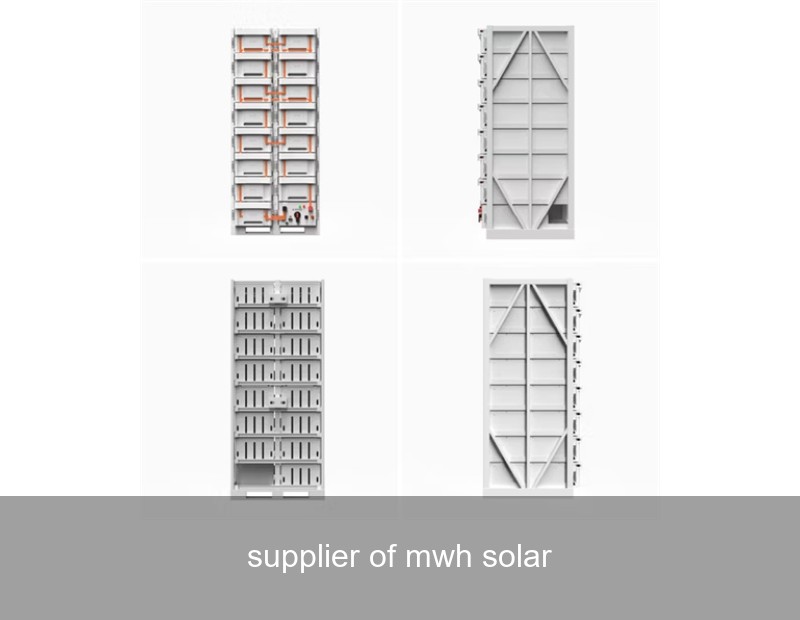
This is precisely where a company like Highjoule distinguishes itself. With nearly two decades of experience since 2005, Highjoule operates as a holistic supplier of MWh solar solutions. We provide end-to-end systems featuring our integrated HPS (Highjoule Power System) units. These containerized or modular solutions combine high-density lithium-ion batteries, industry-leading inverters, and our proprietary JouleMind™ AI-driven EMS. This platform doesn't just store energy; it continuously learns your site's patterns and optimizes every kilowatt-hour for self-consumption, peak shaving, or grid services, ensuring you receive the maximum economic value from every MWh your solar assets produce.
Case Study: A 4.8 MWh Solar-Plus-Storage Transformation in Bavaria
Let's examine a real-world application. A mid-sized manufacturing plant in Bavaria, Germany, had a 2 MWp rooftop solar installation. Despite significant generation, they still faced high energy costs during evening production shifts and grid demand charges.
| Challenge | Solution by Highjoule | Quantifiable Outcome |
|---|---|---|
| High grid consumption during peak evening hours, negating solar savings. | Designed and deployed a 4.8 MWh BESS (using 3x HPS-1600 units) integrated with the existing solar PV. | Increased solar self-consumption from 35% to over 80%. |
| Exposure to volatile time-of-use electricity rates. | JouleMind™ EMS was programmed for strategic arbitrage: charge from excess solar/off-peak grid, discharge during peak periods. | Reduced peak period grid draw by 95%, slashing demand charges. |
| Need for backup power during brief grid outages. | The system was configured for seamless islanding, providing critical load backup for up to 6 hours. | Achieved full ROI in under 7 years, with 20+ year system life expectancy. |
This project exemplifies the supplier of MWh solar philosophy. Highjoule didn't supply new panels; we supplied guaranteed, manageable megawatt-hours. The client now views their energy setup as a predictable, controllable asset, shielding them from market volatility. You can explore more on the importance of storage for solar in commercial applications from the Solar Energy Industries Association (SEIA).

Image: Commercial and industrial sites are prime candidates for MWh-scale solar-plus-storage solutions. Source: Unsplash
Choosing Your MWh Solar Supplier: A Strategic Guide
Selecting a partner for a MWh-scale project is a strategic decision. Here are key questions to ask any potential supplier of MWh solar:
- Can you provide detailed, site-specific energy yield and financial models? (Not just generic specs)
- What is the round-trip efficiency of your integrated BESS? (Every percentage point lost is a MWh of revenue foregone.)
- How does your Energy Management System make dispatch decisions? Is it a simple timer, or an adaptive AI platform?
- What is your track record with interconnecting systems of this scale with the local utility? (Permitting and interconnection are major hurdles.)
- Do you offer long-term service and performance monitoring agreements? (This is a 20-year partnership.)
The Highjoule Advantage: From Supplier to Energy Partner
At Highjoule, we build our client relationships on these very questions. Our service model extends far beyond delivery. We offer comprehensive Energy-as-a-Service (EaaS) options for commercial and industrial clients who prefer an OPEX model with no upfront capital. Furthermore, our 24/7 Global Monitoring Center proactively manages system health, ensuring every contracted MWh is delivered. For microgrid and utility projects, our expertise in grid-forming inverters and black-start capabilities makes us a trusted supplier of MWh solar for mission-critical applications.
The Future of MWh-Scale Solar: Integration and Intelligence
The next frontier for suppliers of MWh solar is the creation of fully autonomous energy ecosystems. Imagine a system that not only manages solar and storage but also integrates EV charging fleets, thermal loads, and can transact in real-time energy markets via blockchain. The focus is shifting from simple storage to orchestration. Research from institutions like the National Renewable Energy Laboratory (NREL) points to the rise of these integrated "smart energy hubs."
The companies that will lead are those, like Highjoule, that view software and data intelligence as core to the hardware. The JouleMind™ platform is already evolving in this direction, using machine learning to predict weather, load changes, and market prices to optimize system dispatch not just for today, but for the next 20 years.
Ready to Redefine Your Energy Equation?
Your journey to energy independence and cost control starts with a shift in perspective: from buying solar panels to procuring managed megawatt-hours. What would a guaranteed, lower cost per MWh do for your organization's operational budget and sustainability roadmap over the next decade?
 Inquiry
 Online Chat