


20kV Energy Storage Cabinet: The Backbone of Modern Industrial and Commercial Power Resilience
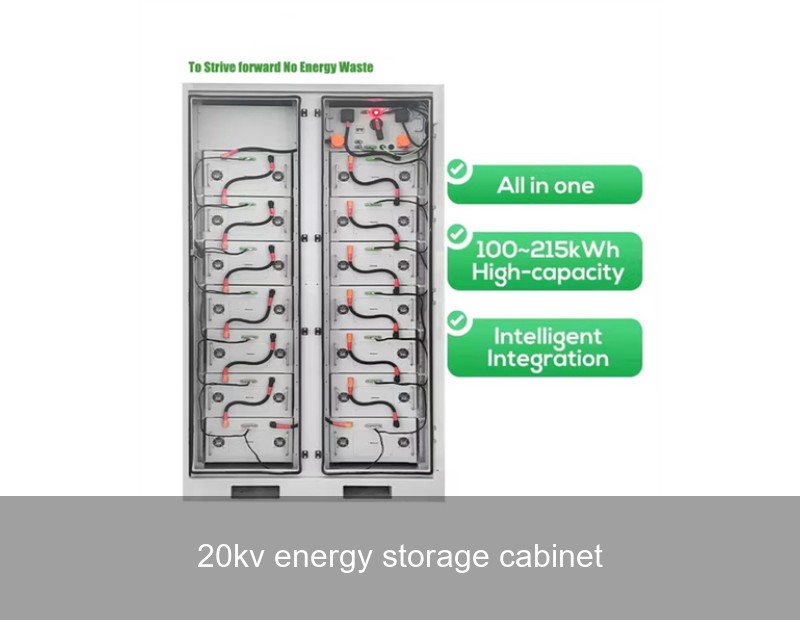
Have you ever considered what keeps a large factory running during a grid outage, or how a data center manages its immense power demands efficiently? The answer increasingly lies in a robust, high-voltage solution: the 20kV energy storage cabinet. This isn't just a big battery; it's a sophisticated, integrated power management system designed for scale, stability, and intelligence. For businesses across Europe and the US facing volatile energy prices, stringent sustainability goals, and an unreliable grid, these high-voltage cabinets are becoming the critical infrastructure for energy independence and operational continuity. Companies like Highjoule, a global leader in advanced energy storage since 2005, are at the forefront of engineering these intelligent systems that power commerce and industry reliably.
Table of Contents
- What is a 20kV Energy Storage Cabinet?
- The Phenomenon: Why High-Voltage Storage is Surging
- The Data: Quantifying the Need for Resilience
- Case Study: A German Automotive Plant's Solution
- The Highjoule Approach: Intelligent 20kV Systems
- Key Benefits Beyond Backup Power
- The Future Landscape of Industrial Power
What Exactly is a 20kV Energy Storage Cabinet?
Let's demystify the term. A 20kV energy storage cabinet is a containerized system that stores electrical energy at a distribution voltage level of 20,000 volts. Unlike lower-voltage residential systems, these are engineered for high-power applications. Think of it as the difference between a garden hose and a firefighting main. The cabinet integrates:
- Battery Racks: Typically using high-cycle life Lithium Iron Phosphate (LFP) chemistry for safety and longevity.
- Power Conversion System (PCS): The brain that converts DC battery power to AC grid power and manages bidirectional flow.
- 20kV Switchgear & Transformer: Directly interfaces with the facility's medium-voltage distribution network, eliminating the need for costly step-down transformers.
- Thermal Management: Advanced liquid or air cooling to maintain optimal battery temperature.
- Energy Management System (EMS): The intelligent software layer that controls when to charge, discharge, or hold based on energy prices, grid signals, and facility load.

Image Source: Unsplash - Representative image of industrial energy storage equipment.
The Phenomenon: Why High-Voltage Storage is Surging in Demand
The shift towards 20kV-class systems isn't accidental. It's a direct response to a perfect storm of market forces. Industrial and commercial (C&I) energy consumers are caught between rising electricity costs, increasing frequency of extreme weather events causing grid instability, and corporate mandates to reduce carbon footprints. Relying solely on the grid or traditional diesel generators is no longer a viable—or sustainable—strategy. The modern facility needs a dynamic asset that can provide backup power, cut energy costs, and support renewable integration, all while being manageable and safe.
The Data Drives the Decision: Quantifying Risk and Reward
The business case is compelling. According to a U.S. Department of Energy report, power outages cost the U.S. economy an estimated $150 billion annually. For a single large manufacturing plant, an unplanned outage can mean losses of hundreds of thousands of dollars per hour in lost production and spoiled materials. Furthermore, the volatility of wholesale electricity markets, especially in Europe, creates opportunities for arbitrage—storing energy when prices are low and using it when prices are high. A well-sized 20kV storage system can perform this function automatically, turning energy cost from a fixed expense into a manageable variable.
| Challenge | Impact | How 20kV Storage Addresses It |
|---|---|---|
| Grid Outages | Production halts, data loss, safety risks | Seamless backup power for critical loads |
| Demand Charges | Can be 30-50% of a C&I electricity bill | Peak shaving to flatten load profile |
| Intermittent Renewables | Solar/wind overproduction or underproduction | Stabilizes output, enables time-shifting of green energy |
| Carbon Targets | Regulatory pressure and ESG reporting needs | Maximizes on-site renewable consumption |
A Real-World Case Study: A Bavarian Automotive Supplier
Let's look at a concrete example. A major automotive parts manufacturer in Bavaria, Germany, faced two core issues: unpredictable spikes in energy demand from their press lines causing crippling demand charges, and the need to ensure 24/7 power for their automated painting line to prevent multi-day shutdowns.
They partnered with Highjoule to deploy a turnkey 20kV energy storage solution integrated with their existing on-site solar array. The system featured Highjoule's H-Cube HV Cabinet, known for its compact footprint and built-in GridSynergy EMS.
The Results (12-month post-installation):
- Demand Charge Reduction: 22% reduction in peak power draw, translating to over €85,000 in annual savings.
- Solar Self-Consumption: Increased from 35% to over 80%, drastically reducing grid purchases.
- Reliability: Successfully rode through three minor grid disturbances with zero impact on the painting line.
- ROI: Projected payback period of under 5 years, factoring in savings and available incentives.
This case exemplifies the multi-faceted value proposition of a modern 20kV storage system.
The Highjoule Approach: Engineering Intelligence into Every 20kV Cabinet
As a pioneer with nearly two decades of experience, Highjoule doesn't just build cabinets; we build integrated power resilience platforms. Our H-Cube HV series for commercial and industrial applications is designed from the ground up for the 20kV class.
What sets our systems apart is the deep integration of hardware and software. The cabinet's physical architecture prioritizes safety (with UL 9540A and IEC 62933 certifications) and serviceability. But the true intelligence lies in our proprietary GridSynergy EMS. This platform uses AI-driven forecasting to analyze weather patterns, facility schedules, and real-time energy market data (where available) to make millisecond decisions on energy flow. It transforms the storage cabinet from a passive backup device into an active, revenue-generating or cost-avoiding grid asset.

Image Source: Unsplash - Representative image of an energy management software dashboard.
Our services extend beyond delivery. Highjoule offers comprehensive Energy-as-a-Service (EaaS) models, long-term performance monitoring, and proactive maintenance, ensuring our clients' energy infrastructure is a source of confidence, not concern.
Key Benefits: More Than Just a Battery in a Box
1. Enhanced Grid Stability and Participation
Aggregated 20kV systems can provide grid services like frequency regulation, helping to balance the broader network—a crucial need as intermittent renewables grow. Highjoule's systems are designed with this grid-interactive future in mind.
2. Future-Proofing Your Energy Infrastructure
Investing in a scalable 20kV platform allows for easy expansion of storage capacity or the integration of additional renewable sources. It's a modular building block for your future microgrid.
3. Operational and Sustainability Excellence
By ensuring power quality and reducing reliance on fossil-fuel backups, these systems directly contribute to both operational efficiency and sustainability KPIs, appealing to investors and customers alike.
The Future Landscape: Where Do We Go From Here?
The trajectory is clear. As industries electrify and renewables become dominant, the role of high-voltage, intelligent energy storage will only become more central. We are moving towards a landscape where every large facility has its own orchestrated energy ecosystem, with a 20kV storage cabinet as its cornerstone, interacting dynamically with the grid rather than just drawing from it.
The question for business leaders and facility managers is no longer if they need to address energy resilience and cost, but how and with whom. The technology is proven, the economics are clear, and the risks of inaction are growing.
Is your organization ready to explore how a tailored 20kV energy storage strategy can transform your energy profile from a cost center into a pillar of resilience and strategic advantage? What would absolute power certainty do for your core operations?
 Inquiry
 Online Chat