


StarCharge BESS: How Much Does a Commercial Battery Energy Storage System Cost?
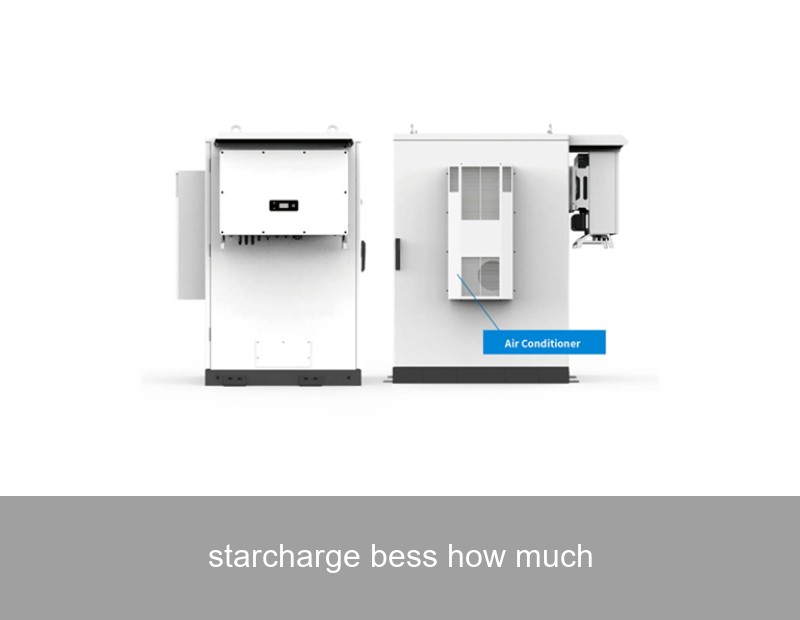
If you're a business owner, facility manager, or energy professional in Europe or the US, you've likely heard the buzz about Battery Energy Storage Systems (BESS). With rising electricity prices and ambitious sustainability goals, the question isn't just if you should invest, but rather: "StarCharge BESS, how much does it actually cost?" The answer, like any significant capital investment, is nuanced. It's not just about the price tag of the hardware; it's about understanding the total value, long-term savings, and strategic energy independence it unlocks. Let's demystify the investment and explore what drives the cost of a commercial-grade BESS solution.
Table of Contents
The Price Puzzle: More Than Just a Battery Box
Asking "how much for a StarCharge BESS?" is similar to asking "how much for a new factory?" It depends entirely on scale, specifications, and desired outcomes. A system for a small retail store differs vastly from one stabilizing a microgrid for an industrial park. Generally, for commercial and industrial (C&I) applications in Western markets, you can expect a fully installed, grid-connected BESS to range from $400 to over $1,000 per usable kilowatt-hour (kWh). This wide band encompasses everything from containerized megawatt-scale solutions to modular cabinet systems.
The core "battery" itself is a major component, but it's only part of the story. A complete, reliable BESS comprises several critical subsystems:
- Battery Modules & Racks: The actual electrochemical cells (typically Lithium Iron Phosphate - LFP for safety and longevity).
- Power Conversion System (PCS): The bi-directional inverter that converts DC battery power to AC for your facility and the grid.
- Battery Management System (BMS): The brain that monitors cell health, temperature, and state-of-charge for safety and performance.
- Energy Management System (EMS): The strategic controller that decides when to charge or discharge based on tariffs, weather forecasts, and consumption patterns.
- Thermal Management: Crucial cooling/heating systems to keep batteries at optimal temperature.
- Safety & Grid Integration: Switchgear, transformers, fire suppression, and grid compliance hardware.
This is where a provider's expertise becomes critical. A system from a leader like Highjoule is engineered as an integrated, intelligent whole, not a bundle of disparate parts. Since 2005, Highjoule has specialized in designing these systems to maximize lifetime value, ensuring each component works in perfect harmony for decades.

Image Source: Unsplash. A modern C&I BESS installation requires careful integration of multiple components.
Key Cost Drivers of a Commercial BESS
To understand your specific investment, let's break down the primary factors influencing the final figure.
| Cost Driver | Description | Impact on "How Much?" |
|---|---|---|
| System Capacity (kWh) | The total amount of electrical energy the system can store. | The single largest factor. Larger capacity = higher upfront cost, but often a lower cost per kWh due to economies of scale. |
| Power Rating (kW) | The rate at which energy can be discharged (power). Determines how fast you can use the stored energy. | Higher power needs require more robust inverters (PCS) and electrical work, increasing cost. |
| Technology & Chemistry | Battery cell type (e.g., LFP, NMC). LFP is the dominant choice for C&I due to its safety and cycle life. | LFP may have a slightly higher upfront cost per kWh than some chemistries but offers a lower total cost of ownership over 15+ years. |
| Site-Specific Requirements | Electrical upgrades, foundation work, enclosure (container vs. indoor), permitting, and distance to grid connection point. | Can vary wildly and add 15-30% to project costs. A thorough site assessment is essential. |
| Software & Intelligence | Capabilities of the EMS for automated, revenue-generating operations like peak shaving and grid services. | Advanced software adds value, not just cost. It's the key to unlocking ROI. |
The Highjoule Advantage: Smart Design for Optimal ROI
At Highjoule, we believe the right question isn't just "how much does it cost?" but "what is its value over its lifetime?" Our H-Series C&I BESS solutions are built with this philosophy. We utilize top-tier LFP battery cells and pair them with our proprietary Helios Energy Management Platform. This AI-driven platform doesn't just store energy; it actively seeks the most profitable moments to dispatch it, whether to avoid a peak demand charge from your utility or to participate in a grid balancing program.
By offering a complete, AC-integrated solution, Highjoule simplifies the process. We handle system design, engineering, and provide ongoing performance monitoring, reducing complexity and hidden costs. Our modular design allows for scalable deployments, meaning you can start with a system that fits your current budget and expand it as your needs grow. This focus on total lifecycle value often makes a Highjoule system a more economical choice in the long run, even if the initial quote isn't the absolute lowest on the market.
Real-World Case: A UK Manufacturing Plant
Let's move from theory to practice with a concrete example. A mid-sized automotive parts manufacturer in Birmingham, UK, faced erratic time-of-use tariffs and steep peak demand charges that could constitute up to 30% of their electricity bill. Their goal was to reduce operational costs and gain predictability.
Solution & Data: Highjoule deployed a 500 kWh / 250 kW H-Series BESS integrated with their existing rooftop solar PV. The system was programmed for peak shaving: charging from the grid and solar during off-peak/low-cost hours, and discharging during expensive peak periods (4-7 PM).
- Capital Investment: Approximately £215,000 (fully installed).
- Annual Savings: The system delivers consistent savings of £42,000-£48,000 per year on electricity costs through demand charge reduction and arbitrage.
- Simple Payback Period: Roughly 4.7 years.
- Additional Benefit: The system provides backup power for critical loads during short grid outages, preventing production stoppages.
This case illustrates how the "how much" question transforms into a value discussion. The investment of £215k isn't an expense; it's a capital redeployment that generates a reliable, >20% annual return in the form of energy cost avoidance, with a system designed to operate for over 15 years. (For context on global storage trends, see the IEA's Energy Storage Report).

Image Source: Unsplash. Modern BESS platforms provide real-time data and control, turning energy into a strategic asset.
Looking Beyond the Sticker Price: Incentives and Financing
In both the US and Europe, significant financial incentives can dramatically alter the net cost equation. In the US, the Investment Tax Credit (ITC) now stands at 30-70% for standalone storage, significantly reducing the net capital outlay. In the EU, various member states offer grants, low-interest loans, or tax benefits for storage paired with renewables. For instance, programs in Germany or Italy can subsidize a substantial portion of the project cost.
Furthermore, innovative financing models like Energy-as-a-Service (EaaS) or leasing can eliminate the upfront capital cost entirely. In such models, a provider like Highjoule or a third-party financier owns the asset, and you pay a monthly service fee based on the energy savings or services delivered, making the benefits of a BESS immediately accessible with no CAPEX.
The long-term operational savings are the true counterweight to the initial cost. By flattening your demand profile, you transition from being a passive ratepayer to an active energy manager. The system also future-proofs your operations against volatile fossil fuel prices and provides resilience—a value that's hard to quantify until the moment the grid falters and your operations continue uninterrupted. (Learn more about grid services from FERC in the US).
Your Next Step Towards Energy Intelligence
So, "StarCharge BESS, how much?" The most accurate answer comes from a detailed conversation about your specific site, load profile, energy tariffs, and strategic goals. The journey begins with data. What does your last 12 months of electricity bills look like? Where are your peak demand pain points?
Highjoule's team of experts begins every project with a complimentary, data-driven feasibility analysis. We model your consumption, simulate BESS performance, and provide a transparent projection of costs, savings, and ROI. We don't just sell hardware; we partner with you to build a smarter, more resilient, and profitable energy infrastructure.
What would a 25% reduction in your annual energy spend do for your business's competitiveness and sustainability profile? Let's start the conversation and build the precise financial model for your future.
 Inquiry
 Online Chat