


Beyond the Basics: Why Your Choice of Supplier of Power BMS Defines Your Energy Future
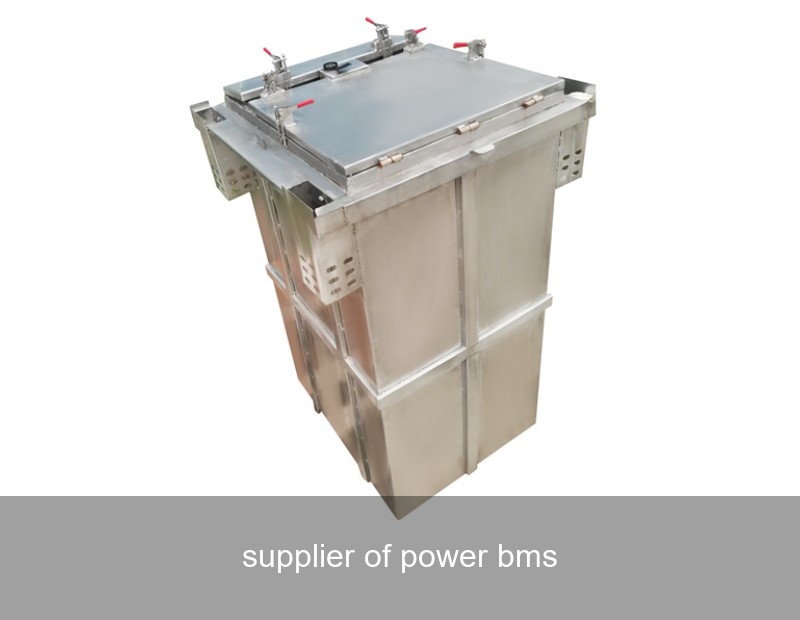
In the rapidly evolving world of energy storage, the Battery Management System (BMS) is the unsung brain of any installation. Yet, for many project developers and energy managers, the BMS can feel like a complex black box. You might be asking: isn't a BMS just a standard component? The critical insight is this: the supplier of power BMS you choose doesn't just provide a piece of hardware; they deliver the intelligence, safety, and longevity of your entire energy asset. This decision separates a basic battery container from a truly intelligent, resilient, and profitable power system.
Table of Contents
- The Silent Evolution: From Voltage Monitor to Energy Intelligence Hub
- What Truly Differentiates a Premier Supplier of Power BMS?
- The Hard Data: How a Weak BMS Impacts Your Bottom Line
- A Real-World Case: Grid Support in Southern Germany
- The Highjoule Approach: Integrated Intelligence from Cell to Grid
- Future-Proofing Your Investment: Questions to Ask Your BMS Supplier

Credit: ThisisEngineering Raeng / Unsplash
The Silent Evolution: From Voltage Monitor to Energy Intelligence Hub
Think back to the earliest BMS units. Their role was primarily protective: monitor cell voltage and temperature to prevent catastrophic failure. Today, that's merely table stakes. The modern supplier of power BMS must deliver a system that acts as the central nervous system for energy storage. We're talking about advanced functionalities like state-of-health (SOH) and state-of-charge (SOC) algorithms accurate to within 1%, predictive analytics for maintenance, seamless integration with energy management systems (EMS), and compliance with evolving grid codes. This evolution turns passive batteries into active grid participants.
What Truly Differentiates a Premier Supplier of Power BMS?
So, beyond the spec sheet, what should you look for? Here are the key pillars that separate industry leaders from component vendors:
- Depth of Algorithmic Intelligence: The core software that models battery behavior is proprietary. Superior algorithms extend battery life and maximize usable capacity.
- Cybersecurity by Design: As a connected device, the BMS is a potential entry point. Top-tier suppliers build security protocols into the firmware layer, not just as an add-on.
- Proven Interoperability: Can the BMS communicate flawlessly with inverters from different manufacturers and various SCADA platforms? This flexibility is crucial for complex projects.
- Scalability and Architecture: A quality BMS uses a master-slave or distributed architecture that can scale from a small commercial unit to a 100+ MWh utility site without losing performance.
The Hard Data: How a Weak BMS Impacts Your Bottom Line
Let's quantify the risk. A study by the National Renewable Energy Laboratory (NREL) highlighted that inconsistent voltage balancing and inaccurate SOC estimation can accelerate battery degradation by up to 30% over time. What does that mean financially? For a 1 MWh commercial system, this could represent a premature capital replacement cost of hundreds of thousands of dollars, completely eroding the project's ROI. The supplier of power BMS you select is your primary defense against this hidden financial drain.
A Real-World Case: Grid Frequency Regulation in Southern Germany
Consider the challenge faced by a municipal utility in Bavaria. They deployed a 5 MW / 10 MWh battery storage system to participate in the Primary Control Reserve (PCR) market—a service that requires ultra-fast and precise response to grid frequency deviations. The service is lucrative but demanding; penalties for underperformance are severe.
The Problem: Their initial, less sophisticated BMS struggled with the real-time data throughput and precision required. Slight inaccuracies in cell-level measurements caused the system to derate its output to stay within safety margins, leaving potential revenue on the table.
The Solution: They partnered with a technology-focused supplier of power BMS—Highjoule. Our engineers deployed the Highjoule Sentinel BMS Platform, known for its high-speed, synchronous sampling across all cells and its advanced, cloud-connected analytics suite.
| Metric | Before Highjoule BMS | After Highjoule BMS |
|---|---|---|
| Measurement Accuracy | ±15 mV | ±2 mV |
| System Availability for PCR | 91% | 99.8% |
| Annual Revenue from PCR | Estimated €850,000 | €1.12 million |
| Projected Degradation Rate | ~3.5% per year | ~2.2% per year (modeled) |
The increased accuracy allowed the battery to operate confidently at its full certified capacity, boosting revenue by approximately 32%. The granular data also enabled predictive maintenance, reducing downtime. This case exemplifies how the right BMS supplier transforms a capital expense into a high-availability revenue generator.

Credit: American Public Power Association / Unsplash
The Highjoule Approach: Integrated Intelligence from Cell to Grid
At Highjoule, founded in 2005, we view the BMS not as a commodity but as the cornerstone of our Intelligent Storage Platform. Our philosophy is simple: true system performance can only be unlocked with deep, native integration between the battery hardware, the BMS software, and the grid interface.
Our flagship Sentinel BMS Platform embodies this. It features a distributed, daisy-chain architecture that reduces wiring by up to 60%, enhancing reliability. Its core intelligence comes from adaptive learning algorithms that continuously refine battery models based on real operating data, a feature particularly valued in our European and North American markets where operating conditions vary widely.
But we go further. For commercial and industrial (C&I) clients, our BMS is the data engine for the Highjoule Energy Cloud, a platform that provides actionable insights on energy cost optimization, carbon footprint tracking, and participation in demand response programs. We are a supplier of power BMS that delivers not just a component, but a pathway to energy independence and sustainability.
Future-Proofing Your Investment: Questions to Ask Your BMS Supplier
As you evaluate partners, move beyond basic specifications. Engage them in a technical dialogue. Here are critical questions to pose:
- "Can you demonstrate your BMS's performance history in a similar application (e.g., frequency regulation, solar smoothing) with third-party data?"
- "How do your algorithms adapt to different cell chemistries (LFP, NMC) and their aging characteristics?"
- "What is your protocol for firmware updates and cybersecurity patches over the system's 15+ year lifespan?"
- "How does your BMS facilitate integration with third-party EMS or building management systems?"
The answers will reveal whether you are dealing with a true technology partner or just a hardware vendor.

Credit: Carlos / Unsplash
Choosing the right supplier of power BMS is arguably the most technical decision you'll make in your storage project, with the longest-lasting consequences. It's the difference between a system that merely stores energy and one that actively manages, optimizes, and monetizes it for years to come. As grid demands become more dynamic and battery assets become critical infrastructure, can you afford to treat the brain of your system as an afterthought?
What is the one performance metric—be it round-trip efficiency, warranty assurance, or revenue certainty—that would most influence your choice of a BMS technology partner for your next project?
 Inquiry
 Online Chat