


Your Guide to Choosing the Right Supplier of PVH Panel Systems
As energy prices remain volatile and sustainability goals become more urgent, businesses and homeowners are increasingly looking beyond standard solar. You've likely heard about the powerful combination of solar panels and battery storage. But there's a smarter, more integrated approach gaining traction: the PVH panel system. PVH—which stands for Photovoltaic-Heat—is an advanced solution that maximizes energy capture and utilization. However, the true performance and longevity of your system hinge on one critical decision: selecting the right supplier of PVH panel technology. This isn't just about buying components; it's about partnering for a resilient, efficient, and future-proof energy ecosystem.
Table of Contents
- What is a PVH Panel System? Beyond Basic Solar
- Why Your Choice of Supplier of PVH Panel Solutions is Critical
- Key Criteria for Evaluating a PVH Panel Supplier
- Case Study: A European Logistics Center's Success Story
- The Highjoule Approach: Intelligent Integration
- Future Trends in PVH and Integrated Storage
What is a PVH Panel System? Beyond Basic Solar
Let's clarify: PVH panels are a sophisticated evolution of traditional photovoltaic (PV) modules. While standard PV panels convert sunlight into electricity, they also generate significant heat, which can actually reduce their electrical efficiency. PVH technology intelligently captures and utilizes this waste heat for domestic hot water or space heating, while simultaneously producing electricity. This dual-output system dramatically increases the total energy yield from the same rooftop footprint.
Think of it this way: a standard solar array might convert 20% of the sun's energy into electricity. A well-designed PVH system can achieve a combined thermal and electrical efficiency of over 60%. This holistic energy harvesting is why forward-thinking projects are now specifying integrated PVH solutions from the outset.

The Core Components of a PVH System
- Hybrid PV-Thermal Collectors: The heart of the system, these panels have a fluid channel behind the PV cells to capture heat.
- Intelligent Energy Management System (EMS): The "brain" that prioritizes energy flow between electricity, heat, and storage.
- Thermal Storage Unit: Often an insulated water tank that stores captured heat for later use.
- Electrical Battery Storage: A crucial partner to store excess electricity for use at night or during peak hours.
Why Your Choice of Supplier of PVH Panel Solutions is Critical
Purchasing a PVH system is not like buying off-the-shelf solar panels. The complexity lies in the integration. A top-tier supplier of PVH panel systems acts as a technology integrator and long-term partner. They ensure the electrical generation, thermal capture, and storage components communicate flawlessly. Choosing a supplier based on price alone can lead to a "Frankenstein system" – a collection of mismatched parts with poor performance, no unified warranty, and endless operational headaches.
The market data underscores this. According to a IEA Solar Heating and Cooling Programme report, the global capacity of solar thermal systems is significant, but their integration with PV is where the highest value is unlocked. Systems designed as an integrated whole from a single responsible supplier show up to 40% better overall energy performance compared to piecemeal installations.
Key Criteria for Evaluating a PVH Panel Supplier
So, what should you look for? Use this checklist when vetting a potential supplier of PVH panel technology.
| Criterion | Why It Matters | Key Question to Ask |
|---|---|---|
| System Integration Expertise | PVH success depends on seamless interaction between electrical, thermal, and software components. | "Do you provide a single, proprietary EMS that controls all aspects of the system?" |
| Proven Performance Data | Look for real-world case studies with monitored performance, not just lab specs. | "Can you share 12-month performance data from a similar installation?" |
| Comprehensive Warranty & Support | A single, unified warranty covering the entire system is a must for peace of mind. | "Is there one warranty covering the panels, thermal unit, and battery, and is support available locally?" |
| Technology Agnosticism | The best suppliers choose the optimal component for each function, not just what they manufacture. | "How do you select the battery chemistry and thermal storage for my specific climate and usage profile?" |
Case Study: A European Logistics Center's Success Story
Let's look at a real-world application. A major logistics company operating a 15,000 sqm distribution center in Southern Germany faced two challenges: high electricity costs for cooling and a corporate mandate to reduce fossil fuel use for heating.
The Solution: They partnered with a leading supplier of PVH panel and integrated storage systems to deploy a 500 kWp PVH array on their vast warehouse roof. The system was directly coupled with a 1 MWh battery energy storage system (BESS) and an intelligent energy management platform.
The Data-Driven Outcome (First Year of Operation):
- Total Energy Yield: 425 MWh of electricity + 680 MWh of thermal energy.
- On-Site Consumption: 92% of generated electricity used on-site, thanks to predictive load shifting by the EMS.
- Fossil Fuel Displacement: The captured heat replaced 85% of the natural gas previously used for warehouse space heating and hot water.
- ROI: Projected payback period reduced to under 7 years, factoring in energy savings and government incentives for cogeneration.
This case, documented in part by the Fraunhofer Institute for Solar Energy Systems, highlights how a holistic supplier approach transforms a building from an energy consumer into a highly efficient energy producer.
The Highjoule Approach: Intelligent Integration
At Highjoule, with nearly two decades of experience as a global supplier of PVH panel and advanced storage systems, we view energy through the lens of integration. Our philosophy is that the sum must be greater than the parts. For commercial and industrial clients, we don't just sell PVH panels; we deliver a Highjoule Integrated Energy Platform (HIEP).
Our HIEP is built around our proprietary Neuron EMS, an AI-driven software that acts as the central nervous system for your energy assets. It doesn't just react; it forecasts weather, energy prices, and facility load to make optimal decisions in real-time. Should PVH electricity charge the batteries, power the facility, or be fed to the grid? Should captured heat be used immediately or stored? Neuron makes these calls to maximize your economic and sustainability returns.

Our product suite for PVH projects includes:
- Highjoule PVH Optimizer Modules: High-efficiency panels with integrated thermal extraction, designed for durability and easy installation.
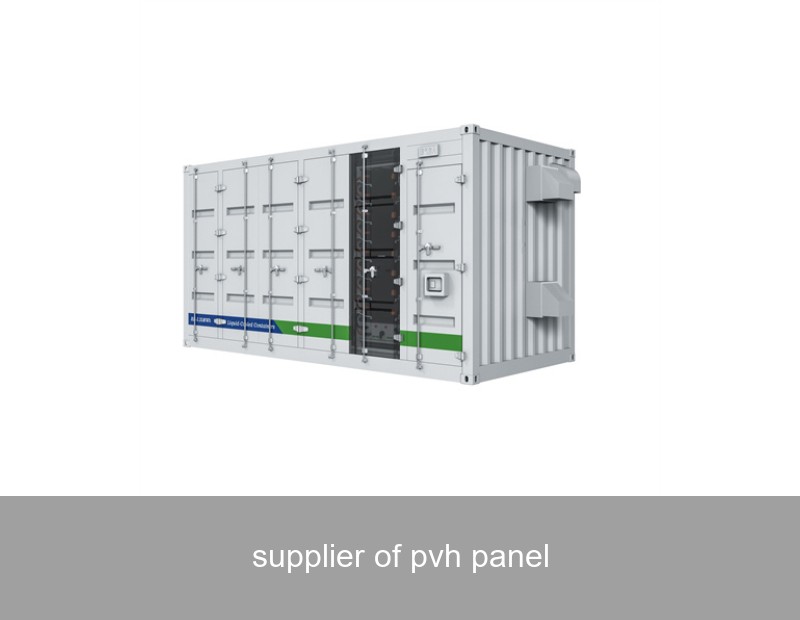
- Highjoule FlexStore BESS: Scalable, containerized battery storage with lifecycle management to ensure longevity alongside your PVH array.
- Highjoule Thermal Core: A compact, high-capacity phase-change material storage unit for efficient heat retention.
This integrated approach ensures a single point of responsibility, a unified performance guarantee, and a system that adapts to your evolving energy needs.
Future Trends in PVH and Integrated Storage
The future of energy is not just renewable; it's intelligent and sector-coupled. We see the role of a supplier of PVH panel systems expanding into creating fully autonomous microgrids. Imagine a factory where PVH panels, large-scale battery storage, and electric vehicle charging depots are all orchestrated to minimize cost and carbon footprint, while even providing grid stability services.
Emerging technologies like bifacial PV cells combined with thermal capture and AI-driven predictive maintenance are set to push efficiencies even higher. The key will be choosing a supplier with the R&D commitment and software prowess to make these advancements seamlessly available to your existing system.
A Question for Your Next Planning Meeting
As you consider your organization's energy resilience and sustainability roadmap, ask yourself: Are we evaluating isolated technologies, or are we seeking a strategic partner capable of delivering and managing a fully integrated, intelligent energy system?
What would a 70% reduction in both your grid electricity dependence and fossil heating fuel mean for your operational costs and environmental goals this decade?
 Inquiry
 Online Chat