


Unlocking Energy Independence: The Power and Potential of a Container Stromanschluss
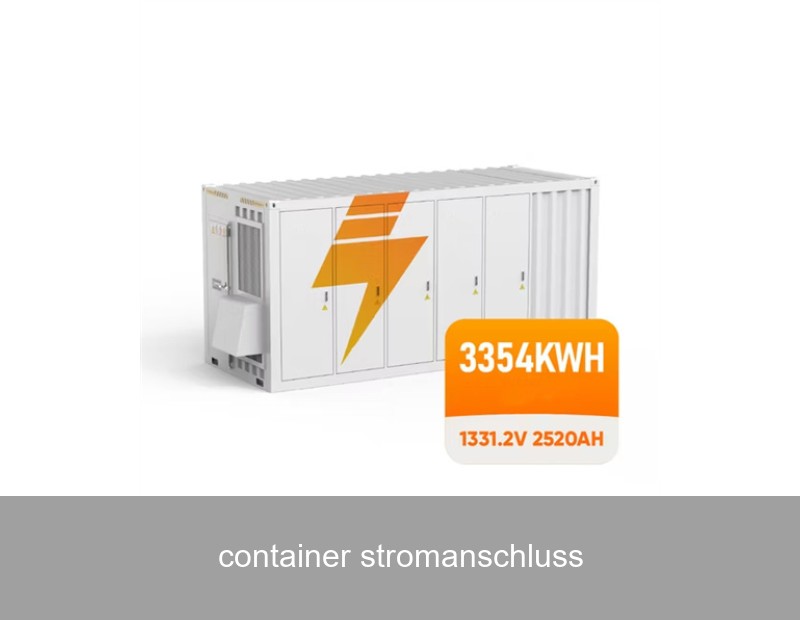
Imagine needing to power a remote construction site, a bustling festival, or a critical data center, but the grid is either unreliable, expensive, or simply non-existent. This is a common reality for industries across Europe and the US. The solution? A Container Stromanschluss—a containerized power connection. But this isn't just a diesel generator in a box. Today, it represents a sophisticated, plug-and-play energy hub, increasingly powered by renewables and smart battery storage. Let's explore how this modern energy solution is reshaping power access.
Table of Contents
- What is a Container Stromanschluss?
- The Problem: Grid Limitations & Rising Costs
- The Data: Why Mobile, Resilient Power is in Demand
- Case Study: A German Industrial Park's Solution
- The Highjoule Approach: Intelligence in a Container
- Key Components of a Modern Energy Container
- The Future of Decentralized Power
What is a Container Stromanschluss?
At its core, a Container Stromanschluss (container power connection) is a fully integrated power system housed within a standardized shipping container. This modular approach allows for the entire energy infrastructure—be it battery storage, photovoltaic inverters, control systems, or even backup generators—to be pre-assembled, tested, and shipped to any location. It's a "power plant in a box" that can be deployed in days, not years. For businesses, this means unparalleled flexibility and speed in securing a reliable, often renewable, power supply.

The beauty lies in its standardization and scalability. Whether you need a 100 kWh system for a temporary event or a multi-megawatt-hour setup for industrial backup, the container format provides a robust, secure, and transportable solution.
The Problem: Grid Limitations & Rising Costs
Many businesses face a harsh energy trifecta: soaring electricity prices, an aging grid infrastructure prone to outages, and stringent sustainability targets. In Europe, industrial electricity prices have seen extreme volatility, while in the US, grid resilience is a growing concern due to extreme weather events. Connecting to the grid can also be a lengthy and costly process, especially for remote locations. This forces reliance on diesel generators—a noisy, polluting, and increasingly expensive option.
This is the phenomenon driving change. Companies are no longer passive consumers; they are actively seeking control over their energy destiny. The question has shifted from "How much will our utility bill be?" to "How can we generate, store, and manage our own power efficiently?"
The Data: Why Mobile, Resilient Power is in Demand
The numbers paint a clear picture. According to the U.S. Energy Information Administration (EIA), the average U.S. electricity customer experienced just over eight hours of power interruptions in 2020, with major events being a primary cause. In the EU, the European Commission's reports consistently highlight the need for massive grid investment to integrate renewables.
Meanwhile, the levelized cost of energy from solar PV and wind has plummeted, making on-site generation economically compelling. The missing link has been flexible, large-scale storage. This is where the modern Container Stromanschluss shines, merging generation, storage, and smart management into a single, turnkey asset.
Case Study: A German Industrial Park's Solution
Consider a real-world example from Bavaria, Germany. A mid-sized manufacturing park faced peak demand charges that accounted for nearly 30% of its annual electricity bill. Grid upgrade quotes were prohibitive, and their sustainability goals ruled out a diesel-only solution.
Their answer was a customized Container Stromanschluss solution. The system included:
- A 500 kWh lithium-ion battery energy storage system (BESS)
- Integrated PV inverters ready for a future rooftop solar expansion
- Advanced energy management software for peak shaving and load optimization
- Grid-forming capabilities for optional island mode operation
The results, after 18 months of operation:
| Metric | Result |
|---|---|
| Peak Demand Charges Reduced | by 65% |
| Annual Energy Costs Saved | €82,000 |
| CO2 Emissions Avoided | Estimated 48 tonnes/year |
| Deployment Time | 6 weeks from contract to commissioning |
This case underscores the tangible financial and operational benefits. The containerized system provided not just backup power, but active, daily cost savings and a clear path to greener operations.
The Highjoule Approach: Intelligence in a Container
At Highjoule, we've been at the forefront of this evolution since 2005. Our EnerCube series of containerized energy storage systems is designed precisely for these challenges. We don't just sell hardware; we deliver a guaranteed outcome: energy resilience and cost predictability.

What makes the Highjoule solution different? Our systems are built around a proprietary, AI-driven energy management platform. This platform doesn't just store energy; it learns your facility's load patterns, forecasts weather for solar production, and automatically decides the most economical moment to charge from the grid or PV, discharge to power your operations, or even provide grid services. For a Container Stromanschluss, this intelligence is what transforms a simple battery box into a strategic financial asset.
Our services encompass everything from initial feasibility studies and custom engineering to remote monitoring, maintenance, and performance guarantees. We ensure your containerized power solution delivers from day one for the next 15+ years.
Key Components of a Modern Energy Container
Let's break down what's inside a state-of-the-art system like Highjoule's EnerCube:
- Battery Racks: Utilizing high-cycle life, safety-certified lithium-ion cells (like LFP chemistry) for maximum longevity and safety.
- Power Conversion System (PCS): The heart that converts DC battery power to AC for your facility, and vice-versa. Advanced models are bidirectional and grid-forming.
- Thermal Management: A critical, often overlooked system. Precision HVAC ensures optimal battery temperature for performance and lifespan, regardless of outdoor climate.
- Fire Safety: Integrated gas-based suppression systems, thermal runaway detection, and physical compartmentalization.
- Energy Management System (EMS): The "brain." This software controls all operations, provides user interfaces, and connects to cloud analytics for optimization.
- Grid Connection Point: The standardized, protected interface—the literal Stromanschluss—that connects the container to your main distribution panel or the public grid.
The Future of Decentralized Power
The trend is clear: energy systems are becoming more distributed, digital, and decarbonized. A Container Stromanschluss is the perfect physical embodiment of this trend. Looking ahead, we see these units not only serving single sites but forming interconnected virtual power plants (VPPs), where hundreds of distributed containers balance the wider grid, as noted in research by the National Renewable Energy Laboratory (NREL).
This means your on-site power asset could generate revenue by providing grid stability services, creating an additional income stream. The container is no longer just a cost center; it's a revenue-generating node in a smarter energy network.
So, as you evaluate your organization's energy resilience and cost strategy, ask yourself this: What could a predictable, controllable, and sustainable power connection, delivered in a matter of weeks, do for your operations and your bottom line? The opportunity to redefine your Stromanschluss is here, contained and ready to deploy.
 Inquiry
 Online Chat