


Navigating Your Energy Independence: Choosing the Right Supplier of All-in-One Solar Systems
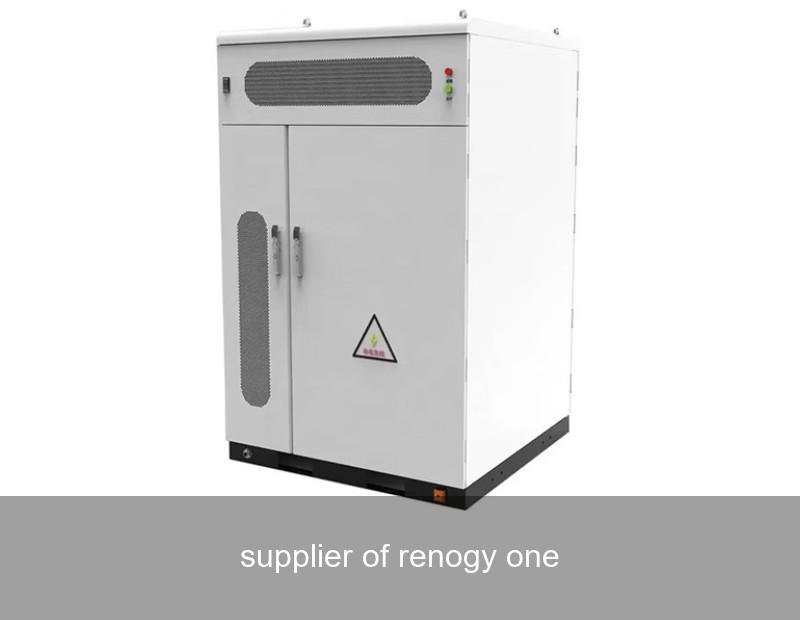
Imagine a single, sleek unit on your wall that silently captures the sun's power, stores it for a rainy day (or night), and seamlessly powers your home or business. This isn't science fiction; it's the reality offered by modern all-in-one solar energy systems. For homeowners and business leaders across Europe and the US, the dream of energy independence is increasingly tied to finding a reliable supplier of all-in-one solar systems. But with a growing market, how do you distinguish a truly integrated, high-performance solution from a mere assembly of parts in a box? Let's demystify the technology and explore what you should really look for.
The Promise and Practical Challenges of All-in-One Systems
The appeal is undeniable. Traditional solar setups involve coordinating multiple vendors—solar panel installers, inverter companies, battery specialists—leading to complex logistics and potential compatibility headaches. An all-in-one system, which typically integrates the inverter, charger, and battery into a single, compact cabinet, simplifies everything. It's designed for easier installation, a unified warranty, and often, smarter energy management through a single app.
However, the term "all-in-one" can be misleading. Not all integrations are created equal. The core challenge lies in the synergy between components. A system with a top-tier battery but a mediocre inverter will underperform. Sophisticated software that can't effectively manage thermal loads or grid interactions can turn a promised "set-and-forget" solution into a constant management burden.

Image Source: Unsplash - A modern, integrated energy storage unit.
This is where the choice of your supplier of all-in-one solar systems becomes critical. You're not just buying hardware; you're investing in a system's long-term intelligence, durability, and support.
The Data Behind the Growth
According to the International Energy Agency (IEA), global solar PV capacity is set to dominate renewable expansion. Concurrently, the demand for attached energy storage, especially in residential and commercial segments, is skyrocketing. In markets like Germany and California, where grid feed-in tariffs are decreasing and electricity prices are volatile, the economic logic for self-consumption is stronger than ever. A well-designed all-in-one system is the key to capturing that value.
What Makes a Great Supplier of All-in-One Systems?
When evaluating a potential supplier of all-in-one solar systems, consider these pillars beyond the basic spec sheet:
- Deep System Integration: The best systems are engineered from the ground up. The battery chemistry, battery management system (BMS), inverter power electronics, and thermal management are co-designed to work in perfect harmony, maximizing efficiency and lifespan.
- Software Intelligence: Hardware is just the body; the software is the brain. Look for suppliers whose systems offer advanced, user-configurable operating modes. Can it prioritize self-consumption, provide backup power during outages, or participate in grid services where allowed? The software should make energy optimization automatic and insightful.
- Scalability and Flexibility: Your energy needs will evolve. Can the system be easily expanded with extra battery modules? Does it support a wide range of solar input? A future-proof supplier designs with modularity in mind.
- Localized Support and Certification: For the US and European markets, certifications (like UL 9540 in the US, CE marking in Europe) are non-negotiable for safety. Equally important is the supplier's ability to provide local technical support, training for installers, and accessible warranty service.
Highjoule's Integrated Approach to All-in-One Power
At Highjoule, with nearly two decades of experience since 2005, we've seen the energy storage market evolve from niche to mainstream. Our philosophy is that a true supplier of all-in-one solar systems must be a master of integration, not just a packager.
Our Helios Fusion Series embodies this principle. We don't simply source an inverter and a battery pack. We engineer our own lithium ferro phosphate (LFP) battery packs with a proprietary, multi-layered BMS for unparalleled safety and longevity. We pair them with our high-efficiency, multi-mode inverters that are programmed with our Adaptive Synergy OS. This software doesn't just monitor; it learns. It analyzes your consumption patterns, weather forecasts, and utility rate structures to autonomously shift energy flows, ensuring you use every possible kilowatt-hour from your sun.
| Feature | Benefit | Outcome for User |
|---|---|---|
| Co-Engineered LFP Battery & Inverter | Optimal charge/discharge curves, reduced energy loss | Higher round-trip efficiency, longer system life |
| Adaptive Synergy OS with AI Forecasting | Predicts solar yield and consumption to optimize storage cycles | Maximizes self-consumption, reduces grid dependence |
| Modular Stackable Design | Capacity from 10 kWh to 30+ kWh in the same footprint | Grow your storage as your needs or budget grows |
| Seamless Backup Power Activation | Sub-20ms switch to backup power during grid failure | Critical loads stay powered without interruption |
For commercial and industrial clients, our Highjoule GridSynch Platform takes this further, allowing multiple Fusion units or our larger containerized systems to operate as a virtual power plant (VPP), providing stability to the local grid and opening up new revenue streams.
A Real-World Case: Off-Grid Business Resilience in the Swedish Highlands
Theoretical benefits are one thing; real-world performance is another. Consider a remote, off-grid mountain lodge in northern Sweden. Heavily reliant on a diesel generator, the business faced soaring fuel costs, noise pollution, and carbon emissions that conflicted with its eco-tourism brand. They needed a reliable, clean, and quiet primary power source.
They partnered with a local installer and chose Highjoule as their supplier of all-in-one solar systems. The solution involved a 45 kW solar array paired with three parallel Highjoule Helios Fusion 15 systems, providing a total of 45 kWh of storage.
- Challenge: Extreme temperature variations (-30°C to +25°C) and limited generator run-time for backup.
- Highjoule Solution: The systems' integrated, self-heating LFP batteries ensured safe operation and capacity retention in deep cold. The Adaptive Synergy OS was configured to strictly manage state-of-charge, prioritizing solar and strategically using the generator only for top-ups in prolonged cloudy periods.
- Result (12-month data): Diesel consumption reduced by 94%. The lodge achieved 81% energy autonomy from solar+storage alone. The quiet operation enhanced the guest experience, and the predictable energy costs allowed for better financial planning. The lodge owner noted, "It's not just a battery system; it's an autonomous energy manager for our remote location."

Image Source: Unsplash - Renewable energy solutions for remote locations.
The Future of Integrated Energy Solutions
The trajectory is clear: energy systems are moving from passive, single-function devices to active, intelligent nodes in a broader energy network. The next evolution for a leading supplier of all-in-one solar systems involves deeper grid integration. Imagine your system automatically providing frequency regulation services to the national grid (as piloted in the UK's Balancing Mechanism), or forming local energy communities where neighbors trade excess solar power peer-to-peer.
At Highjoule, we are actively developing these capabilities. Our systems are being designed not just for independence, but for intelligent interdependence—giving you control while allowing you to contribute to a more resilient and renewable grid.
An Open Question to Guide Your Journey
As you contemplate your move towards energy independence, ask yourself this: Is your goal simply to install some hardware, or is it to form a long-term partnership with a supplier of all-in-one solar systems that will provide the intelligence and support to navigate the evolving energy landscape for the next 20 years? What energy challenge keeps you up at night that a truly integrated system could solve?
 Inquiry
 Online Chat