


Finding the Right Supplier of Sakura Solar for Sustainable Energy Independence
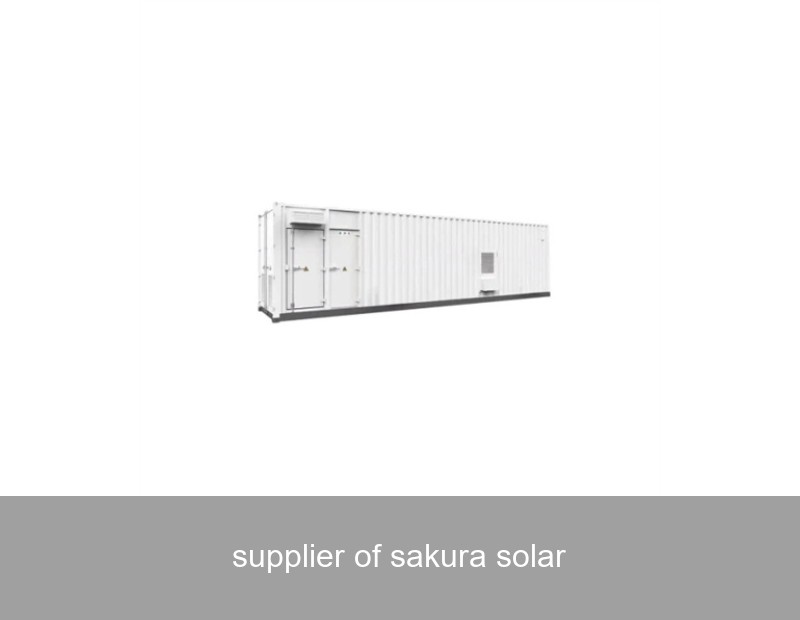
As energy prices fluctuate and the push for sustainability grows stronger, many homeowners and businesses are looking towards solar power. You might have heard the term "Sakura solar" and wondered what sets it apart. Essentially, it represents a commitment to high-quality, aesthetically pleasing, and highly efficient solar technology—principles that any leading supplier of Sakura solar should embody. But choosing the right partner goes beyond just the panels; it's about integrating them with intelligent storage to create a truly resilient and cost-effective energy system. This is where expertise in complete energy solutions becomes critical.
Table of Contents
The Phenomenon: More Than Just Panels on a Roof
The solar energy landscape is evolving rapidly. A decade ago, the goal was simply to install panels and reduce grid dependence during the day. Today, the conversation has shifted. The real challenge isn't just generation—it's management. What happens when the sun isn't shining? How do you maximize the use of every kilowatt-hour your beautiful Sakura-style panels produce? This is the central question for modern energy consumers.
Many homeowners and business operators experience a common frustration: seeing their solar system export excess power to the grid at low rates, only to purchase expensive power back in the evening. This cycle undermines both financial savings and energy independence goals. The phenomenon highlights a gap that a premium supplier of Sakura solar must address: the integration of storage.
The Data: Why Storage is the Missing Link
Let's look at the numbers. According to the U.S. Department of Energy, the average annual electricity consumption for a U.S. residential utility customer is about 10,500 kilowatt-hours (kWh). A well-sized solar system can cover a significant portion of this. However, without storage, typical self-consumption rates of solar power—the amount you use directly—often hover between 30-50%. This means up to 70% of your solar energy could be exported, often at less-than-optimal value.
Adding a battery energy storage system (BESS) can dramatically increase this self-consumption to 70% or even higher, fundamentally changing the economics. The table below illustrates the impact:
| Scenario | Solar Self-Consumption Rate | Grid Energy Reliance at Night | Estimated Bill Savings* |
|---|---|---|---|
| Solar Only (No Storage) | ~40% | High | 40-60% |
| Solar + Advanced Storage | ~80%+ | Low to Minimal | 70-90%+ |
*Savings vary based on location, utility rates, and system size.
This data makes a compelling case: the true value of a high-quality solar array is unlocked only when paired with an equally sophisticated storage solution.

Image: A modern home energy system combining solar generation and battery storage, the cornerstone of true energy independence.
The Case Study: A German Bakery's Recipe for Energy Resilience
Let's examine a real-world example from Bavaria, Germany. Bäckerei Schmidt (a mid-sized family bakery) installed a 50 kW rooftop solar system in 2018. While it reduced daytime costs, their ovens and refrigeration, which ran heavily in the early morning and evening, still relied on the expensive grid. Their energy costs remained a significant operational burden.
In 2022, they partnered with a system integrator using Highjoule's technology to add a 60 kWh Highjoule CubeStack commercial battery storage system. The results after one year were telling:
- Self-Consumption of Solar Power Increased: From 48% to 94%.
- Grid Energy Purchases Reduced: By 82% annually.
- Peak Demand Charges Mitigated: The system intelligently discharged during high-draw periods, smoothing their power demand curve and reducing capacity fees.
- ROI Timeline: The combined system is projected to pay for itself in under 7 years, thanks in part to Germany's dynamic energy market and the ability for the bakery to participate in grid flexibility services.
For Bäckerei Schmidt, choosing a supplier of Sakura solar meant choosing a partner who understood the complete picture—not just panel efficiency, but how to store and manage that energy for a specific, demanding commercial profile. This holistic approach turned their bakery from a passive energy consumer into an active, resilient energy hub.
The Solution: Highjoule's Integrated Approach
This is where Highjoule's nearly two decades of experience comes into play. As a global leader since 2005, we don't just supply components; we provide intelligent, integrated energy systems. While we partner with top-tier solar panel manufacturers whose quality and aesthetics align with the "Sakura" standard of excellence, our core expertise lies in the brain and heart of the system: the advanced battery storage and energy management software.
For residential clients, our Highjoule HomePower series is a sleek, wall-mounted solution that seamlessly integrates with new or existing solar arrays. Its AI-driven software learns your consumption patterns, maximizes self-use, and can provide essential backup power during outages. For commercial and industrial (C&I) applications like the German bakery, our modular CubeStack systems offer scalable power and capacity. They are engineered for durability and safety, featuring advanced lithium iron phosphate (LFP) chemistry and robust thermal management.
What truly differentiates a Highjoule system is the EnergyOS platform. This intelligent software doesn't just store energy; it optimizes it. It can be configured to:
- Charge from solar excess or when grid electricity is cheapest (time-of-use optimization).
- Discharge to avoid peak demand charges—a major cost for businesses.
- Provide grid services in certain markets, creating a potential revenue stream.
- Offer real-time monitoring and control via a user-friendly app.

Image: Advanced energy management software, like Highjoule's EnergyOS, is crucial for optimizing the flow and value of stored solar power.
Choosing Your Supplier of Sakura Solar and Storage: Key Considerations
So, when you're evaluating a supplier of Sakura solar and storage, what should you look for? Here is a practical checklist:
- Holistic System Design: Do they offer seamless integration of solar, storage, and software?
- Technology & Safety: What battery chemistry do they use? (LFP is widely regarded as safer and longer-lasting). What certifications do their products hold (e.g., UL, IEC)?
- Software Intelligence: Can the system adapt to your usage and changing utility rates?
- Proven Track Record: Can they provide case studies or references from projects similar to yours?
- Service & Warranty: What is the warranty period (10+ years is standard for quality batteries)? What is their service and support network like in your region (critical for Europe and the U.S.)?
At Highjoule, we believe your investment in premium solar technology should be complemented and secured by an equally premium storage solution. It's not just about generating energy; it's about harnessing its full potential for your home, business, or community microgrid.
Ready to Explore Your Energy Potential?
We've discussed the importance of pairing high-quality solar with intelligent storage. Now, consider your own energy profile: What are your peak consumption hours? How might your daily routine or business operations benefit from having a predictable, self-managed energy supply? We invite you to connect with our team of solution architects to discuss how an integrated Highjoule system can be designed to meet your specific goals for savings, sustainability, and resilience.
 Inquiry
 Online Chat