


Solax Power 1MW Energy Storage Cabinet: The Cornerstone of Modern Energy Independence
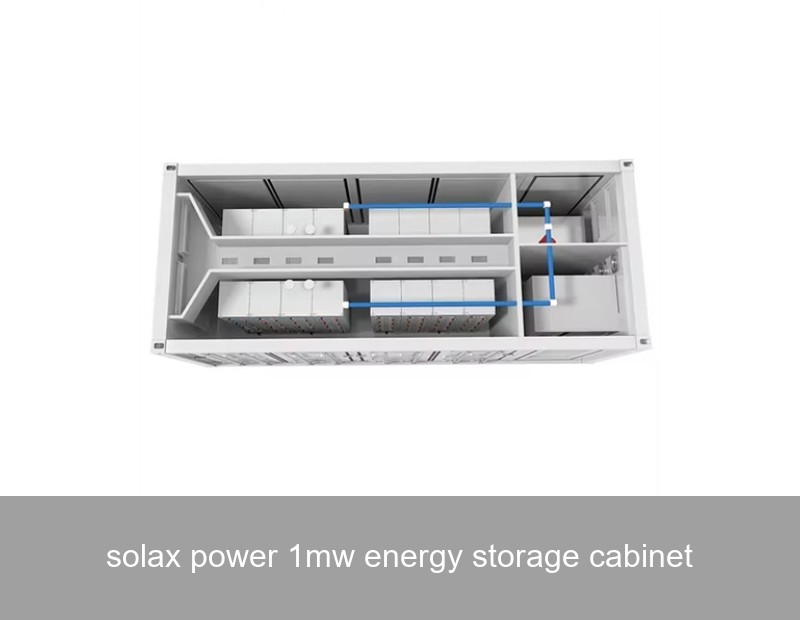
Imagine a single, powerful unit that can store enough energy to power hundreds of homes or a mid-sized factory, all while stabilizing the grid and slashing energy costs. This isn't a vision of the distant future; it's the reality offered by large-scale battery energy storage systems (BESS), with the Solax Power 1MW energy storage cabinet emerging as a prime example of this transformative technology. For businesses and communities across Europe and the U.S., the shift towards renewable energy is undeniable, but its intermittent nature—the sun doesn't always shine, the wind doesn't always blow—presents a formidable challenge. The solution lies in robust, industrial-scale storage. In this deep dive, we'll explore how megawatt-scale cabinets work, why they are critical for energy resilience, and how companies like Highjoule are integrating such solutions to build a smarter, more sustainable energy landscape.
Table of Contents
- The MW-Scale Revolution: From Kilowatts to Grid Support
- Anatomy of a Powerhouse: Inside a 1MW Energy Storage Cabinet
- The Business Case: More Than Just Backup Power
- Case Study: A Real-World Application in European Manufacturing
- Highjoule's Role: Engineering Intelligent MW-Scale Solutions
- The Future Outlook and Your Next Step
The MW-Scale Revolution: From Kilowatts to Grid Support
We've grown accustomed to residential battery systems rated in kilowatts (kW). A 1MW (1,000 kW) system represents a quantum leap in capacity and application. This scale is no longer about just powering a single home; it's about supporting entire commercial facilities, industrial processes, or acting as a critical node in a microgrid. The driving forces behind this surge are clear: volatile energy prices, stringent carbon reduction targets, and an aging electrical infrastructure struggling with peak demands.
Consider this data point: According to the International Renewable Energy Agency (IRENA), global battery storage capacity is expected to multiply 35-fold by 2030, with utility-scale projects leading the charge. A single, well-integrated 1MW cabinet can shift massive amounts of solar or wind energy from periods of low demand to high demand, a process known as energy arbitrage. For a commercial user, this directly translates to avoiding punitive peak demand charges from utilities, which can constitute up to 70% of an industrial electricity bill.
Anatomy of a Powerhouse: Inside a 1MW Energy Storage Cabinet
So, what exactly is a Solax Power 1MW energy storage cabinet? Think of it as a fully integrated, plug-and-play power plant in a containerized or modular enclosure. It's far more than just a box of batteries. Here’s a breakdown of its core components:
- Battery Modules: Typically using lithium iron phosphate (LiFePO4) chemistry for safety and long cycle life, these are the core energy storage units, stacked to achieve the desired capacity (often 1-2 MWh per MW of power).
- Power Conversion System (PCS): The brain of the operation. This bi-directional inverter converts DC battery power to AC for the grid/facility and vice-versa for charging.
- Battery Management System (BMS): The guardian. It monitors each cell for voltage, temperature, and state of charge, ensuring safety, longevity, and optimal performance.
- Thermal Management System: A critical, often overlooked component. It maintains the batteries within an ideal temperature range using liquid or air cooling, which is essential for efficiency and preventing degradation.
- Energy Management System (EMS): The strategist. This software platform controls when to charge and discharge based on electricity rates, grid signals, or on-site generation, maximizing financial return.

Image Source: Unsplash (Representative image of industrial energy storage equipment)
The Business Case: More Than Just Backup Power
The value proposition of a MW-scale storage system is multi-faceted. Let's frame it using the PAS (Problem-Agitate-Solution) framework:
Problem: A manufacturing plant in Germany faces crippling peak demand charges and has ambitious corporate sustainability goals. Their newly installed solar array produces excess energy at midday, but their highest energy consumption occurs in the early morning and evening, missing the opportunity to use their own green power.
Agitate: This misalignment means they are still heavily reliant on the grid during expensive peak periods, their solar investment isn't fully optimized, and their carbon footprint remains higher than necessary. Grid instability also poses a risk of costly production downtime.
Solution: A tailored 1MW/2MWh energy storage system. It stores the midday solar surplus and dispatches it during peak hours, cutting demand charges. It provides seamless backup power during outages, and it can even participate in grid-balancing programs for additional revenue.
| Application | How the 1MW Cabinet Delivers Value |
|---|---|
| Peak Shaving | Discharges during utility peak periods to dramatically reduce demand charges. |
| Renewable Integration | Stores excess solar/wind generation for use when production is low. |
| Backup Power | Provides critical power continuity for essential operations. |
| Grid Services | Can provide frequency regulation or voltage support to the local grid operator. |
Case Study: A Real-World Application in European Manufacturing
Let's move from theory to practice. A concrete example comes from a partnership Highjoule undertook with a mid-sized automotive parts supplier in Northern Italy.
The Challenge: The facility operated 24/7, with energy-intensive processes causing significant peak loads. Their existing 500kW rooftop solar system was underutilized, and grid electricity prices were highly volatile. Their primary goals were cost certainty and reducing their Scope 2 emissions.
The Highjoule Solution: Our team designed and deployed a containerized BESS featuring a Solax Power 1MW energy storage cabinet as its core, coupled with a 2MWh battery capacity and Highjoule's proprietary OptiGrid EMS. The system was seamlessly integrated with their existing solar PV and factory load.
The Results (12-Month Period):
- Demand Charge Reduction: Peak demand from the grid was reduced by an average of 40%, leading to direct savings of over €85,000 annually.
- Solar Self-Consumption: Increased from 35% to over 80%, maximizing their renewable asset.
- ROI Timeline: The projected payback period for the total system investment is under 5 years, thanks to the combined savings and revenue streams.
- Reliability: The system successfully provided uninterrupted power during two brief grid disturbances, preventing an estimated €50,000 in potential production losses.
This case underscores that the right storage solution, when expertly integrated, delivers tangible financial and operational resilience. You can read more about grid-scale storage benefits from the U.S. Department of Energy's Office of Energy Storage.
Highjoule's Role: Engineering Intelligent MW-Scale Solutions
At Highjoule, our expertise extends far beyond simply supplying hardware. Since 2005, we have evolved into a full-service provider of intelligent storage solutions. When a client comes to us with an interest in a Solax Power 1MW energy storage cabinet or similar large-scale technology, we engage in a comprehensive partnership.
Our process begins with a deep energy audit and load profile analysis. We don't believe in one-size-fits-all. Our engineering team then designs a system where the storage cabinet is the heart, but the Highjoule OptiGrid EMS is the intelligent brain. This platform uses AI-driven algorithms to forecast energy prices and load patterns, making real-time decisions to optimize for savings, sustainability, or grid support—whichever priority our client sets.

Image Source: Unsplash (Representative image of energy management software dashboard)
Furthermore, we provide full lifecycle support, from permitting and grid interconnection assistance to remote monitoring and maintenance. For microgrid applications, our systems are designed to "island" from the main grid, providing communities or campuses with true energy independence. Our solutions are built on the pillars of safety, efficiency, and longevity, ensuring that our clients' investments are protected for decades.
The Future Outlook and Your Next Step
The landscape of energy is shifting from a centralized, one-way flow to a decentralized, interactive network. The Solax Power 1MW energy storage cabinet represents a key building block in this new paradigm. As battery technology continues to advance and software intelligence grows, the capabilities and value of these systems will only expand.
This leads us to a crucial, open-ended question for any business leader, facility manager, or community planner reading this: What does energy resilience look like for your operation, and how might the ability to control and dispatch your own megawatt-scale power transform your financial and environmental goals?
We invite you to start that conversation. What's the single biggest energy challenge you're facing today?
 Inquiry
 Online Chat