


Finding the Right Supplier of Solar 5 HP Solutions for Your Energy Independence
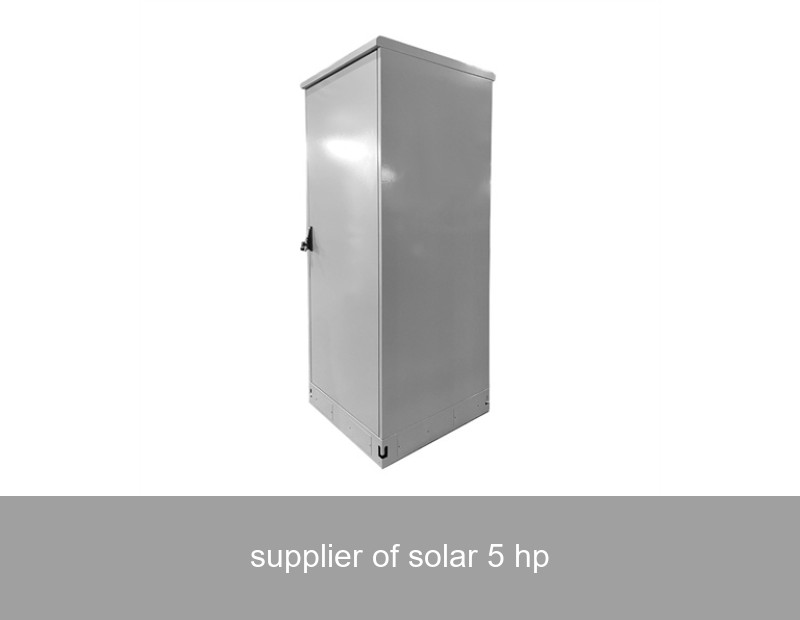
Have you ever looked at your farm's irrigation pump, your small factory's machinery, or your commercial building's HVAC system and wondered, "Could this be powered by the sun?" For many businesses and large property owners, a 5 horsepower (HP) motor is the workhorse of daily operations. Converting such a critical load to solar isn't just a trend; it's a strategic move toward predictable energy costs and operational resilience. But the journey hinges on one crucial decision: choosing the right supplier of solar 5 HP systems. It's not just about panels and an inverter; it's about a holistic solution that delivers reliable, intelligent, and sustainable power. This article will guide you through what to look for and how advanced energy storage transforms a simple solar installation into a future-proof asset.
Table of Contents
- The Phenomenon: The 5 HP Energy Challenge
- The Data: Why Solar Makes Financial Sense for 5 HP Loads
- The Case Study: A California Vineyard's Transformation
- The Key Insight: It's About the System, Not Just Panels
- Highjoule's Role: Intelligent Storage as the Game-Changer
- Choosing Your Supplier: A Checklist
The Phenomenon: The 5 HP Energy Challenge
Across farms in Europe's agricultural heartlands and manufacturing hubs in the American Midwest, 3.7kW to 4kW (5 HP) motors are ubiquitous. They drive deep-well irrigation pumps, ventilation fans, conveyor belts, and large commercial compressors. These motors are reliable, but their electricity consumption is significant and often subject to volatile utility rates and peak demand charges. For an owner, this translates into a major, often uncontrollable, operational expense. The desire to switch to solar is clear, but the path is fraught with questions: Will it work when the sun isn't shining? Can it handle the motor's high starting current (inrush)? A simple grid-tied solar setup often falls short, leaving you dependent on the grid exactly when you hoped to be independent.
The Data: Why Solar Makes Financial Sense for 5 HP Loads
Let's talk numbers. A typical 5 HP motor running 8 hours a day can consume approximately 30-35 kWh daily, depending on load. Annually, that's over 12,000 kWh. With industrial electricity prices in parts of Europe exceeding €0.25/kWh and commercial rates in California reaching $0.30/kWh, the annual cost can easily surpass €3,000 or $3,600. A well-designed solar system with a capacity of around 10-15 kWp (considering sunlight hours and system losses) can cover this load for 25+ years. The math shows a compelling return on investment, often with payback periods under 7 years in sun-rich regions, followed by decades of nearly free energy. However, this positive ROI assumes the system is designed to handle the motor's unique electrical profile and includes a way to use the solar energy effectively, not just when the sun is perfectly positioned.
The Case Study: A California Vineyard's Transformation
Consider the real-world example of a 50-acre vineyard in Sonoma County, California. Their primary challenge was a 5 HP submersible pump used for irrigation and frost protection, a critical load with a high inrush current. Their old diesel generator was costly and unreliable. They partnered with a supplier of solar 5 HP solutions that integrated Highjoule's HPS-10 commercial battery storage system.
The solution included a 12 kW solar array and the key component: a Highjoule HPS-10 unit with a built-in high-surge power inverter. This system was specifically programmed to manage the pump's demanding start-up sequence.
| Metric | Before Installation | After Installation |
|---|---|---|
| Annual Energy Cost for Pump | $4,200 (Grid + Diesel) | $180 (Minimal Grid Backup) |
| Operational Reliability | Dependent on Grid & Generator | 24/7 Solar-Powered, Automated |
| Carbon Footprint | ~8.5 tons CO2e annually | ~0.5 tons CO2e annually |
| System Payback Period | N/A | Estimated 5.8 years |
The Highjoule system's intelligent energy management software allowed the vineyard to schedule irrigation during sunny periods, store excess energy in the battery for early morning frost protection cycles, and seamlessly switch to battery power if the grid experienced a fault. This case underscores that the right supplier delivers not just hardware, but a guaranteed operational outcome.

Credit: Photo by American Public Power Association on Unsplash (Representative image of agrivoltaics)
The Key Insight: It's About the System, Not Just Panels
The fundamental insight for any buyer is this: When you search for a supplier of solar 5 HP systems, you are not shopping for commodity solar panels. You are investing in an integrated power plant. The critical differentiators lie in the components that manage energy, not just generate it:
- The Inverter's Surge Capacity: A 5 HP motor can require 5-6 times its running current to start. Your inverter must have this surge capacity built-in, or the motor will stall.
- Energy Storage Intelligence: Solar generation and motor operation are rarely perfectly in sync. Batteries bridge this gap, but a basic battery bank is inefficient. You need an intelligent Battery Energy Storage System (BESS) that manages charge/discharge cycles for longevity and performance.
- System Control & Monitoring: Can you schedule your pump or machinery to run on solar power automatically? Can you monitor performance remotely and receive alerts? This software layer is what turns hardware into a smart asset.
Highjoule's Role: Intelligent Storage as the Game-Changer
This is where a partner like Highjoule becomes invaluable. As a global leader in advanced储能系统 since 2005, Highjoule doesn't just supply batteries; it provides the brain for your solar 5 HP system. For commercial and industrial applications, products like the Highjoule HPS Series are engineered for precisely these scenarios.
Imagine a system where the Highjoule controller communicates with your solar inverter and your motor starter. It knows:
- When solar production is peaking and can direct that power to run the motor and charge the battery.
- How to use stored energy to run the motor during cloudy periods or at night, eliminating grid dependence.
- How to provide a "soft start" function using its inverter, dramatically reducing stress on the motor and the electrical system.
By integrating Highjoule's technology, your supplier delivers a solution that maximizes self-consumption of solar energy, protects your equipment, and provides a clear dashboard of your energy independence in real-time.

Credit: Photo by Michael Fousert on Unsplash (Representative image of a modern battery storage system)
Choosing Your Supplier: A Checklist
Armed with this knowledge, your evaluation of a supplier of solar 5 HP solutions should be thorough. Here is a practical checklist:
- Engineering Assessment: Do they conduct a detailed site survey and analyze your motor's exact specifications (starting current, duty cycle)?
- Component Quality: Do they use inverters certified for high-surge applications and partner with reputable BESS providers like Highjoule for the storage component?
- System Design: Does their proposal include detailed single-line diagrams and explain the control logic for energy flow?
- Software & Monitoring: Do they offer a proprietary or best-in-class monitoring platform (like Highjoule's EnergyOS) for remote management?
- Warranty & Support: What are the warranties on performance and parts? Do they offer long-term service agreements?
- References & Case Studies: Can they provide verifiable examples of successful 5 HP or similar mid-size commercial motor solarizations?
For further reading on the technical standards and benefits of solar-powered irrigation, a resource like the Food and Agriculture Organization (FAO) of the UN provides valuable context.
Beyond the Motor: The Ripple Effect of a Good Decision
Choosing a supplier that integrates robust storage does more than power one motor. It creates a microgrid for your facility. The same Highjoule system that runs your 5 HP pump can provide backup power for critical lighting, security systems, or office equipment. It can be programmed to avoid peak utility tariffs, generating additional savings. You're not just buying a product; you're establishing a scalable platform for energy resilience.

Credit: Photo by Zbynek Burival on Unsplash (Representative image of solar-powered agriculture)
The transition to solar for your essential machinery is a significant step. It requires a partner who understands the intersection of electro-mechanical loads, renewable generation, and digital energy management. So, as you evaluate potential partners, ask them this: "Beyond the solar panels, how will your system ensure my 5 HP motor runs reliably at 3 PM and at 3 AM, and how will you prove it's working for the next two decades?" The answer will separate the true energy solution providers from the mere equipment vendors.
 Inquiry
 Online Chat