


Finding the Right Supplier of Solar Combos: Your Complete Guide to Smart Energy Integration
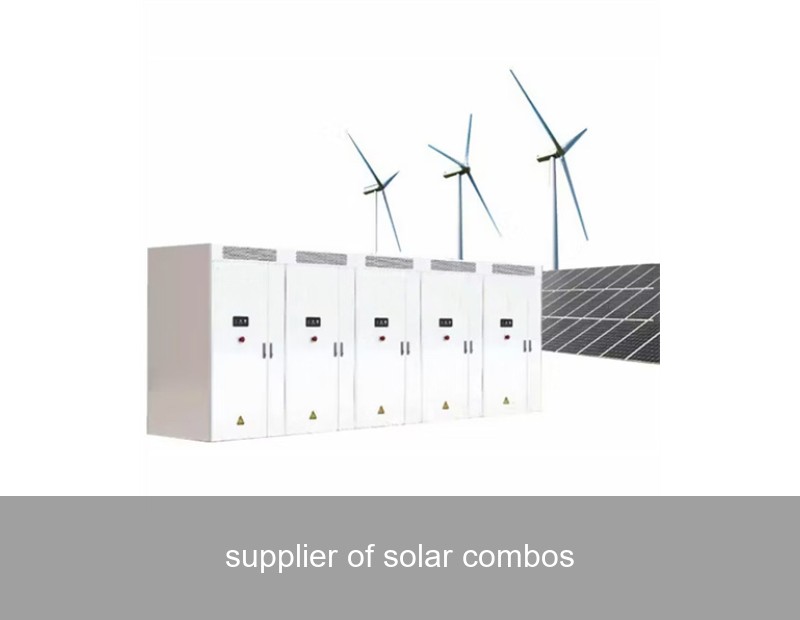
You've made the smart decision: solar panels on your roof are a great start. But if you've ever watched the sun go down and seen your energy import from the grid spike right back up, you know something's missing. That missing piece is storage, and the true magic happens when both are designed to work as one seamless system. This integrated solution is what the industry calls a solar combo, and choosing the right supplier of solar combos is the single most critical decision for your energy independence. It's the difference between just generating power and truly owning your energy future.
Table of Contents
- The Phenomenon: Why Solar Alone Is No Longer Enough
- The Data: The Compelling Case for Integrated Storage
- Case Study: A German Bakery's Recipe for Resilience
- What Makes a Superior Supplier of Solar Combos?
- The Highjoule Approach: Intelligence at the Core
- Key Questions to Ask Your Potential Supplier
The Phenomenon: Why Solar Alone Is No Longer Enough
For years, the story was simple: install solar panels, reduce your electricity bill, and feel good about green energy. And while that's still true, the energy landscape has evolved dramatically. We now face two interconnected challenges: intermittency and grid volatility.
Solar power is inherently variable. At night, production is zero. On cloudy days, it dips. Yet, our energy demand often peaks in the early morning and evening—times when solar output is low. This mismatch forces you to buy expensive power from the grid just when everyone else is doing the same. Furthermore, grid instability and rising electricity costs across Europe and North America are making reliance on the utility a significant financial and operational risk. A standalone solar system addresses only part of the equation. The modern solution is an integrated solar combo—a system where solar generation, battery storage, and smart energy management are conceived, designed, and built to work in perfect harmony from day one.
The Data: The Compelling Case for Integrated Storage
Let's talk numbers. According to the International Energy Agency (IEA), global renewable capacity is soaring, with solar PV leading the charge. However, they also note that effective integration is key to maximizing value. Here's what that value looks like in practice:
- Self-Consumption Boost: A typical home solar system without storage might use 30-50% of its own generation on-site. Add a correctly sized and integrated battery, and that figure can jump to 70-90% or more, slashing grid purchases.
- Peak Shaving: Commercial users often pay "demand charges" based on their highest 15-minute power draw each month. A solar combo can strategically discharge the battery during these short peaks, potentially reducing this portion of the bill by 30-50%.
- ROI Acceleration: While adding storage increases upfront cost, the combined system's ability to avoid time-of-use rates, provide backup power, and participate in grid services programs can significantly shorten the payback period compared to solar alone.

Image Source: Unsplash (Photographer: Andreas Gücklhorn)
Case Study: A German Bakery's Recipe for Resilience
Let's look at a real-world example. Bäckerei Schmidt (name changed for privacy), a mid-sized artisan bakery in Bavaria, Germany, faced a common industrial dilemma. Their ovens, refrigeration, and lighting created a high, consistent energy load. Their existing rooftop solar helped during the day, but early morning baking peaks and nighttime refrigeration relied entirely on the grid, leading to crippling energy costs.
In 2022, they partnered with a system integrator using Highjoule's technology to deploy a turnkey solar combo solution:
- Extension: Added 50 kW of new solar capacity.
- Storage: Installed a 120 kWh Highjoule H-Cube 2.0 commercial battery energy storage system (BESS).
- Intelligence: Integrated with Highjoule's EnerSync AI platform for predictive energy management.
| Metric | Before Combo | After Combo | Change |
|---|---|---|---|
| Grid Energy Import | 65% of total use | 22% of total use | -66% |
| Monthly Demand Charge | €1,850 (avg.) | €620 (avg.) | -66% |
| Self-Consumption of Solar | 41% | 94% | +129% |
| CO2e Emissions | 32 tonnes/year | 9 tonnes/year | -72% |
The system also provides guaranteed backup power for refrigeration, securing thousands of euros worth of inventory. The project's ROI is projected at under 7 years, a figure made possible by the holistic, intelligent design of the solar combo.
What Makes a Superior Supplier of Solar Combos?
Not all suppliers are created equal. A box mover selling separate components is not the same as a true supplier of solar combos. The latter delivers a synergistic system. Here are the hallmarks of a top-tier provider:
- Deep System Integration: The inverter, battery, and management software should be pre-optimized to communicate flawlessly, ensuring safety, efficiency, and longevity.
- Advanced Energy Management (AEM): The system must be smart. It should forecast solar production and load patterns, automatically deciding when to store, use, or (where allowed) sell energy to maximize economic return.
- Scalability & Flexibility: A good system grows with your needs. Can you easily add more battery modules or solar panels later? The architecture should be modular.
- Full-Cycle Support: This extends beyond installation. Look for suppliers offering remote monitoring, proactive maintenance alerts, and performance guarantees.
The Highjoule Approach: Intelligence at the Core
At Highjoule, our philosophy as a leading global supplier of solar combos is that hardware is essential, but intelligence is transformative. Since 2005, we've engineered our systems from the ground up for seamless integration.
Our Solar Combo Suite for commercial and industrial applications is built around three pillars:
- The H-Cube 2.0 BESS: Our containerized or modular battery system features industry-leading safety with UL 9540A certification, high cycle life, and passive cooling for minimal maintenance. It's the robust heart of the combo.
- The EnerSync AI Platform: This is the brain. Using machine learning and local weather data, EnerSync creates a 48-hour forecast of your energy profile. It then makes real-time decisions to optimize every kilowatt-hour, whether for self-consumption, peak shaving, or participating in demand response programs like the UK's Balancing Mechanism.
- Unified Monitoring & Control: Through a single pane of glass, facility managers can see the performance of the entire solar + storage system, track savings, and adjust strategies. This holistic view is what makes it a true combo, not just separate parts.

Image Source: Unsplash (Photographer: American Public Power Association)
For residential and small business applications, our Home Energy Hub brings this same integrated intelligence to a compact form factor, allowing homeowners to seamlessly manage solar, storage, and even EV charging.
Key Questions to Ask Your Potential Supplier
Before you sign a contract, arm yourself with these crucial questions. The answers will separate true solution providers from mere equipment vendors:
- "Can you provide a detailed simulation of my projected energy flows, self-consumption rate, and financial savings before installation?"
- "Is your energy management system predictive (AI-based) or just reactive? Can it integrate with my local utility's rate structures?"
- "What is the warranty on the entire system's performance, not just individual component warranties?"
- "How do your battery and inverter communicate? Is it a proprietary, secured protocol for optimal safety and performance?"
- "Can you share a similar case study from my region with verifiable data?"
The journey to true energy independence is exciting. It begins with recognizing that solar and storage are two sides of the same coin. By choosing a supplier of solar combos that prioritizes deep integration and intelligent control—like Highjoule—you're not just buying technology; you're investing in a predictable, resilient, and cost-effective energy ecosystem for decades to come.
What specific energy challenge—whether it's peak demand charges, backup power needs, or simply maximizing your solar investment—is most critical for your business or home to solve in the next 12 months?
 Inquiry
 Online Chat