


Finding the Right Supplier of Solar Microinverters for Your Energy Independence
Have you ever looked at your traditional solar system and wondered why a single shaded panel seems to drag down the performance of your entire rooftop array? This common frustration highlights a critical choice in solar design: the technology that converts sunlight into usable power. For homeowners and businesses across Europe and the US seeking maximum efficiency and resilience, the supplier of solar microinverters they choose becomes a pivotal partner in their energy journey. Unlike central string inverters, microinverters optimize each panel individually, ensuring that shade, debris, or panel mismatch doesn't compromise your system's total output. This article will guide you through the key considerations, backed by data and real-world examples, to help you select a technology partner that delivers not just components, but true energy intelligence and long-term value.
Table of Contents
- The Phenomenon: The Hidden Inefficiency of Traditional Solar
- The Data: Quantifying the Microinverter Advantage
- The Case Study: A European Agri-Business's Transformation
- The Insight: More Than Just an Inverter Supplier
- Choosing Your Partner: The Highjoule Difference
- Your Energy Future: A Question of Granular Control
The Phenomenon: The Hidden Inefficiency of Traditional Solar
Imagine a chain of holiday lights where one faulty bulb causes the whole string to go dark. Traditional solar systems with a central string inverter operate on a similar principle. All panels are connected in series, and the system's output is limited by the performance of its weakest panel. Morning shade on one corner, afternoon cloud cover, or simply dust accumulation can significantly reduce the energy harvest of the entire array. This "clipping" effect is a well-documented phenomenon in solar energy, leading to substantial annual energy losses, especially in environments with variable weather or complex roof layouts. For the energy-conscious consumer, this means paying for a system that isn't operating at its full potential, day after day.
The Data: Quantifying the Microinverter Advantage
The shift towards module-level power electronics (MLPE), like microinverters, is driven by compelling performance data. Studies and real-world performance tracking consistently show advantages:
- Increased Energy Harvest: Systems with microinverters can produce 5% to 25% more energy annually compared to string inverter systems, particularly in sites prone to shading or using multiple roof planes. This isn't marginal gain; it's a significant return on investment.
- Enhanced Safety & Monitoring: Microinverters convert DC to AC right at the panel, eliminating dangerous high-voltage DC wiring across the roof and into the home—a key safety benefit. Furthermore, they provide panel-level monitoring, allowing owners to see the performance of each individual panel via a smartphone app.
- Improved Reliability & Scalability: With a decentralized design, a single point of failure is eliminated. If one microinverter needs service, the rest of the system continues producing power. Adding panels in the future is also far more straightforward.
According to the National Renewable Energy Laboratory (NREL), the levelized cost of energy for residential solar continues to fall, with system performance and longevity being major factors. Microinverters contribute directly to both.

Image: Panel-level optimization is key for modern, efficient rooftops. Source: Unsplash
The Case Study: A European Agri-Business's Transformation
Let's ground this data in reality. Consider a mid-sized vineyard in Tuscany, Italy. The operation had a 100 kWp solar array installed on various barn and processing facility roofs, using a traditional string inverter. They faced three core issues: significant shading from trees in the afternoon, uneven production across buildings, and a complete system shutdown when the single inverter failed.
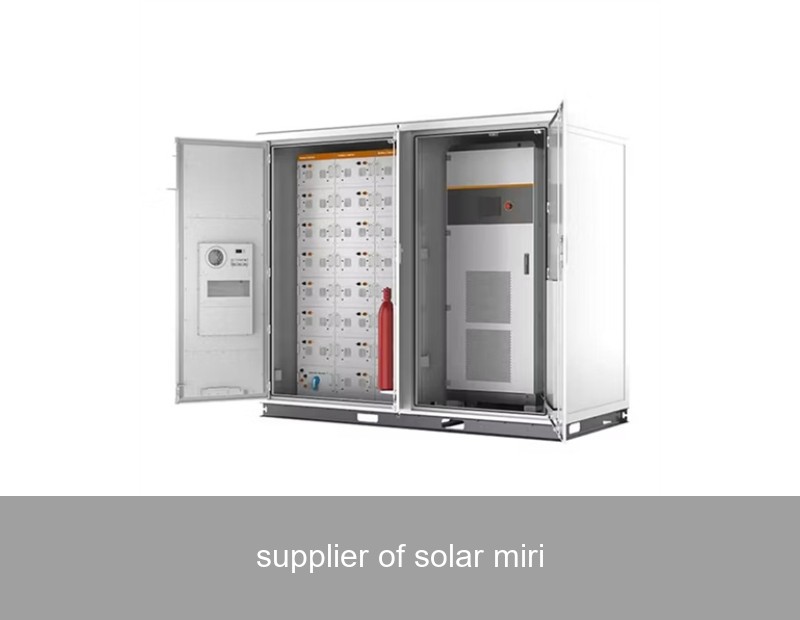
Their search for a solution led them to a premium supplier of solar microinverters and integrated storage: Highjoule. The project involved retrofitting the existing panels with Highjoule's HX-Micro series inverters and integrating a 40 kWh HX-Cube battery storage system.
| Metric | Before Retrofit (String Inverter) | After Retrofit (Highjoule Microinverters + Storage) |
|---|---|---|
| Annual Energy Production | ~118 MWh | ~142 MWh |
| Energy Self-Consumption | 35% | Over 85% |
| System Downtime Events | 2-3 per year | Zero (panel-level redundancy) |
| Grid Dependence During Peak Rates | High | Minimal (battery discharge) |
The results were transformative. The 20% increase in production, coupled with intelligent storage that shifted solar energy to evening use, reduced their grid energy costs by over 60%. The panel-level monitoring allowed them to pinpoint a single underperforming panel for cleaning, something impossible with their old system. This case exemplifies that the right technology partner doesn't just sell hardware; they deliver a measurable performance outcome.
The Insight: More Than Just an Inverter Supplier
The true insight for any homeowner or business is this: you are not just buying microinverters. You are investing in an energy ecosystem. The hardware is crucial, but the software intelligence, system design expertise, and long-term support are what unlock lasting value. A leading supplier of solar microinverters today must offer:
- Grid Services Ready Intelligence: Systems that can communicate with the grid, participate in demand response programs (where available), and future-proof your investment for smart grid integration.
- Seamless Storage Integration: The ability to smoothly pair with battery storage, creating a true hybrid system that maximizes self-consumption and provides backup power.
- Comprehensive Monitoring & Analytics: User-friendly platforms that offer actionable insights, not just raw data, helping you understand and optimize your energy habits.
Choosing Your Partner: The Highjoule Difference
This is where Highjoule's nearly two decades of expertise come into focus. As a global leader in advanced energy storage and conversion, we understand that a microinverter is the brain of each solar panel. Our Highjoule HX-Micro series is engineered for the demanding climates of Europe and North America, with robust durability and industry-leading conversion efficiency. But we go beyond the component.
Our products are the building blocks of a smarter energy home or business. The HX-Micro inverter seamlessly communicates with our HX-Cube or HX-Wall battery storage systems and is managed by the unified Highjoule Energy OS platform. This means a single, intuitive interface to monitor your solar production, battery state, home consumption, and even EV charging. For installers, our plug-and-play design and comprehensive support network simplify deployment and maintenance. For the end-user, it delivers peace of mind and tangible energy sovereignty.
Choosing Highjoule means selecting a partner committed to sustainable, intelligent, and resilient power solutions. We provide the technology stack that turns a solar installation from a simple generator into an interactive, grid-supportive asset. Learn more about our system architecture from resources like the U.S. Department of Energy which underscores the importance of integrated system design.
Image: Integrated storage and monitoring complete the modern energy system. Source: Unsplash
 Inquiry
 Online Chat