


Finding the Right Supplier of VRFB Battery for Long-Duration Energy Storage
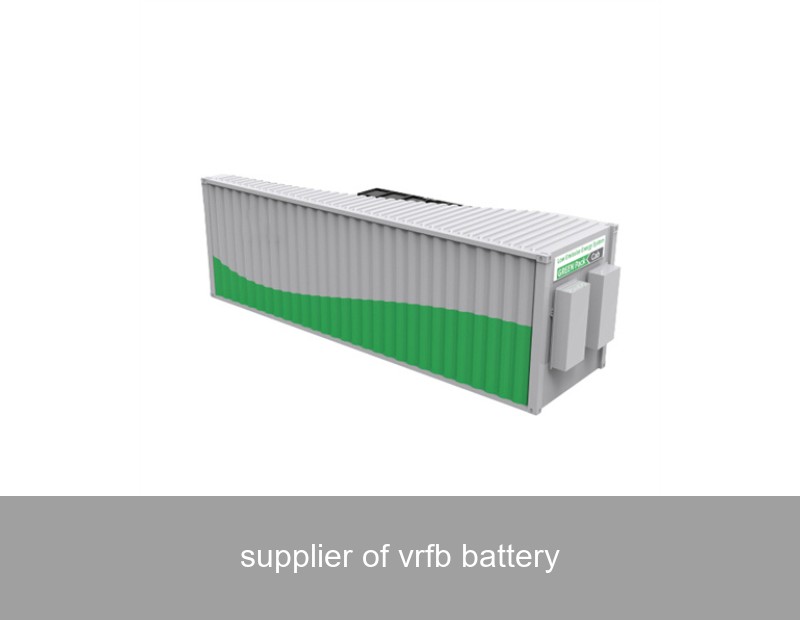
As the global push for renewable energy intensifies, a critical challenge emerges: how do we store solar and wind power for use when the sun isn't shining and the wind isn't blowing? This is where long-duration energy storage (LDES) becomes indispensable. Among the competing technologies, Vanadium Redox Flow Batteries (VRFBs) are gaining significant traction for their unique advantages. But choosing a reliable supplier of VRFB battery systems is a complex decision that hinges on more than just price. It's about partnership, proven technology, and a deep understanding of energy resilience.
Table of Contents
The LDES Challenge: Beyond Lithium-Ion's Limits
Let's face it, the energy landscape is shifting rapidly. Grid operators and large energy consumers are grappling with increasing volatility. The phenomenon is clear: as renewable penetration grows, the gaps between generation and demand become more pronounced. We're moving from needing storage for just a few hours to needing it for entire days or even weeks to ensure grid stability and energy security.
The data underscores this shift. According to the U.S. Department of Energy's Long Duration Storage Shot, the goal is to reduce the cost of grid-scale energy storage by 90% for systems that deliver 10+ hours of duration within the next decade. Lithium-ion batteries, while excellent for short-duration applications, face concerns regarding cycle life, degradation, and safety when scaled for daily, deep-cycling long-duration roles. This creates a tangible market gap for technologies like flow batteries.
Why VRFB Rises to the Occasion
So, what makes a Vanadium Redox Flow Battery a compelling choice for LDES? The core principle is elegant: energy is stored in liquid vanadium electrolyte solutions, housed in external tanks and pumped through a cell stack to generate electricity.
- Decoupled Power & Energy: The power rating (kW) is determined by the stack size, while the energy capacity (kWh) depends on the volume of electrolyte. This allows for cost-effective scaling of duration simply by adding more electrolyte.
- Exceptional Longevity: VRFBs can typically achieve 20,000+ cycles with minimal capacity degradation over a 20-30 year lifespan, far exceeding most other electrochemical storage options.
- Inherent Safety: The aqueous electrolyte is non-flammable, significantly reducing fire risks compared to some other chemistries—a major consideration for densely populated areas or sensitive industrial sites.
- 100% Depth of Discharge: You can use the entire stored energy daily without harming the battery, a crucial feature for applications requiring full backup or daily arbitrage.

Image Source: U.S. Department of Energy (public domain)
Key Criteria for Choosing Your VRFB Supplier
Selecting a supplier of VRFB battery technology isn't like buying a commodity. You're investing in a decades-long asset. Here’s what to scrutinize:
| Criteria | Why It Matters | Key Questions to Ask |
|---|---|---|
| Proven Track Record | Field performance over years is the ultimate test of system design and durability. | Can you provide operational data from installations older than 5 years? What is the real-world degradation rate? |
| System Efficiency & Intelligence | Round-trip efficiency (RTE) impacts ROI. Smart controls maximize value across multiple applications. | What is the DC-DC or AC-AC RTE? Does the BMS/EMS allow for automated, multi-mode operation? |
| Total Cost of Ownership (TCO) | Upfront capex is just one component. Consider maintenance, lifespan, and performance guarantees. | What are the scheduled maintenance requirements? What warranty and performance guarantees are offered? |
| Technical Support & Service | Local expertise ensures rapid response and minimizes downtime over the system's long life. | Do you have local service engineers and a 24/7 monitoring center? What is your typical response time? |
Case Study: VRFB Stabilizing a European Microgrid
Let's look at a real-world example. A large food processing plant in Northern Germany, reliant on a combination of on-site wind turbines and the grid, faced two issues: curtailment of its renewable generation during low-demand periods and vulnerability to grid fluctuations affecting sensitive equipment.
They partnered with a leading supplier of VRFB battery systems to deploy a 2 MW / 12 MWh storage solution. The goals were to increase self-consumption of wind power, provide voltage and frequency support, and ensure critical backup. After 3 years of operation, the results are telling:
- Self-Consumption Increase: On-site renewable usage rose from 48% to over 82%.
- Grid Service Revenue: The system participates in the primary control reserve market, generating significant ancillary service income.
- Zero Degradation: Regular performance tests show no measurable capacity loss to date, validating the longevity claims.
- ROI Acceleration: The combination of energy arbitrage, grid services, and demand charge reduction has put the project on track for a sub-7-year payback period.
This case demonstrates the multi-value stream potential of a well-integrated VRFB system when supplied and supported by a knowledgeable partner.
The Highjoule Approach: Intelligent VRFB Systems
At Highjoule, with nearly two decades of experience since 2005, we've evolved our perspective on energy storage. We don't just see ourselves as a supplier of VRFB battery hardware; we are a provider of long-term energy resilience. Our H-Joule VFlow series is engineered for the demands of commercial, industrial, and microgrid applications.
Our systems are built around three core pillars:
- Adaptive Intelligence: Our integrated Energy Management System (EMS) is the brain of the operation. It doesn't just store and release energy; it continuously analyzes market signals, weather forecasts, and load patterns to optimize dispatch for maximum financial and operational value.
- Robust Simplicity: We focus on design for reliability and ease of service. Our stack design prioritizes longevity, and our modular architecture allows for easy expansion or maintenance with minimal downtime.
- Full-Circle Partnership: From initial feasibility studies and financial modeling to installation, commissioning, and 24/7 remote monitoring from our operations centers in the EU and US, we support our clients for the entire lifecycle of the asset.

Image Source: Highjoule.com - A containerized H-Joule VFlow system ready for grid integration.
For a large utility-scale project or a campus microgrid, our team works to tailor the solution, ensuring the VRFB system is not just an add-on but a core, value-generating component of your energy infrastructure.
The Future Outlook for VRFB Technology
The trajectory for VRFBs is promising. Continued research is driving down costs, particularly around vanadium electrolyte utilization and power stack performance. Innovations like electrolyte leasing models are also emerging to reduce upfront capital expenditure. As carbon reduction targets tighten and grid stability concerns rise, the demand for safe, long-lasting storage will only grow. The question is no longer if long-duration storage is needed, but which technology and partner can deliver guaranteed performance for decades.
Ready to Explore Your Long-Duration Storage Potential?
Every site has a unique energy profile. What would an analysis of your load patterns and local energy markets reveal about the potential savings and resilience a VRFB system could bring to your operation? How might your organization benefit from a technology designed to perform reliably for the next quarter-century?
For more in-depth technical information on flow battery chemistry, you can refer to this primer from the U.S. Department of Energy. Market analysis reports from organizations like IRENA also provide valuable context on the global storage landscape.
 Inquiry
 Online Chat