


Unlocking the Sun's Full Potential: A Deep Dive into Advanced Surya Solar Energy Solutions
You've made the smart decision to go solar. The panels are on your roof, and you're feeling good about generating clean power. But then, a cloud passes over, or the sun sets, and you're right back to pulling energy from the grid, often at the highest rates. This is the common, frustrating reality for many solar adopters. The true power of Surya solar energy solutions isn't just in capturing sunlight—it’s in harnessing it on your terms, 24/7. This is where the next evolution in energy independence begins, moving from simple generation to intelligent storage and management.
Table of Contents
- The Generation-Consumption Gap: Solar's Unfinished Business
- Beyond Panels: The Core Components of Modern Surya Solutions
- Case Study: A California Winery's Transformation
- Highjoule's Role: Intelligent Energy Orchestration
- Future-Proofing Your Investment: Key Trends
The Generation-Consumption Gap: Solar's Unfinished Business
Traditional solar setups create a fundamental mismatch. Peak generation happens midday, while peak consumption for most homes and businesses occurs in the early morning and evening. This means you're exporting excess power to the utility at a low feed-in tariff, only to buy it back hours later at a premium. According to the U.S. Department of Energy, this intermittency is the single largest challenge for high solar penetration grids. The solution isn't more panels—it's a smarter system that aligns supply with demand.
Beyond Panels: The Core Components of Modern Surya Solutions
A truly resilient surya solar energy solution is an integrated ecosystem. Let's break it down:
- High-Efficiency Photovoltaics (PV): The starting point. Modern mono-crystalline and bifacial panels capture more light in less space.
- The Intelligent Inverter: The system's brain. It converts DC to AC, but advanced models now manage energy flow, grid interaction, and system diagnostics.
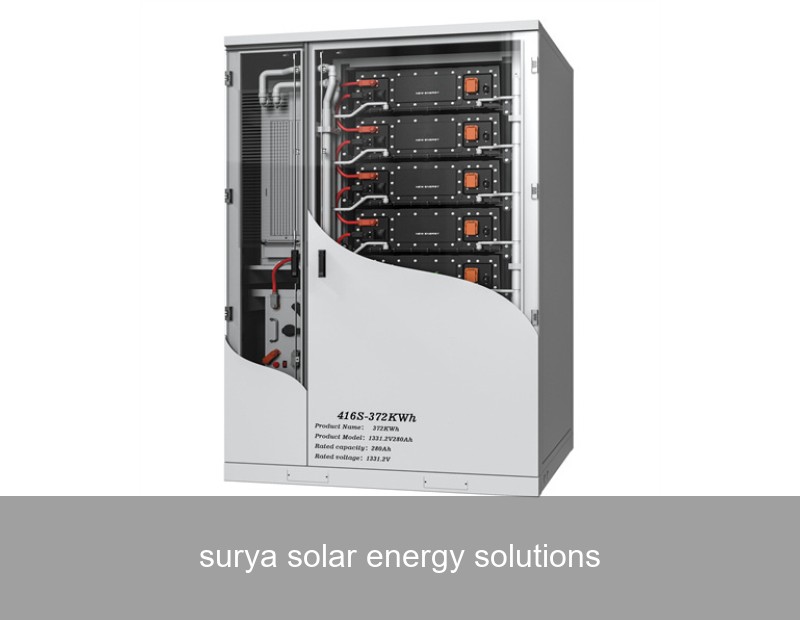
- The Battery Energy Storage System (BESS): The game-changer. This is your personal energy reservoir. Lithium-ion phosphate (LFP) chemistry, known for its safety and long cycle life, has become the commercial and residential standard.
- Energy Management Software (EMS): The maestro. This software learns your usage patterns, weather forecasts, and utility rate schedules to autonomously decide when to store, use, or sell energy.

Image Source: Unsplash (Representative image of a modern solar + storage installation)
The Data That Drives the Storage Revolution
The economic argument for adding storage is now overwhelming. In markets like California (CAISO) and parts of Europe, the difference between peak and off-peak electricity prices can exceed $0.20 per kWh. A study by Lazard shows the levelized cost of storage (LCOS) for lithium-ion systems has fallen by over 70% since 2015. This isn't just about backup power; it's about financial optimization. For a commercial entity, shifting just 500 kWh of daily consumption from peak to stored solar can translate to tens of thousands in annual savings.
Case Study: Sustainability and Savings at Napa Valley's Cresta Vineyard
Let's look at a real-world application. Cresta Vineyard in Napa Valley, California, faced two problems: high energy costs from running refrigeration and irrigation pumps, and a desire to meet rigorous sustainability certifications. Their 250 kW rooftop solar array only covered 60% of their needs due to time-of-use misalignment.
In 2022, they deployed an integrated surya solar energy solution featuring a 500 kWh battery storage system. The results after one year were compelling:
| Metric | Before Storage | After Storage |
|---|---|---|
| Grid Energy Import (Peak Hours) | 85% | 15% |
| Annual Energy Cost | $72,000 | $31,000 |
| On-Site Renewable Consumption | 60% | 94% |
| ROI Period | N/A | 4.2 years |
The system, orchestrated by intelligent software, charges batteries during midday solar excess and discharges during the 4-9 pm peak window. It also provides seamless backup during public safety power shutoffs, protecting valuable inventory. This is a prime example of solar moving from a supplemental role to the primary, controlled energy asset.
Highjoule's Role: Intelligent Energy Orchestration
At Highjoule, we've been at the forefront of this integration since 2005. We understand that a surya solar energy solution is more than a sum of parts. Our HPS Series commercial and industrial battery systems are built with LFP chemistry and feature modular, scalable designs from 100 kWh to multi-MWh configurations. For residential and small business applications, our Home+ energy storage system seamlessly integrates with new or existing solar arrays.
What truly differentiates our solution is the Highjoule Apex Energy Platform. This cloud-based EMS uses predictive AI algorithms to continuously optimize your energy flow. It considers real-time electricity prices (critical in European and deregulated US markets), weather data, and your consumption patterns to maximize self-consumption and ROI. We don't just provide hardware; we provide a guaranteed energy resilience and cost management outcome.

Image Source: Unsplash (Representative image of an energy management dashboard)
Future-Proofing Your Investment: Key Trends
The landscape is evolving rapidly. Here’s what to consider for a future-proof system:
- Vehicle-to-Grid (V2G) & Vehicle-to-Home (V2H): Your EV battery will soon be a bidirectional asset in your energy ecosystem. Ensure your inverter and EMS are V2G-ready.
- Grid Services Participation: In some regions, you can earn revenue by allowing your aggregated storage to provide frequency regulation to the grid. This requires specific grid-interactive certifications.
- Hybrid Inverters: The move is towards multi-mode inverters that can handle solar, battery, and grid input simultaneously, simplifying system design and improving efficiency.
According to the International Energy Agency (IEA), global renewable capacity is set to expand by 2,400 GW by 2028, with solar PV accounting for over half. The integration of storage is what will make this growth stable and valuable.
Your Energy, Your Control
The promise of solar has always been independence. Modern surya solar energy solutions, powered by intelligent storage and software like Highjoule's Apex Platform, are finally delivering on that promise. It transforms a variable resource into a dependable, financial asset. The question is no longer if you should add storage, but how soon you can to start maximizing the return on your solar investment and taking definitive control of your energy future.
What specific energy cost or resilience challenge could an intelligent, stored solar solution solve for your home or business in the next year?
 Inquiry
 Online Chat