


Advances in Solar Energy: Powering a Brighter, More Resilient Future
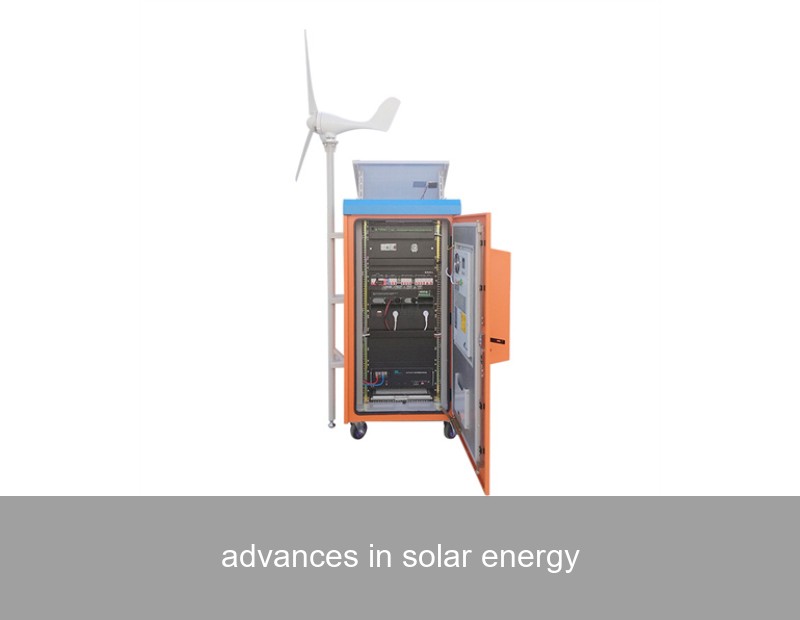
For decades, solar energy has been the poster child for a clean energy future. But if you think it's just about putting panels on a roof, think again. The last few years have witnessed a quiet revolution. The most significant advances in solar energy are no longer just about the panels themselves; they're about how we integrate, manage, and maximize every kilowatt-hour the sun provides. From smarter software to groundbreaking storage solutions, these innovations are transforming solar from an intermittent alternative into a reliable, foundational power source for homes, businesses, and entire communities.
Table of Contents
- Beyond the Panel: The System-Wide Revolution
- The Storage Game-Changer: Making Solar Power Persistent
- The AI Brain: Predictive Analytics and Smart Energy Management
- Case Study: Solar+Storage as a Pillar of Urban Resilience
- Highjoule's Role: Integrating Advances into Reliable Solutions
- The Future Horizon: What's Next for Solar Innovation?
Beyond the Panel: The System-Wide Revolution
While photovoltaic (PV) cell efficiency continues its incremental climb, the real leaps are happening at the system level. Think of it this way: a faster processor is great, but it's the operating system and apps that truly unlock a computer's potential. Similarly, modern solar advancements focus on the entire ecosystem:
- Bifacial Modules: These panels capture sunlight on both sides, increasing yield by up to 25% by utilizing reflected light from the ground or roof surface.
- Microinverters and Power Optimizers: Moving beyond a single inverter for the whole array, these devices optimize performance for each panel individually. This means shade on one panel doesn't drag down the entire system's output.
- Enhanced Durability: New materials and coatings are making panels more resistant to harsh weather, salt spray (crucial for coastal areas), and potential-induced degradation, ensuring a longer, more productive lifespan.
These innovations collectively boost the overall energy harvest and reliability of a solar installation, but they address only part of the challenge: the sun's variability.
The Storage Game-Changer: Making Solar Power Persistent
This is arguably the most critical advance in solar energy. The ability to store excess daytime generation for use at night or during peak demand periods changes everything. It's the difference between a supplemental power source and a primary one.
Modern battery energy storage systems (BESS), particularly those using lithium iron phosphate (LFP) chemistry, offer greater safety, longer cycle life, and falling costs. According to the International Energy Agency (IEA), global battery storage capacity is set to multiply exponentially this decade, with solar PV coupled with storage becoming the new benchmark for new installations.
The integration isn't just physical; it's intelligent. A true solar-plus-storage system doesn't just charge batteries when there's extra power. It uses sophisticated algorithms to decide the most economical and efficient moment to store or discharge energy—for instance, avoiding grid draw during expensive peak tariffs or providing backup power during an outage.

Image Source: Unsplash - A modern solar-plus-storage home installation.
The AI Brain: Predictive Analytics and Smart Energy Management
What if your solar system could predict the weather, your energy consumption, and grid conditions to make perfect decisions? That's the promise of AI and machine learning. These advances in solar energy management turn a collection of hardware into a smart, grid-interactive asset.
- Predictive Generation Forecasting: Using hyper-local weather data, the system can predict solar yield for the next 24-48 hours.
- Load Prediction and Optimization: By learning a home's or factory's energy patterns, the system pre-charges batteries before a typical high-usage period.
- Grid Services Participation: For larger commercial systems, aggregated fleets of solar+storage can provide grid stability services like frequency regulation, creating a new revenue stream for system owners.
Case Study: Solar+Storage as a Pillar of Urban Resilience
Let's look at a real-world application. In California, USA, where public safety power shutoffs (PSPS) due to wildfire risk have become a reality, a community microgrid project in the town of Boulder Creek provides a powerful example.
The project combined a 2.5 MW solar carport array with a 4.5 MWh battery storage system. During a planned PSPS event in late 2023, this microgrid successfully "islanded" from the main grid, providing continuous, clean power to critical facilities—including a fire station, emergency shelter, and a local grocery store—for over 48 hours. Data from the event showed the system met 100% of the critical load demand during the outage, displacing what would have required noisy, polluting diesel generators. This model, replicated across many regions, showcases how advances in solar energy coupled with large-scale storage are directly enhancing community resilience and energy security.
Highjoule's Role: Integrating Advances into Reliable Solutions
At Highjoule, we don't just observe these trends; we build them into the core of our offerings. Since 2005, our mission has been to turn cutting-edge research into dependable, daily power for our commercial, industrial, and residential clients.
Our HPS Series for residential and small commercial applications is a prime example. It's not just a battery; it's an integrated energy management system. It seamlessly pairs with new or existing solar arrays, using adaptive learning to understand energy patterns and optimize for self-consumption, bill savings, or backup readiness. For larger-scale needs, our GridMax BESS solutions provide the muscle and intelligence for industrial facilities and microgrids, enabling them to participate in demand response, arbitrage energy costs, and ensure operational continuity.
We view our systems as the essential bridge between solar generation and reliable consumption. By integrating the latest in power electronics, safe LFP battery technology, and cloud-based monitoring software, we ensure our clients don't just have solar panels—they have a smart, resilient, and efficient energy ecosystem.
| Feature | Traditional Solar PV Only | Advanced Solar+Storage (e.g., Highjoule HPS) |
|---|---|---|
| Power Availability | Daytime only, weather-dependent | 24/7, with stored energy for night/outages |
| Grid Independence | Low - goes offline during grid outages | High - can island and provide backup power |
| Financial Optimization | Limited to offsetting daytime usage | Maximizes self-consumption, can avoid peak tariffs, potential for grid services |
| Grid Impact | Can contribute to evening ramp challenges | Can smooth output and support grid stability |
The Future Horizon: What's Next for Solar Innovation?
The journey is far from over. We're on the cusp of seeing perovskite solar cells move from the lab to potentially offering higher efficiencies at lower costs. Virtual power plants (VPPs), which aggregate thousands of distributed systems like Highjoule's, will become commonplace, acting as a giant, flexible power resource for the grid. Furthermore, the concept of solar-wind-storage hybrid plants is gaining traction, leveraging complementary generation profiles for even more consistent renewable output.

Image Source: Unsplash - A utility-scale solar farm, the foundation for large-scale renewable integration.
The ultimate goal is a fully decarbonized, resilient, and democratized energy system. Every advance in solar energy, from the cell to the cloud, brings us closer. But this leads us to a crucial question for any business or homeowner considering their energy future: In a world of rapid innovation, how do you choose a solution that not only harnesses today's technology but is also ready to adapt to the breakthroughs of tomorrow?
 Inquiry
 Online Chat