


Understanding Industrial Solar Panels Price: A Smart Investment Guide
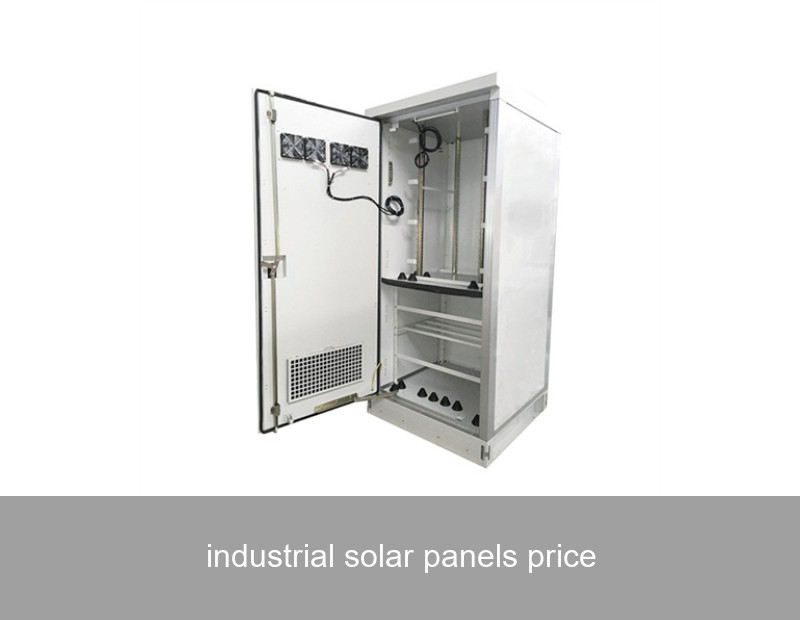
If you're managing a factory, warehouse, or any large-scale operation, you've likely explored cutting energy costs. The conversation inevitably turns to solar. But when you first hear the industrial solar panels price, it can be a significant figure that gives pause. However, viewing this number purely as an expense is where many businesses miss the mark. The true story isn't just the sticker price; it's the long-term value, operational resilience, and strategic energy independence that a well-designed system delivers. As a leader in advanced energy storage, Highjoule has partnered with countless businesses to transform their energy infrastructure from a cost center into a strategic asset. Let's break down what really drives the cost and value of industrial solar power.
Table of Contents
- What Drives the Industrial Solar Panels Price?
- The Real Cost: Looking Beyond the Panels Themselves
- The Highjoule Advantage: Where Energy Storage Changes the Equation
- Future-Proofing Your Investment
What Drives the Industrial Solar Panels Price?
The quoted price per watt for industrial solar panels has fallen dramatically over the past decade, thanks to manufacturing scale and technological improvements. According to the National Renewable Energy Laboratory (NREL), the average cost of solar PV systems has dropped by over 70% since 2010. For industrial installations, you might see panel prices ranging from $0.20 to $0.50 per watt for the modules alone. But here's the crucial point: the panels typically account for only about 15-25% of the total system cost.
So, where does the rest of the investment go? A complete industrial solar solution is an ecosystem:
- Balance of System (BOS): This includes inverters, mounting structures, wiring, and combiner boxes. For large rooftops or ground-mounted arrays, structural engineering and specialized racking can be a significant component.
- Soft Costs: Often the most variable factor. This encompasses engineering design, permitting, interconnection fees, and labor installation. These costs can vary widely based on local regulations, labor markets, and project complexity.
- Logistics & Scale: Transporting hundreds of heavy panels to a site and using cranes for installation adds cost, but economies of scale work in your favor. A 1 MW system will have a lower cost per watt than a 100 kW system.

Image Source: Unsplash - A large-scale industrial solar installation showing racking and panel arrays.
The Real Cost: Looking Beyond the Panels Themselves
Focusing solely on the industrial solar panels price is like buying a car based only on the tire cost. The real metric for business is the Levelized Cost of Energy (LCOE)—the net present value of the total cost of building and operating the system over its lifetime, divided by the total energy produced. A cheaper panel with lower efficiency might have a higher LCOE if it produces less energy over the same roof space.
Consider these operational factors that impact true cost:
| Factor | Impact on Total Value |
|---|---|
| Panel Efficiency & Degradation Rate | Higher efficiency panels generate more power in limited space. A lower degradation rate (e.g., 0.25% vs. 0.5% per year) means significantly more output in year 20. |
| Inverter Performance & Lifespan | Inverters may need replacement during the system's life. High-quality, durable inverters reduce long-term O&M costs. |
| O&M & Monitoring | Predictive maintenance and real-time monitoring prevent revenue loss from downtime. This is a key service component. |
| Energy Rate Structures | In regions with time-of-use rates or demand charges, when you produce and use energy is as important as how much you produce. |
Case Study: Price vs. Performance in Action
Let's look at a real-world scenario from the European market. A mid-sized food processing plant in Germany with a 24/7 operation was facing rising energy costs and carbon reduction targets. They evaluated two proposals: one centered on the lowest industrial solar panels price, and another, a comprehensive solution from Highjoule that integrated high-efficiency bifacial panels with our HPS-Stack battery storage system.
- Option A (Lowest Panel Cost): 500 kW system, low-cost polycrystalline panels. Projected to cover 30% of daytime energy use. No storage. High export to grid at low feed-in-tariff rates.
- Option B (Highjoule Integrated System): 480 kW system, high-efficiency monocrystalline bifacial panels + 250 kWh HPS-Stack storage. Slightly higher upfront cost.
The Outcome After 2 Years: Option B, while initially 18% higher in capital expenditure, delivered far superior financial returns. The Highjoule system, with intelligent energy management, enabled the plant to:
- Reduce grid demand during peak price hours by 95%, slashing demand charges.
- Increase self-consumption of solar energy from ~40% to over 85%.
- Provide backup power for critical refrigeration lines, avoiding spoilage during two brief grid outages.
The payback period for Option B was calculated at 6.2 years, compared to 8.5 years for Option A, thanks to integrated storage optimizing every kilowatt-hour. The International Renewable Energy Agency (IRENA) confirms that hybrid solar-plus-storage projects are increasingly offering the lowest LCOE in many commercial settings.
The Highjoule Advantage: Where Energy Storage Changes the Equation
This case study highlights why Highjoule's approach is different. We don't just sell panels; we provide intelligent, integrated power solutions. The conversation about industrial solar panels price becomes a conversation about total energy management cost.
Our HPS-Stack industrial battery energy storage system (BESS) is the cornerstone of this. It's a modular, containerized solution that seamlessly couples with new or existing solar arrays. By storing excess solar energy generated at midday, your business can use it during expensive evening peaks or during grid outages. This capability turns solar from a intermittent source into a firm, dispatchable power plant for your facility.
Furthermore, our GridSynergy AI Platform optimizes this energy flow in real-time, analyzing weather forecasts, energy prices, and consumption patterns to make autonomous decisions that maximize your return. This is how we help clients transform their energy profile: from passive consumers to active managers of a resilient, cost-effective microgrid.

Image Source: Unsplash - An engineer inspecting a containerized battery storage system similar to Highjoule's HPS-Stack.
Future-Proofing Your Investment
The energy landscape is shifting rapidly. Carbon pricing, volatile fossil fuel markets, and corporate ESG mandates are making renewable energy a strategic necessity. When evaluating an industrial solar investment, ask yourself: Is this system just meeting today's needs, or is it a platform for tomorrow's challenges?
A system designed with Highjoule is built for the future. The modularity of our storage allows for capacity expansion as your needs grow. Our software receives continuous updates to participate in emerging grid service markets, like frequency regulation, which can create new revenue streams. Investing in a robust, smart system today locks in your energy costs for decades and provides a hedge against uncertainty.
So, the next time you receive a quote for an industrial solar installation, look beyond the line item for the industrial solar panels price. Examine the system's intelligence, its integration capabilities, and the partner behind it. Are they offering a commodity, or a comprehensive energy strategy?
What would the financial impact be for your business if you could not only cut your daytime energy bill but also eliminate peak demand charges and ensure production continuity during grid instability? Let's model that scenario together.
 Inquiry
 Online Chat