


How Much Does a Switch Cabinet for Your Energy Storage System Really Cost?
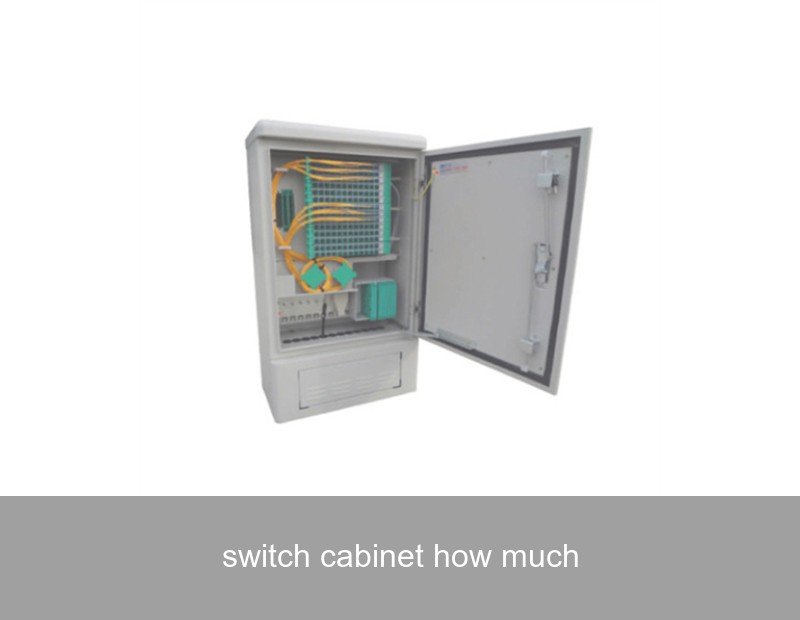
If you're planning a solar-plus-storage project or upgrading your facility's power infrastructure, the question "switch cabinet how much?" is likely on your mind. It's a smart starting point, but the answer is rarely a simple number on a price tag. The cost of a switch cabinet, or more accurately, an integrated power conversion and control system, is deeply intertwined with the performance, safety, and longevity of your entire energy storage investment. As a global leader in advanced energy storage solutions, Highjoule has been designing and optimizing these critical systems since 2005. Let's demystify the real costs involved.
What Exactly Are You Paying For? Beyond the Metal Box
First, let's clarify terminology. In the context of modern Battery Energy Storage Systems (BESS), a "switch cabinet" often refers to the Power Conversion System (PCS) enclosure or the overall system integration cabinet. This is the brain and brawn of your storage system. It doesn't just house switches; it contains:
- Bi-Directional Inverter: Converts DC battery power to AC for your building or grid, and vice-versa for charging.
- Advanced Control System (SCADA/EMS): The intelligence that manages charging/discharging cycles, grid interaction, and safety protocols.
- Safety & Protection Components: Circuit breakers, fuses, contactors, and isolation switches that are critical for NFPA 855 and IEC 62443 compliance.
- Thermal Management: Cooling systems essential for maintaining efficiency and preventing lithium-ion battery degradation.
- Grid Interface & Metering: Hardware that allows seamless, code-compliant connection to the utility grid.
Therefore, when you ask "switch cabinet how much?", you're really asking about the cost of this integrated power management hub. A low initial quote might mean critical corners have been cut in these components, leading to higher costs down the line.
Key Factors That Determine the Final Price
The price for a robust switchgear and PCS solution can range significantly, from tens of thousands to several hundred thousand dollars, depending on your project's scale and needs. Here are the primary drivers:
| Factor | Impact on Cost | Why It Matters |
|---|---|---|
| Power Rating & Scalability | High Impact | A 100 kW cabinet has a different price point than a 1 MW+ containerized solution. Modular designs, like those in Highjoule's H-Series Commercial Systems, may have a higher initial unit cost but offer far lower lifetime cost through easy expansion. |
| Grid Services Capability | Medium to High Impact | Can the system provide frequency regulation or voltage support? Advanced grid-forming inverters add cost but unlock significant revenue streams in markets like the US or Germany, improving ROI. |
| Safety & Certification Level | High Impact | UL 9540, IEC 62619, and CE marking are non-negotiable for insurance and permitting. Proper internal arc-fault protection, fire suppression, and cybersecurity features (essential for IEC 62443) add to the bill of materials but are invaluable. |
| Integration Complexity | Variable Impact | A pre-integrated, factory-tested "all-in-one" solution often provides better long-term value than a disparate collection of components assembled on-site, which can lead to higher soft costs and integration risks. |
The Hidden Cost of "Cheap": Downtime and Degradation
Consider a low-quality inverter with 92% efficiency versus a premium one at 98.5%. Over a 20-year lifespan on a 500 kW system, that efficiency gap represents a massive amount of lost energy you paid for but never used. Similarly, inadequate thermal management can accelerate battery degradation, forcing a premature replacement—the single largest cost in a BESS. The cabinet's intelligence is key to preventing this.
A Real-World Case: Cost vs. Value in Action
Let's look at a recent project in Bavaria, Germany. A medium-sized manufacturing plant wanted to reduce peak demand charges and provide backup power. They evaluated two bids:
- Bid A (Lowest Capex): A basic 250 kW/500 kWh system using a standard inverter cabinet with minimal grid interaction features.
- Bid B (Highjoule Solution): A 250 kW/550 kWh system featuring our integrated H-Stack Power Cabinet with grid-forming technology and advanced cycle management software.
Bid A was approximately 18% cheaper upfront. However, our analysis with the client projected a different 10-year picture:
- Energy Arbitrage & Demand Savings: Both systems provided savings.
- Grid Service Revenue (Prima Regelleistung): Bid B's capability to participate in Germany's primary control reserve market generated an additional €28,000 annually. Bid A could not participate.
- Battery Longevity: Highjoule's adaptive thermal and charge management was projected to extend battery life by 15%, deferring a €60,000+ replacement cost.
Within 4 years, the higher initial investment in the Highjoule switch cabinet and system intelligence had paid for itself, and the client was on a path to significantly greater total savings. This case highlights why the question should shift from "switch cabinet how much?" to "what is the total value over its lifetime?"

Image: A technician performs final checks on an integrated power conversion system. The complexity inside dictates long-term value. (Credit: Unsplash)
The Highjoule Approach: Intelligent Integration for Long-Term Value
At Highjoule, we engineer our power conversion and control cabinets as the central nervous system of a high-performance storage solution. Our products, such as the H-Cube for C&I applications and the H-Flex for microgrids, are designed with Total Cost of Ownership (TCO) as the primary metric.
- Pre-Engineered & Pre-Assembled: Our cabinets arrive site-ready, slashing installation time and risk. This reduces the often-overlooked "soft costs" that can inflate project budgets.
- Software-Defined Intelligence: Our JouleOS™ platform allows the same hardware to adapt to new revenue streams or grid codes via software updates, future-proofing your investment.
- Global Compliance Built-In: Whether your project is in California (requiring UL 9540) or the EU (requiring CE and IEC standards), our systems are designed and certified from the ground up, avoiding costly retrofits.
We partner with you to model your specific energy profile, local utility rates, and incentive structures. This analysis provides a clear financial projection, so you understand not just the cabinet's price, but its payback period and ROI.
Making the Right Investment Decision
So, how much does a switch cabinet cost? As we've seen, the truthful answer is: "It depends on the value you need it to create." To move forward, we recommend you gather the following information about your project:
- Your primary goal (e.g., demand charge reduction, backup power, renewable self-consumption, grid services).
- Your average and peak power loads (in kW).
- Your local utility rate structure and any available storage incentives (like the ITC in the US or various EU state aids).
- Any site-specific constraints (space, electrical infrastructure age, etc.).
With this data, a specialist can model an optimized system. For authoritative, unbiased information on system safety and standards, resources like the NFPA 855 standard page or the IEC's energy storage portal are excellent references.

Image: Modern energy management software, like Highjoule's JouleOS™, turns raw hardware into a strategic asset. (Credit: Unsplash)
Your Next Step
Are you ready to move beyond a simple price quote and explore the specific financial and operational benefits a correctly sized and intelligently controlled energy storage system could bring to your business or community? What would a 20% reduction in your annual energy costs, coupled with enhanced power resilience, mean for your operations?
 Inquiry
 Online Chat