


Hybrid Power Cabinet Cost: How Much for Energy Independence?
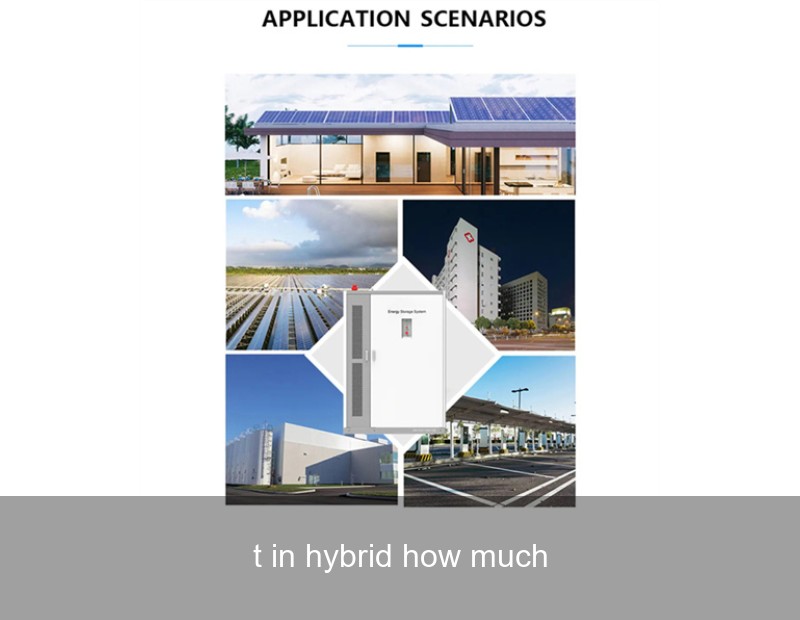
If you're a business owner, facility manager, or homeowner looking to take control of your energy bills and resilience, you've likely asked the question: "tủ điện hybrid how much?" – or in English, "how much does a hybrid power cabinet cost?". It's the crucial starting point. However, the answer is rarely a simple number on a price tag. Think of it like asking, "How much does a house cost?" The range is vast because the value is tailored. A hybrid power cabinet (or hybrid inverter cabinet) is the intelligent brain and heart of a modern energy system, seamlessly integrating solar panels, battery storage, and the grid to optimize your power flow, reduce costs, and provide backup. At Highjoule, with nearly two decades of experience as a global provider of advanced energy storage systems, we believe the right question evolves from "how much does it cost?" to "what value does it deliver for my investment?" Let's break down the real costs and considerations.
The Anatomy of Cost: It's More Than Just a Box
First, let's clarify what we're pricing. A hybrid power cabinet isn't a single appliance; it's a sophisticated system. The core cabinet houses the hybrid inverter, which can simultaneously manage DC power from solar, AC power from the grid, and bi-directional flow from batteries. But the total system cost includes several key components that directly impact performance and price.

Image source: Unsplash. A modern hybrid power cabinet integrates critical components for energy management.
Key Components That Shape Your Investment
- The Hybrid Inverter Itself: This is the core intelligence. Power rating (e.g., 5kW, 10kW, 20kW+) is the primary cost driver. A higher rating supports larger solar arrays and greater simultaneous loads.
- Battery Storage (The Energy Bank): Often the single largest cost component. Capacity (measured in kWh) and battery chemistry (like Lithium Iron Phosphate - LFP, known for safety and longevity) determine price. Highjoule's systems utilize top-tier LFP technology for optimal cycle life and stability.
- Solar PV Array: While sometimes a separate existing investment, new solar panels add to the upfront cost but are essential for generating free fuel for your system.
- Balance of System (BOS): This includes wiring, circuit breakers, safety disconnects, monitoring hardware, and often a critical load panel. Quality here ensures safety and reliability.
- Software & Intelligence: Advanced energy management software (like Highjoule's EnergyOS™) allows for smart scheduling, grid interaction modes, and detailed analytics, adding significant value.
- Professional Installation & Grid Compliance: Labor, electrical work, permitting, and interconnection fees vary greatly by region (e.g., California vs. Texas, or Germany vs. Poland).
Navigating the Price Landscape: From Residential to Commercial
Given these variables, providing ballpark figures requires context. The following table outlines typical price ranges for fully installed systems in the US and European markets, considering average component quality and professional installation. These are estimates; a detailed audit from a provider like Highjoule is essential for accuracy.
| System Scale & Application | Typical Power Rating | Typical Battery Storage | Estimated Installed Cost Range (USD/EUR) | Primary Value Driver |
|---|---|---|---|---|
| Residential Retrofit | 5kW - 10kW | 10kWh - 20kWh | $15,000 - $30,000 | Self-consumption, backup power for essential loads, bill reduction. |
| Small Commercial/Industrial (e.g., workshop, farm) | 20kW - 50kW | 30kWh - 100kWh | $45,000 - $120,000 | Demand charge reduction, operational resilience, time-of-use arbitrage. |
| Medium-Large Commercial/Microgrid (e.g., factory, community) | 100kW+ | 200kWh+ | $200,000+ (highly project-specific) | Grid independence, large-scale energy cost hedging, participation in grid services. |
Important Note: Government incentives can dramatically reduce net cost. In the US, the Investment Tax Credit (ITC) currently covers 30% of system costs. Many European countries offer grants, low-interest loans, or feed-in tariffs. Always factor these in during your planning.
Case Study: The Proof is in the Pudding (and the Power Bill)
Let's move from theory to a real-world example. In 2023, Highjoule partnered with a mid-sized artisanal bakery in Bavaria, Germany. The challenge: soaring electricity prices and the critical need for uninterrupted refrigeration and production lines. A power outage would mean massive spoilage and lost revenue.
The Solution: We installed a tailored hybrid power system featuring a 25kW hybrid inverter cabinet and 80kWh of Highjoule's LFP battery storage, integrated with their existing 40kW rooftop solar.
The Results (12-month period):
- Energy Cost Reduction: Increased solar self-consumption from 35% to over 85%, slashing grid electricity purchases by 60%.
- Demand Charge Management: The system's peak shaving capability reduced the bakery's monthly power demand charges by an average of 40%.
- Resilience: The system provided seamless backup during two grid outages, preventing an estimated €15,000 in lost product and downtime.
- Simple Payback Period: Factoring in the German BAFA federal funding, the calculated payback time for the bakery's investment was under 6 years—a compelling financial and operational decision.

Image source: Unsplash. Commercial operations like bakeries have critical, continuous power needs.
Highjoule's Philosophy: Engineering Value, Not Just Products
At Highjoule, we understand that your hybrid power cabinet is a strategic capital investment. Our approach goes beyond hardware. We offer Highjoule H-Series Hybrid Systems, which are engineered for scalability and intelligence. The integrated EnergyOS™ platform allows you to set operational modes like "Maximize Self-Consumption," "Time-of-Use Optimization," or "Backup Priority," adapting your energy strategy to local tariffs and your specific needs. For commercial clients, our systems can be configured to participate in demand response programs, creating an additional revenue stream—turning your energy asset into a profit center.
Our services include a comprehensive feasibility and ROI analysis, taking the guesswork out of the "how much" question. We model your load profile, local weather, and utility rates to project your savings and resilience gains with high accuracy.
The Critical Questions to Ask Before You Buy
Instead of focusing solely on the lowest upfront price, consider these questions to assess long-term value:
- What is the system's round-trip efficiency? (A higher percentage means less energy is lost in storage and conversion). Highjoule systems typically exceed 95%.)
- What is the warranted cycle life and degradation profile of the battery? (LFP batteries, like ours, often carry warranties for 6,000+ cycles or 10+ years.)
- Is the system scalable? Can I easily add more battery modules or solar capacity later?
- How intelligent is the software? Can it adapt to changing grid rules and my evolving usage patterns?
- What is the total cost of ownership over 15 years? (Include maintenance, potential replacement costs, and projected energy savings.)
Your Next Step Towards a Clear Answer
The journey to answering "tủ điện hybrid how much?" starts with understanding your own energy fingerprint. Every kilowatt-hour you use, the timing of your peak demand, and the cost of your local grid power are unique. The true cost of a hybrid system is not just an invoice amount; it's the net of that investment minus a decade or more of savings, security, and sustainability.
So, we leave you with this: What single energy challenge—be it a volatile bill, a critical process that cannot fail, or a sustainability goal—would solving with a hybrid system make the most significant impact on your operations or peace of mind today?
 Inquiry
 Online Chat