


Telecom Panels: How Much Power Do They Really Need, and How Can Smart Storage Help?
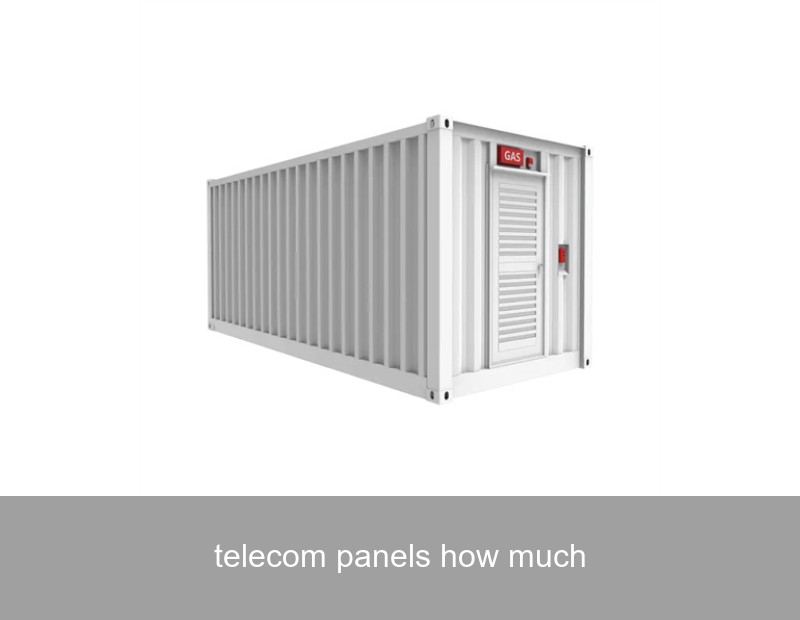
If you're managing telecom infrastructure, you've likely asked yourself, "Telecom panels how much power do they actually consume?" It's a critical question. The answer isn't just a kilowatt-hour figure; it's the key to operational resilience, soaring energy costs, and achieving sustainability goals. In this article, we'll demystify telecom power demands, explore the real-world data, and show how modern energy storage is becoming the backbone of reliable, cost-effective network operations.
Table of Contents
- The Silent Power Hunger of Modern Telecom
- Breaking Down the Consumption: What's Inside a Telecom Panel?
- The Cost Phenomenon: More Than Just Kilowatt-Hours
- A European Case Study: Data from the Field
- Beyond Generators: The Smart Battery Storage Solution
- How Highjoule Powers the Future of Telecom
- How Much Storage Do You Need? A Simplified Guide
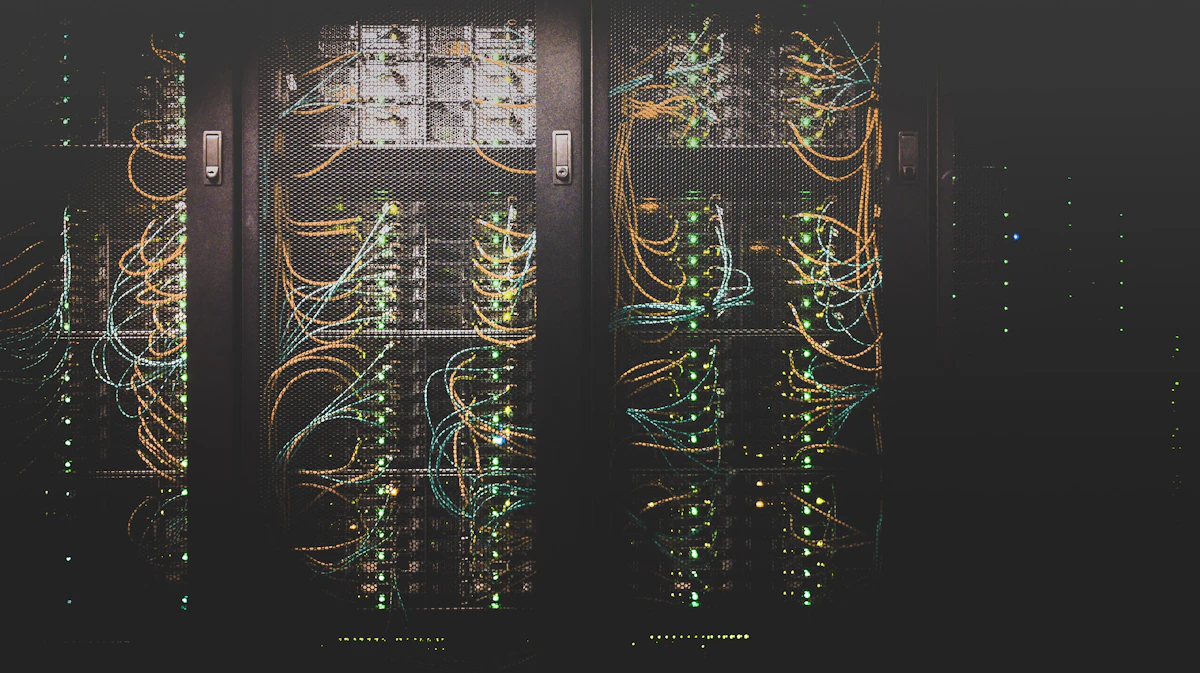
Image Source: Unsplash (Representative image of telecom site)
The Silent Power Hunger of Modern Telecom
Gone are the days when a telecom site was just a simple repeater. Today's panels and cabinets house equipment for 4G/LTE, 5G, fiber backhaul, and edge computing. Each technology layer adds to the base load. A typical remote telecom site can consume between 1.5 kW to 5 kW continuously. That's 36 to 120 kWh every single day. For network operators with thousands of sites, this translates directly into millions in annual energy costs and a massive carbon footprint.
Breaking Down the Consumption: What's Inside a Telecom Panel?
To understand "telecom panels how much" power, let's look inside. The load is usually split into two main categories:
- Radio Equipment (The Largest Share): Baseband units (BBUs), remote radio heads (RRHs), and antennas. 5G equipment, while more efficient per bit, often has a higher absolute power draw due to increased density and processing.
- Support Systems (The Constant Drain): This includes climate control (crucial for electronics), rectifiers, DC power systems, lighting, and security. In many cases, cooling alone can account for 30-40% of the total site energy use.
The challenge is that this demand is non-negotiable. A power outage, even for minutes, can disrupt service for thousands of users and businesses.
The Cost Phenomenon: More Than Just Kilowatt-Hours
The cost isn't just the unit price of electricity. It's a complex equation involving:
| Cost Factor | Impact |
|---|---|
| Peak Demand Charges | Utility bills often charge a premium for your highest power draw in a billing period. Spikes from cooling compressors or backup generators starting can be costly. |
| Diesel Generator Maintenance & Fuel | Generators are expensive to run, pollute, and require frequent servicing. Fuel logistics are a major operational headache. |
| Grid Reliability & Outages | Unstable grids lead to more generator run-time, increasing opex and risking fuel runouts during prolonged outages. |
| Carbon Compliance Costs | Emissions from diesel gensets are increasingly taxed, especially in Europe, adding a direct financial penalty. |
A European Case Study: Data from the Field
Let's examine a real scenario. A major European telecom operator in Southern Italy faced frequent grid instability and high peak tariffs. A cluster of 50 medium-power sites (average load 3.2 kW each) was analyzed.
The Problem: Annual energy costs were inflated by ~€18,000 per site due to peak charges and over 500 hours of diesel generation per site annually, costing €4,200 in fuel and maintenance.
The Intervention: The operator piloted a hybrid power system at 10 sites, integrating lithium-ion battery storage with existing solar panels and generators. The batteries were programmed for peak shaving and as the primary backup source.
The Results (12-month period):
- Diesel Runtime Reduction: 92% decrease. Generators only activated for the longest grid outages.
- Peak Demand Charges: Reduced by an average of 65%.
- Total Site OPEX Savings: €5,100 per site annually.
- Carbon Reduction: ~12 tonnes of CO2 equivalent saved per site.
This case, documented in part by the ETSI EE Committee, highlights the tangible benefits of moving beyond a generator-centric model.

Image Source: Unsplash (Representative image of battery storage monitoring)
Beyond Generators: The Smart Battery Storage Solution
The case study leads us to the modern solution: intelligent battery energy storage systems (BESS). For telecom, it's not just a battery in a box. It's an integrated energy management platform that does the following:
- Primary Backup: Provides instantaneous, silent backup for most common grid outages (2-6 hours), drastically reducing generator use.
- Peak Shaving: Discharges during short periods of high demand to flatten the power draw from the grid, slashing demand charges.
- Renewable Integration: Stores excess solar or wind energy produced on-site for use at night or during cloudy periods, maximizing green energy use.
- Grid Services (Future-Proofing): In some markets, aggregated telecom storage can provide grid stability services, creating a potential new revenue stream.
How Highjoule Powers the Future of Telecom
At Highjoule, we've been designing energy storage solutions for critical infrastructure since 2005. We understand that for telecom, reliability is paramount. Our H-Series Commercial Storage Systems are engineered specifically for harsh, remote environments.
Our solution for telecom operators includes:
- High-Density, LFP Battery Technology: Lithium Iron Phosphate (LFP) chemistry offers superior safety, longer lifespan (10,000+ cycles), and excellent performance in a wide temperature range – perfect for unstaffed shelters.
- Intelligent Energy Manager (IEM): Our proprietary software is the brain. It automatically orchestrates between grid, solar, battery, and generator, prioritizing the most cost-effective and reliable power flow. You can monitor and control entire fleets of sites from a single dashboard.
- Seamless Hybrid Integration: Our systems are designed to easily retrofit into existing sites with generators and/or solar, protecting your prior investments while modernizing your power architecture.
- Global Service & Support: With operations across Europe and North America, Highjoule provides local engineering support, warranty, and lifecycle services to ensure your network stays on air.
By deploying a Highjoule system, you're not just buying a battery; you're investing in a predictable, lower-cost, and more sustainable power platform for the lifecycle of your site.
How Much Storage Do You Need? A Simplified Guide
So, back to your core question: "Telecom panels how much storage is right?" While a full audit is needed, here's a basic framework:
- Identify Your Critical Load (kW): Measure the essential power draw of your radio and support equipment.
- Define Your Backup Duration (hours): Target covering 90% of your grid outages (e.g., 4 hours).
- Calculate Energy Need (kWh): Critical Load (kW) x Duration (hours) = Base Storage (kWh).
- Add Peak Shaving Capacity: If targeting demand charge reduction, add 20-30% more capacity.
Example: A 3 kW critical load needing 4 hours of backup requires a 12 kWh system. For added peak shaving, a 15-16 kWh Highjoule H-Series unit would be ideal.
For deeper insights into grid-edge energy management, the National Renewable Energy Laboratory (NREL) provides excellent resources.

Image Source: Unsplash (Representative image of solar hybrid telecom site)
Ready to Find Your Exact Answer?
The question "telecom panels how much" opens the door to a strategic energy overhaul. What would a 40% reduction in your site's annual energy operating expenditure do for your bottom line? How many tonnes of CO2 could your network avoid while becoming more resilient?
We invite you to start a conversation with Highjoule's technical team. Share your site specifications or energy bills, and let us provide a customized analysis of your potential savings and resilience gain.
 Inquiry
 Online Chat