


Understanding the Different Types of Solar Charge Controllers for Optimal Energy Harvest
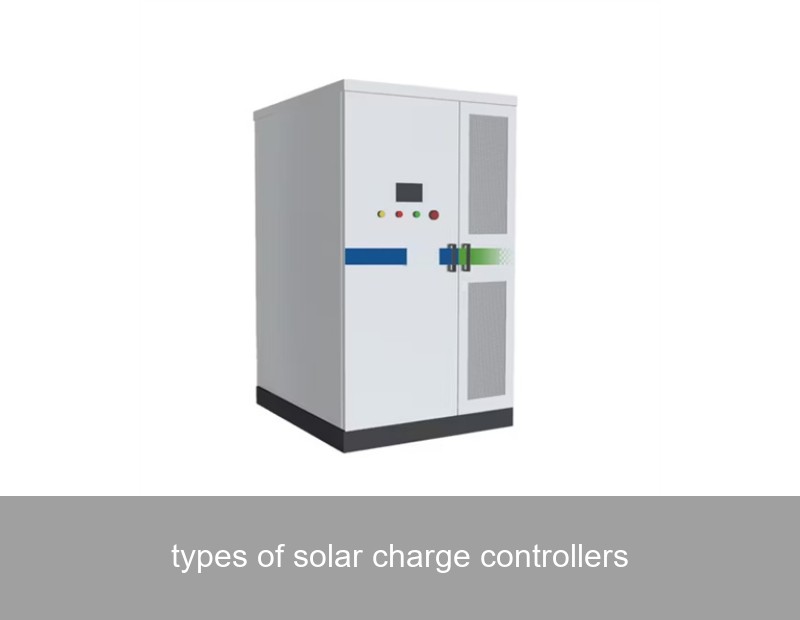
You've invested in solar panels and a battery bank, envisioning energy independence and lower bills. But have you considered the crucial "traffic cop" managing the flow between them? That's your solar charge controller. Choosing between the main types of solar charge controllers—PWM and MPPT—isn't just a technical detail; it's a decision that directly impacts your system's efficiency, payback period, and long-term reliability. In this guide, we'll demystify these devices, using real data and examples, to help you select the perfect brain for your solar power system.
What is a Solar Charge Controller?
Think of a solar charge controller as the essential guardian of your battery's health. It sits between your solar panels and your battery bank, performing three critical jobs: it prevents overcharging (which can cook your batteries), blocks reverse current at night (which can drain them), and, in advanced models, ensures your panels operate at their maximum possible power point. Without it, even the best batteries can fail prematurely.
The Core Types of Solar Charge Controllers
While several technologies exist, the market is dominated by two primary types. Your choice fundamentally shapes your system's performance.
Pulse Width Modulation (PWM) Controllers
PWM controllers are the reliable, cost-effective veterans. They work by slowly reducing the power flowing into the battery as it approaches full charge, essentially connecting the panel directly to the battery through a rapid "on-off" switch. Imagine filling a glass with water by quickly turning the tap on and off to avoid overflow—that's the PWM method.
Best for: Smaller, simpler systems where the solar panel's voltage closely matches the battery bank's voltage (e.g., a 12V panel for a 12V battery). They are robust, affordable, and perfect for applications like RVs, small cabins, or garden lighting where budget is a primary constraint and conditions are ideal.
Key Limitation: PWM controllers cannot convert excess voltage into additional current. If your 20V panel is charging a 12V battery, the extra 8V is essentially dissipated as heat, meaning you lose a significant portion of your panel's potential power, especially in cooler weather when panel voltage rises.
Maximum Power Point Tracking (MPPT) Controllers
MPPT controllers are the high-performance innovators. They don't just connect; they actively interrogate your solar panels to find the exact voltage and current combination (the Maximum Power Point) that yields the most watts. Then, using sophisticated DC-to-DC conversion, they transform that higher voltage into optimal charging current for your battery.

Image Source: Unsplash (Representative image of advanced solar tech)
Best for: Nearly all modern residential, commercial, and off-grid systems, particularly where panel voltage is significantly higher than battery voltage (e.g., string of 60-cell panels for a 24V or 48V battery bank). They excel in non-ideal conditions—cold, cloudy days, or when shading is a concern—often delivering 15-30% more harvested energy compared to PWM in the same setup. This makes them the undisputed choice for maximizing return on investment.
As the U.S. Department of Energy notes, power electronics like MPPTs are key to improving the efficiency and resilience of photovoltaic systems.
Choosing the Right Controller: A Practical Guide
So, which one is right for you? Let's break it down with a comparison and a real-world story.
PWM vs. MPPT: Quick Comparison Table
| Feature | PWM Controller | MPPT Controller |
|---|---|---|
| Efficiency | ~70-80% (matching voltage critical) | ~94-99% (converts excess voltage) |
| Cost | Lower upfront cost | Higher upfront cost |
| System Size | Ideal for small-scale (<200W) | Essential for medium to large-scale |
| Climate Performance | Performance drops in cold weather | Excels in cold, cloudy, or variable weather |
| ROI Perspective | Good for low-budget, simple setups | Higher initial outlay pays back via energy gains |
Real-World Impact: A Case Study from Bavaria
Consider a dairy farm in Bavaria, Germany, with a 10kW rooftop array (using standard 40V panels) charging a 48V battery bank for milking equipment and cooling. A PWM controller would be forced to lower the panel voltage to ~48V, wasting the energy potential. An MPPT controller, however, can harvest power at the panel's optimal point (often around 32-35V per panel in a string) and convert it efficiently to charge the 48V bank.
The Data: Over a year, independent monitoring by the Fraunhofer Institute in similar agri-PV setups showed the MPPT-based system harvested an average of 22% more energy during the critical winter months compared to a PWM-based design. For this farm, that translated to an extra 1,800 kWh annually—enough to power the cooling systems for weeks without grid support, a crucial resilience factor.
Beyond the Basics: Modern Features & Smart Integration
Today's advanced charge controllers, particularly MPPTs, are intelligent hubs. Look for features like:
- Communication & Monitoring: Bluetooth/Wi-Fi connectivity for real-time performance tracking via smartphone apps.
- Programmable Charging Profiles: Tailored algorithms for lithium-ion, lead-acid, or gel batteries to optimize lifespan.
- Load Control: Ability to manage DC outputs for lighting or other loads based on battery voltage or time schedules.
- Grid-Tie & Hybrid Functionality: In systems like those from Highjoule, the controller coordinates seamlessly with inverters and the grid, enabling peak-shaving and backup power strategies.
Highjoule's Integrated Approach: The Controller as a System Conductor
At Highjoule, we view the charge controller not as an isolated component, but as the intelligent conductor within a larger energy orchestra. Our HPS Series Hybrid Power Systems for residential and commercial use integrate high-efficiency, multi-mode MPPT controllers directly into a unified unit with inverters and advanced battery management.

Image Source: Unsplash (Representative image of professional energy system installation)
This means our controllers don't just harvest solar power; they communicate in real-time with our lithium-ion battery packs and cloud-based EnergyOS™ platform. The system can make decisions like: "Should I store this solar energy, use it to power the building now, or sell it back to the grid based on dynamic pricing?" For our commercial clients, this level of integration, managed by our proprietary MPPT algorithms, has boosted overall site energy autonomy by up to 40% compared to using disparate components.
For microgrid and large-scale industrial applications, Highjoule's engineering services design systems that leverage the precision of centralized MPPT control to balance generation from vast solar arrays with complex load demands and storage, ensuring stability and cost-optimal operation every minute of the day.
Final Thoughts: More Than Just a Component
Your choice between the types of solar charge controllers is a choice about the intelligence and ambition of your entire energy system. While PWM offers simplicity, MPPT delivers performance that unlocks the full financial and operational value of your solar investment, especially when integrated into a smart ecosystem like Highjoule's.
Given that panel and battery technology continue to advance, doesn't it make sense to invest in the brain that can keep up and extract every possible watt? What specific energy challenge—be it reliability, cost, or sustainability goals—is guiding your system design, and how might the right controller be the key to solving it?
 Inquiry
 Online Chat