


Why Your Energy Storage System Needs a Temperature Controlled Cabinet
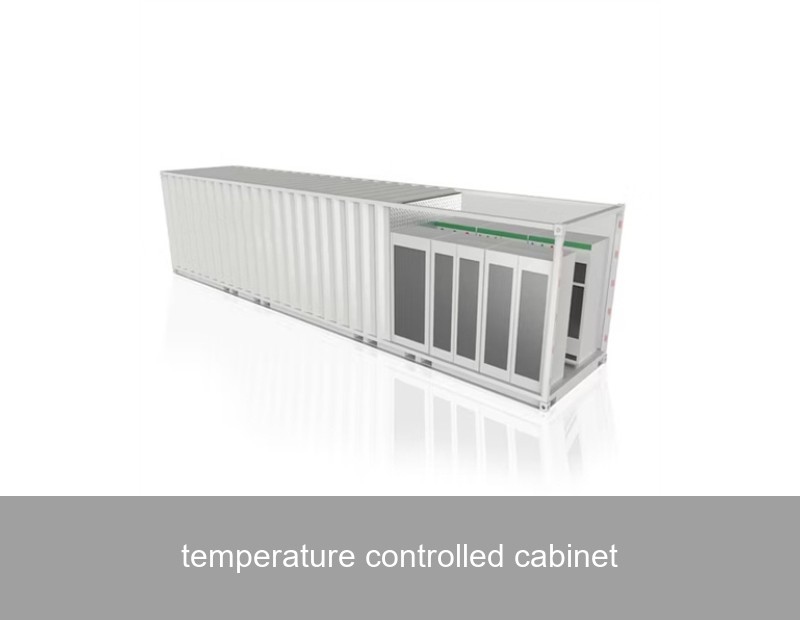
As the world accelerates its shift to renewable energy, a critical yet often overlooked component is quietly determining the success or failure of entire power systems: the humble temperature controlled cabinet. For commercial, industrial, and utility-scale battery energy storage systems (BESS), maintaining optimal thermal conditions isn't just about efficiency—it's about safety, longevity, and return on investment. Let's explore why precise thermal management is the unsung hero of the energy transition and how it protects your most valuable energy assets.
Table of Contents
- The Silent Threat: Temperature's Impact on Battery Health
- The Data: How Temperature Swings Degrade Performance
- Case Study: A German Solar Farm's Thermal Challenge
- Beyond Basics: The Anatomy of a Modern Thermal Cabinet
- The Highjoule Approach: Integrated Intelligence for Thermal Stability
- Future-Proofing Your Storage: Key Selection Criteria
The Silent Threat: Temperature's Impact on Battery Health
Imagine your battery storage system as a living, breathing entity. Just as extreme heat or cold stresses the human body, temperature fluctuations cause profound stress on lithium-ion cells. In a standard enclosure without climate control, internal temperatures can soar on a sunny day or plummet during a winter night. This isn't merely an inconvenience. High temperatures accelerate chemical reactions within the battery, leading to faster degradation of electrolytes and electrode materials. Conversely, low temperatures increase internal resistance, slashing available power and capacity. Inconsistent thermal environments create hotspots, leading to cell imbalance—a primary factor in reducing overall pack lifespan and, in worst-case scenarios, creating safety hazards.

Image Source: Unsplash - Professional inspecting industrial energy storage units.
The Data: How Temperature Swings Degrade Performance
The numbers tell a compelling story. Research from the U.S. Department of Energy's National Renewable Energy Laboratory (NREL) indicates that operating lithium-ion batteries at 30°C (86°F) versus a recommended 20°C (68°F) can double the rate of capacity fade. Another study published in the Journal of Energy Storage found that for every 10°C increase above 25°C, the cycle life of a typical Li-ion cell is halved. Let's translate that to your bottom line: a system designed for a 10-year lifespan might only deliver 5-7 years of reliable service without proper thermal management, destroying your project's financial model.
| Average Operating Temperature | Estimated Cycle Life (vs. Baseline at 20°C) | Potential Capacity Loss After 2 Years |
|---|---|---|
| 10°C (50°F) | 85% | 10-15% |
| 20°C (68°F) - Ideal | 100% (Baseline) | 5-8% |
| 30°C (86°F) | 50-60% | 20-25% |
| 40°C (104°F) | 30% or less | 35%+ |
Case Study: A German Solar Farm's Thermal Challenge
Consider a real-world example from our work in Europe. A 5 MW solar farm in Bavaria, Germany, integrated a 2 MWh battery storage system in 2021 to provide grid frequency regulation and store midday solar peaks. Initially, the batteries were housed in standard, passively ventilated containers. Within 18 months, operators noticed a 22% greater-than-expected divergence in state-of-health (SoH) between battery modules. Data logging revealed that on summer afternoons, the cabinet interior temperature reached 38°C (100°F), while winter nights saw it drop to -5°C (23°F).
The solution wasn't just adding a bigger air conditioner. Highjoule engineers conducted a full thermal audit and designed a retrofit temperature controlled cabinet system with zoned liquid-assisted cooling and heating. The key was predictive thermal management, where the system used weather forecast data and charge/discharge schedules to pre-condition the battery environment. The results? After the upgrade:
- Temperature stability maintained within ±2°C of the 22°C setpoint.
- Cell imbalance reduced by over 70%.
- Projected cycle life was restored to original specifications, securing the asset's long-term revenue.
This case highlights that thermal management is a dynamic, intelligent challenge, not a simple HVAC install.
Beyond Basics: The Anatomy of a Modern Thermal Cabinet
So, what separates a basic metal box from a true temperature controlled cabinet? It's an integrated system of several key components:
- Insulated Enclosure: High-R-value walls and doors to minimize external thermal influence.
- Dynamic Climate System: Combining efficient compressors for cooling with low-energy radiant heaters for cold climates.
- Distributed Sensing: An array of temperature, humidity, and potentially gas sensors at the module, rack, and cabinet level.
- Intelligent Control Unit: The brain that processes sensor data, integrates with the Battery Management System (BMS), and adjusts cooling/heating output proactively.
- Airflow Management: Designed ducting and fans to eliminate hotspots and ensure uniform temperature distribution across all cells.
The Highjoule Approach: Integrated Intelligence for Thermal Stability
At Highjoule, we don't view the cabinet as a separate accessory. Since 2005, our philosophy has been to design the thermal management system as a core, integrated function of the overall energy storage solution. Our Highjoule H Series commercial storage systems and MicroGrid Sentinel platforms feature our proprietary Adaptive Thermal Core™ technology.
This system goes beyond reaction. By leveraging data from the BMS and power conversion system, it anticipates heat generation from upcoming charge/discharge cycles. For instance, if the system is scheduled to deliver a large power burst for grid support at 2 PM, the thermal system begins pre-cooling at 1:30 PM to ensure cells start at the optimal temperature. This reduces stress and improves efficiency. For harsh environments, from the sunbelt of the United States to the Nordic regions, our cabinets are rated for extreme outdoor operation, ensuring your investment is protected year-round.

Image Source: Unsplash - Advanced thermal management components inside an industrial unit.
Future-Proofing Your Storage: Key Selection Criteria
When evaluating a temperature controlled cabinet for your energy storage project, whether for a hospital's backup power, a factory's demand charge management, or a community microgrid, ask these critical questions:
- Is the thermal system proactive or just reactive? Look for predictive features that use operational data.
- What is the temperature uniformity specification? A delta of more than 3-5°C across cells can be problematic.
- How energy-efficient is the climate system itself? A poorly designed cooler can consume a significant portion of the stored energy, undermining system efficiency. Our Highjoule systems, for example, use variable-speed, high COP (Coefficient of Performance) compressors to minimize this parasitic load.
- Does it integrate seamlessly with the BMS? Isolated systems create data silos and missed optimization opportunities.
- What are the long-term service and maintenance requirements? Robust design should minimize filter changes and mechanical service intervals.
Your System's Guardian
Think of a premium temperature controlled cabinet as the guardian of your energy storage investment. It ensures that the expensive battery cells inside operate in their "comfort zone" day after day, year after year. This translates directly into more reliable power, lower lifetime costs, and a safer installation. In an industry where margins and performance are scrutinized, overlooking this component is a risk few can afford.
As you plan your next renewable integration or storage expansion, consider this: Is your thermal management strategy an afterthought, or is it a foundational pillar of your system's design? What hidden costs might lurk in your current setup if cells are aging 20% faster than anticipated? We invite you to connect with our thermal engineering specialists for a personalized assessment of your project's needs.
 Inquiry
 Online Chat