


Paneles Solares Materiales: Choosing the Right Foundation for Your Energy Future
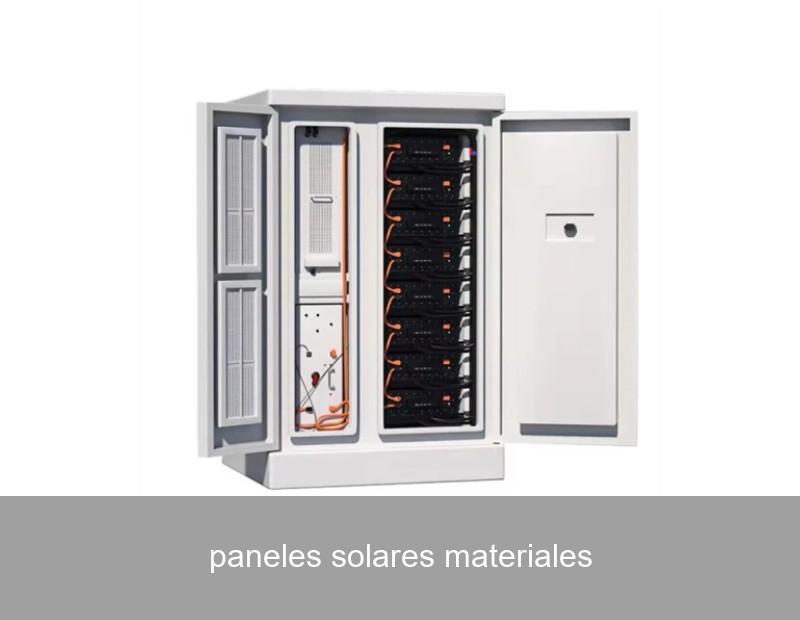
When you look at a solar panel, what do you see? A sleek, glassy surface harnessing the sun's power, right? But the real magic—and the key to its performance, cost, and longevity—lies beneath the surface. The choice of paneles solares materiales (solar panel materials) is the most critical decision in your renewable energy journey. It's the foundation that determines how much energy you'll generate, how long your system will last, and the return on your investment. Whether you're a homeowner in California, a factory manager in Germany, or planning a microgrid in Spain, understanding these materials is your first step toward energy independence. Let's demystify what your solar panels are really made of.
Silicon: The Undisputed Champion
Over 95% of the solar panels installed today are based on silicon, a material derived from sand. Its reliability, efficiency, and well-understood manufacturing process make it the industry standard. But not all silicon is created equal. The crystal structure is what makes the difference.
Monocrystalline Silicon (Mono-Si)
Imagine a single, perfect crystal of silicon grown into a cylindrical ingot and then sliced into ultra-thin wafers. That's monocrystalline. These cells are recognizable by their uniform dark color and rounded edges.
- Efficiency: Highest on the market, typically 20-23%. This means they convert more sunlight into electricity in a given space.
- Lifespan & Performance: Known for exceptional longevity (often 25+ years with performance warranties) and better performance in low-light conditions.
- Cost: Generally the most expensive due to the energy-intensive production process.
- Best For: Rooftops with limited space, projects where maximizing output per square meter is crucial, and long-term investment focus.
At Highjoule, our premium residential and commercial systems often utilize high-efficiency monocrystalline panels. For instance, our Highjoule H Series commercial storage-integrated solutions pair tier-one monocrystalline panels with our intelligent battery systems, ensuring every watt of that high-efficiency generation is captured and used optimally, even after the sun sets.
Polycrystalline Silicon (Poly-Si)
These cells are made by melting multiple silicon fragments together. The result is a wafer with a distinctive blue, speckled appearance due to the many crystals.
- Efficiency: Slightly lower, typically in the 15-18% range.
- Lifespan & Performance: Still very robust with a long operational life, though slightly less efficient in heat and low light compared to mono.
- Cost: More affordable to produce, offering a cost-effective entry point.
- Best For: Larger installations where space is less of a constraint, and the primary goal is achieving a favorable balance between upfront cost and energy output.
Thin-Film: The Flexible Contender
This category ditches the rigid silicon wafer. Instead, photovoltaic material is deposited in thin layers onto a substrate like glass, plastic, or metal. Common types include Cadmium Telluride (CdTe), Copper Indium Gallium Selenide (CIGS), and Amorphous Silicon (a-Si).
- Efficiency: Generally lower than crystalline silicon (10-13% for commercial modules), though lab records are impressive.
- Appearance & Flexibility: Can be lightweight, flexible, and have a uniform, often black appearance. Some can be integrated directly into building materials (BIPV).
- Performance: Can have better performance in high temperatures and shaded conditions compared to some silicon panels.
- Best For: Large-scale utility projects (due to lower cost per watt in mass production), curved surfaces, portable applications, and specific architectural integration.
It's worth noting that material science is rapidly evolving. Organizations like the National Renewable Energy Laboratory (NREL) continuously track record efficiencies for all these technologies, pushing the boundaries of what's possible.
Beyond the Cell: The Unsung Heroes
The photovoltaic cell is the star, but the supporting cast is vital for durability and safety. Quality materials here separate a reliable system from a problematic one.
| Component | Material & Function | Why It Matters |
|---|---|---|
| Encapsulant (EVA, POE) | A polymer layer (like Ethylene-Vinyl Acetate) that seals and protects the cells from moisture and physical damage. | Prevents corrosion and delamination. High-quality encapsulants resist yellowing from UV exposure, maintaining light transmission and efficiency over decades. |
| Backsheet | A multi-layered polymer or glass sheet on the panel's back. | Provides electrical insulation, moisture barrier, and UV protection. A poor backsheet can crack, leading to safety hazards and power loss. |
| Frame (Aluminum) | Anodized aluminum alloy. | Provides structural rigidity, enables secure mounting, and protects the panel edges. Corrosion-resistant coating is essential for coastal or harsh environments. |
| Glass (Tempered) | Low-iron, tempered glass on the front. | Must be highly transparent, extremely strong to withstand hail and wind loads, and have anti-reflective coatings to maximize light capture. |
This holistic focus on all paneles solares materiales is embedded in Highjoule's product philosophy. We don't just source panels; we engineer complete systems. Our Intelligent Energy Platform pairs rigorously vetted, high-durability panels with our advanced battery storage and AI-driven energy management software. This ensures that the quality of your initial solar harvest is matched by the intelligence of its storage and usage, protecting your investment for the long term.
Case Study: Material Choices in Action - A German Industrial Rooftop
Let's look at a real-world example from Bavaria, Germany. A mid-sized automotive parts manufacturer had a vast, flat rooftop (approx. 10,000 m²). Their goals: maximize self-consumption of solar energy to offset high industrial electricity rates, achieve a strong ROI, and ensure minimal maintenance for 25 years.
- Challenge: Space was abundant, but the budget was calculated per installed kilowatt-peak (kWp). High-temperature performance during summer peaks was also a consideration.
- Material & System Solution: The project utilized high-efficiency monocrystalline bifacial panels. These panels capture light on both sides, increasing yield by reflecting light from the white, reflective rooftop membrane. The system was coupled with a Highjoule C.I. Battery Storage Suite to store excess midday production for use during evening production shifts.
- Data & Outcome:
- Total System Size: 1.2 MWp solar PV.
- Battery Storage: 800 kWh Highjoule lithium-iron-phosphate (LFP) battery system.
- Result: The system now covers over 40% of the facility's annual electricity demand. The intelligent energy management system increased self-consumption of solar power from an estimated 35% to over 70%, dramatically reducing grid reliance. The robust material choice ensures stable output even on hot days, and the LFP battery chemistry was selected for its safety, longevity (over 6,000 cycles), and stable performance—critical for an industrial setting.

Image Source: Unsplash (Representative image of an industrial solar installation)
The Future of Solar Materials: Perovskites and Tandems
The innovation in paneles solares materiales is accelerating. The most promising development is perovskite solar cells. These are synthetic materials with a unique crystal structure that can be printed using low-cost processes. Their potential lies in achieving high efficiencies very quickly in the lab. The real game-changer is the "tandem cell," where a perovskite layer is stacked on top of a traditional silicon cell. The perovskite captures different light wavelengths, allowing the tandem cell to surpass the theoretical efficiency limit of silicon alone. Research from institutions like Oxford PV is bringing this technology closer to commercialization. While still emerging, this highlights a future where material science will continue to drive down costs and push efficiencies higher.
Choosing the Right Material for You: It's a System Decision
So, which paneles solares materiales are best? The answer, as you might now guess, is: "It depends on your unique energy profile."
- For most residential and commercial projects in Europe and the US, high-efficiency monocrystalline silicon offers the best performance-to-space ratio and long-term value, especially when paired with storage.
- For large, unshaded ground-mounted or rural installations, the cost advantage of polycrystalline or specific thin-film technologies might be decisive.
- The critical insight is that the panel is just one component. Its true value is unlocked by how it integrates with inverters, batteries, and energy management software.
This is where a holistic provider like Highjoule makes the difference. We don't just sell panels; we provide an integrated Power Resilience Solution. From assessing your site and energy consumption patterns to designing a system with optimally matched materials, and then managing that energy flow with our software for decades, we ensure every material choice serves your ultimate goal: clean, reliable, and affordable power.
What specific energy challenge does your home or business face—is it peak shaving demand charges, achieving backup power resilience, or simply maximizing your ROI on a sunny rooftop? Let's explore how the right combination of advanced paneles solares materiales and intelligent storage can be tailored to solve it.
 Inquiry
 Online Chat