


What Makes the Best Solar Panel in the World? Beyond the Spec Sheet
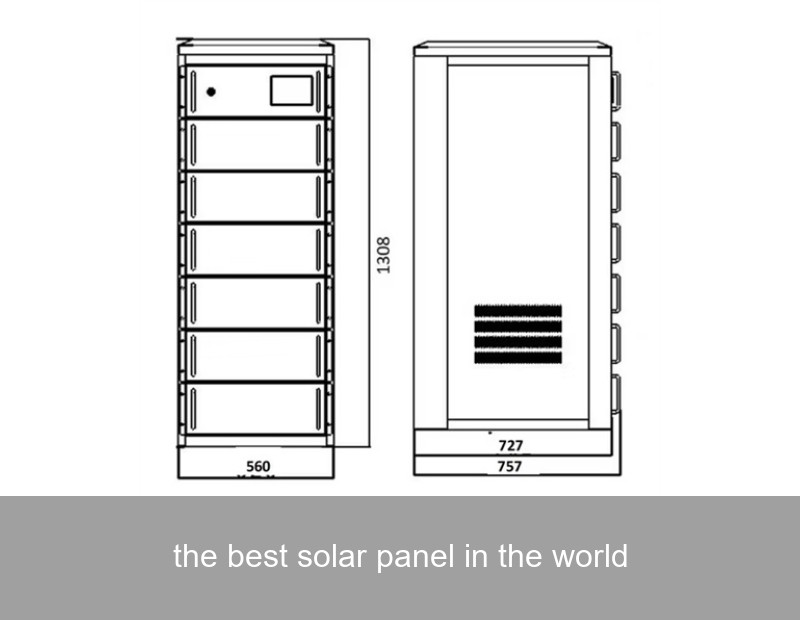
If you're researching solar energy, you've likely asked the ultimate question: "What is the *best* solar panel in the world?" It's a natural starting point. However, as a product technology expert at Highjoule, I often explain that chasing a single "best" panel is like searching for the world's best car—it entirely depends on your needs, climate, and long-term energy goals. The true pinnacle of solar performance isn't just about a panel's peak efficiency in a lab. It's about a holistic system that delivers reliable, intelligent, and sustainable power for decades. Let's explore the key factors that define world-class solar performance and how the right energy storage system unlocks its full potential.
Table of Contents
The Phenomenon: More Than Just a Name
The solar market is filled with impressive claims from manufacturers. Terms like "premium," "tier-1," and "high-efficiency" are everywhere. But the phenomenon we observe is that the highest customer satisfaction and system performance rarely come from the panel alone. They result from a perfect synergy: robust panels paired with intelligent energy management. A panel is a generator; its value is realized only when the energy it produces is captured, stored, and used optimally. This is where the conversation shifts from a component to an integrated power solution.
The Data: Efficiency, Degradation, and Real-World Yield
Let's break down the technical hallmarks of top-tier solar panels. These are the non-negotiable benchmarks we at Highjoule consider when designing systems for our clients in Europe and North America.
Key Performance Indicators (KPIs) of Elite Panels
| KPI | What It Means | World-Class Benchmark |
|---|---|---|
| Conversion Efficiency | The percentage of sunlight converted to electricity. | 22% and above for monocrystalline panels. |
| Annual Degradation Rate | How much output decreases each year. | 0.25% - 0.5% (vs. industry standard of 0.7%). |
| Performance Warranty | Guaranteed power output after 25-30 years. | 92% output after 25 years. |
| Temperature Coefficient | How well performance is maintained in heat. | -0.26% /°C or better (closer to zero is better). |
These numbers are crucial. For instance, a lower degradation rate means significantly more energy over the system's lifetime, which is critical for commercial ROI. You can explore detailed testing from independent laboratories like the National Renewable Energy Laboratory (NREL) for ongoing comparisons.

Image: High-efficiency panels form the foundation, but intelligence completes the system. (Source: Unsplash)
The Case Study: A German Industrial Park's Journey
Let's move from theory to practice with a real example from Southern Germany. A mid-sized manufacturing plant installed what were considered among the "best" solar panels available in 2020—high-efficiency monocrystalline units with a 22.8% rating. Yet, by 2022, they were frustrated. Despite excellent panels, they were still exporting over 40% of their solar energy to the grid at low feed-in tariffs during peak production and drawing expensive power from the grid in the evening.
The Solution & The Data: In 2023, they partnered with Highjoule to integrate a smart Battery Energy Storage System (BESS). We deployed our H-Joule Cube Industrial series, a modular, containerized storage system with advanced energy management software. The results after one year:
- Self-Consumption Rate increased from ~60% to 94%.
- Grid Dependence during peak tariff hours dropped by 80%.
- The overall ROI period for the entire solar + storage system was reduced by an estimated 4 years.
This case clearly shows that the "best" panel's value was latent until it was part of an optimized system. The Highjoule BESS acted as a force multiplier, capturing every possible kilowatt-hour and allowing the business to control its energy costs predictably.
The System Architect: Where the "Best" Panel Truly Shines
This leads to my core expertise. At Highjoule, we view the solar panel as a critical component within a broader energy ecosystem. Our role is to be the system architect. For residential clients, our H-Joule Home systems seamlessly integrate with premium solar arrays, using AI-driven software to learn consumption patterns and store solar energy for use at night or during outages, maximizing every watt from those high-quality panels.
For commercial and industrial (C&I) applications, like the German case, our H-Joule Cube and Megapack solutions provide grid-scale storage and stability. They turn a solar installation from a simple cost-saving measure into a strategic energy asset that can participate in demand response, provide backup power, and smooth out energy costs amidst volatile markets. A panel's high temperature coefficient is great, but our thermal management and system control ensure the *entire* system operates at peak efficiency, even on the hottest or cloudiest days.

Image: A containerized BESS, like Highjoule's H-Joule Cube, turns solar power into a reliable 24/7 energy source. (Source: Unsplash)
The Highjoule Integration Advantage
When you choose Highjoule, you're not just buying a battery. You're acquiring an intelligent layer that includes:
- Adaptive Energy Management Platform: Software that forecasts weather, energy prices, and consumption to make real-time decisions on charging, discharging, and grid interaction.
- Multi-Layer Safety Architecture: From cell-level to system-level monitoring, ensuring the longevity and safety of your entire investment.
- Scalable Design: Start with what you need and expand storage capacity as your business or energy goals grow, protecting your initial panel investment.
The Future-Proof Question
So, before you fixate on finding the single "best solar panel in the world," consider this broader perspective. The most future-proof, resilient, and economically sound energy solution is an integrated one. It combines premium generation with intelligent storage and control.
What energy independence goal—be it for your home, business, or community microgrid—could you achieve if your solar system wasn't limited by the sun's schedule, but empowered by round-the-clock intelligent storage?
 Inquiry
 Online Chat