


The Economics of Battery Energy Storage: Unlocking Value Beyond Backup Power
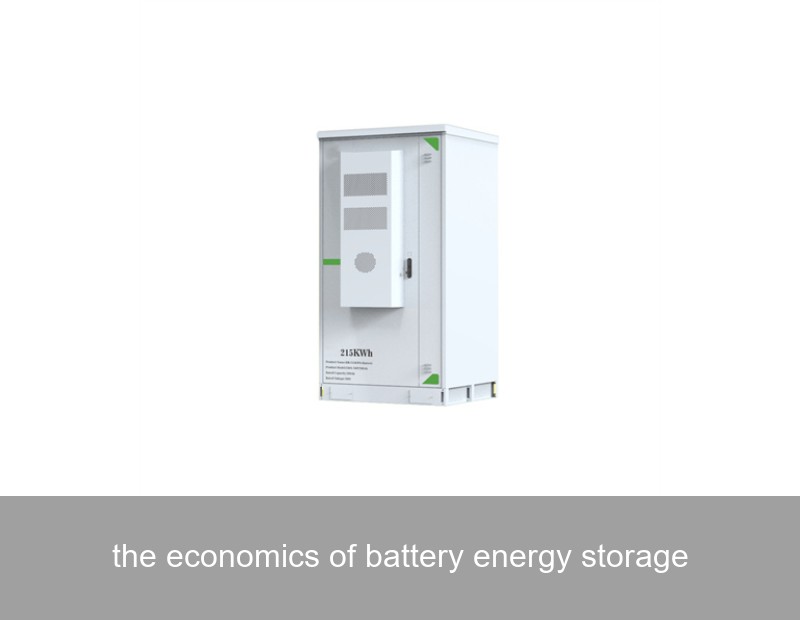
When you hear "battery energy storage," what comes to mind? For many, it's an emergency backup system or a necessary companion for solar panels. While that's true, this view misses the bigger picture. Today, the economics of battery energy storage (BESS) have evolved into a compelling financial story. A modern BESS is not just a cost center; it's a versatile asset that can generate multiple streams of value, reduce energy bills, and provide critical grid services. Let's dive into how this technology transforms from a capital expense into a strategic investment.
The Phenomenon: Why Everyone is Talking About BESS
The global shift towards renewable energy is undeniable. Wind and solar are now the cheapest sources of new electricity in many markets (IRENA, 2023). But this success creates a new challenge: intermittency. The sun doesn't always shine, and the wind doesn't always blow. This variability causes price volatility and strains grid stability. Enter the battery. Advanced storage systems act as a buffer, soaking up excess energy when it's plentiful and cheap, and releasing it when it's scarce and expensive. This fundamental ability to shift energy across time is the cornerstone of its economic value.

Image: A solar farm integrated with battery storage systems, highlighting the synergy between generation and flexibility. Source: Unsplash
The Data: Unpacking the Revenue Stack
The profitability of a BESS hinges on its ability to "stack" multiple value streams. Think of it as a multi-layered cake, where each layer adds to the overall return on investment. Here are the primary layers in the economic stack:
| Value Stream | How It Works | Primary Market |
|---|---|---|
| Arbitrage | Buying electricity at low prices (e.g., midday solar peak) and selling it at high prices (evening demand peak). | Commercial & Industrial, Energy Trading |
| Peak Shaving / Demand Charge Reduction | Using stored energy to reduce power draw from the grid during short periods of highest demand, slashing costly demand charges on utility bills. | Commercial & Industrial, Large Residential |
| Frequency Regulation | Providing ultra-fast response to grid signals to maintain the grid's frequency at 50/60 Hz, a premium service paid by grid operators. | Utility-Scale, Large C&I |
| Backup Power & Resilience | Providing uninterrupted power during grid outages, avoiding operational downtime and data loss. | All Sectors (Data Centers, Hospitals, Homes) |
| Renewable Integration | Storing excess solar/wind generation for later use, increasing self-consumption and reducing curtailment. | Residential with Solar, Renewable Plants |
The exact mix and profitability depend heavily on local market rules, utility rate structures, and the specific capabilities of the storage system itself.
Case Study: A Supermarket Chain in Germany
Let's look at a real-world example. A major supermarket chain in Germany with high refrigeration loads faced two problems: high energy costs and a desire to improve sustainability. They deployed a 500 kWh / 750 kW battery storage system at one of their distribution centers. Here's the economic impact over one year:
- Demand Charge Reduction: By strategically discharging the battery during the 15-minute interval of peak grid demand each month, they reduced their peak draw by 22%. This alone saved them €28,000 annually.
- Arbitrage: Using day-ahead market prices, the system automatically charged during low-price periods (often at night) and discharged during high-price periods. This added €9,500 in revenue.
- Primary Control Reserve (PCR): The system participated in Germany's frequency regulation market, earning €11,200 for its fast response capabilities.
Total Annual Value: €48,700. With a project cost of approximately €250,000, the simple payback period was just over five years—and the system has a projected lifespan of 15+ years. This case, inspired by real projects in the European market, clearly demonstrates the power of value stacking. The battery paid for itself by being a financial Swiss Army knife.
Expert Insights: Key Considerations for a Profitable Project
Not all storage projects are created equal. To ensure strong economics, you must focus on:
1. Technology and Degradation
Lithium-ion chemistry dominates, but not all batteries are the same. Cycle life, depth of discharge (DoD), and thermal management directly impact longevity and total lifetime throughput. A cheap battery that degrades quickly is a poor investment.
2. Intelligent Software and Forecasting
The hardware stores energy, but the software unlocks value. Advanced energy management systems (EMS) use AI and price forecasting to decide in real-time: should I sell to the grid, shave my peak, or provide frequency regulation? This decision engine is the brain of your economic returns.
3. Market Access and Regulations
Can your system participate in wholesale markets or grid service programs? Policies like FERC Order 841 in the U.S. have opened doors, but interconnection rules and market design vary wildly. Understanding the local regulatory landscape is crucial.
How Highjoule Powers Profitable Storage Economics
This is where expertise matters. Since 2005, Highjoule has been at the forefront of designing systems that maximize the economic return for our clients. We don't just sell batteries; we deliver optimized energy assets.
Our HPS Series for commercial and industrial applications is engineered for high cycle life and efficiency, ensuring every stored kilowatt-hour translates to maximum financial value. More importantly, our proprietary OptiCore AI Energy Management Platform is the key. It continuously analyzes weather data, energy prices, load patterns, and grid signals to make optimal, revenue-maximizing decisions every second of the day.
For larger-scale needs, our GridMax Utility-Scale BESS solutions are built with utility-grade components and come with integrated bidding software for seamless participation in energy and ancillary service markets. From initial feasibility studies and financial modeling to system design, installation, and long-term performance monitoring, Highjoule provides an end-to-end partnership to ensure your storage project delivers on its economic promise.

Image: An engineer monitoring a sophisticated energy storage control system. Source: Unsplash
Looking Ahead: The Evolving Equation
The economics of battery energy storage are getting stronger. Battery pack prices have fallen over 90% since 2010 (BloombergNEF, 2023), while grid volatility and the need for flexibility are rising. Furthermore, new applications like electric vehicle charging support and virtual power plants (VPPs) are emerging as additional value layers.
As you consider the role of energy storage for your business or community, the question is no longer "Can we afford it?" but rather, "What is the cost of not having this flexible, revenue-generating asset on our balance sheet?" What specific energy cost or resilience challenge could a smart storage system solve for you today?
 Inquiry
 Online Chat