


Understanding Micro Energy Storage Cabinet Price: A Smart Investment for Energy Independence
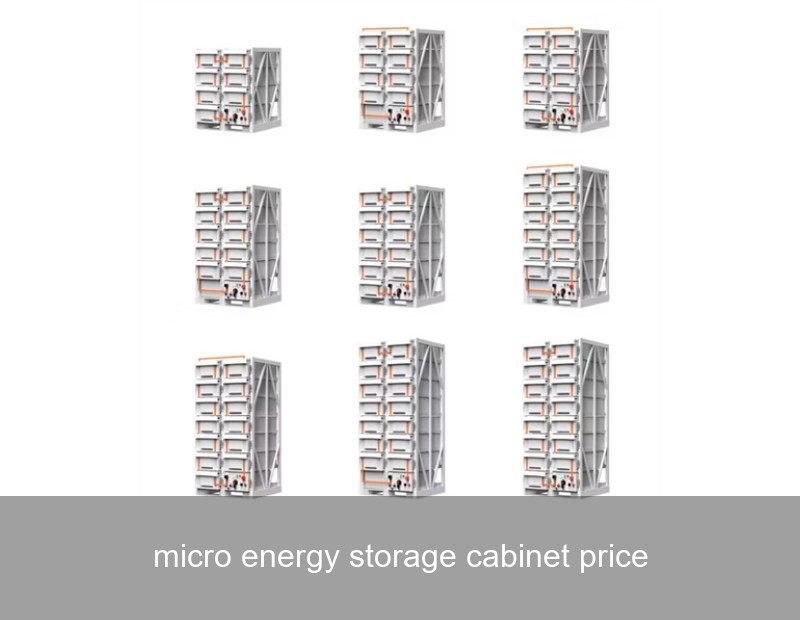
If you're a business owner, facility manager, or even a homeowner with a keen eye on sustainability and the bottom line, you've likely heard the buzz about decentralized energy storage. At the heart of this trend is the micro energy storage cabinet—a compact, powerful system designed to store electricity locally. But when it comes to making a decision, the central question often is: what drives the micro energy storage cabinet price, and is it truly worth the investment? Let's break down the factors, the value, and how companies like Highjoule are engineering solutions that make financial sense for Europe and the US.
Table of Contents
Key Factors Influencing Micro Energy Storage Cabinet Price
Think of a micro energy storage cabinet not just as a box with batteries, but as an integrated energy asset. Its price isn't arbitrary; it's a direct reflection of its capabilities, components, and intelligence. Here’s what you’re really investing in:
- Battery Chemistry & Capacity: The heart of the system. Lithium Iron Phosphate (LFP) is a popular choice for its safety and longevity, but different chemistries impact cost. Capacity, measured in kilowatt-hours (kWh), is the most straightforward driver—more storage means a higher base price.
- Power Rating (kW): How much power the cabinet can deliver at once. A system that can simultaneously run heavy machinery and the office HVAC requires a higher power inverter, adding to the cost.
- Power Conversion System (PCS): This is the brainy component that manages AC/DC conversion. Advanced, bi-directional inverters with high efficiency ratings are more costly but crucial for performance and grid services.
- Energy Management System (EMS) Software: The "smart" in smart storage. Sophisticated software that can forecast energy usage, automate charging/discharging based on tariffs, and integrate with solar PV is a significant value adder.
- Modularity & Scalability: Can you start small and expand later? Systems designed with modularity, like Highjoule's CubeStack Series, may have a different initial price point but offer superior long-term value by protecting your investment.
- Safety & Certification: Robust thermal management, fire suppression, and certifications like UL 9540 in the US or CE/IEC standards in Europe are non-negotiable for safe operation and insurance, influencing the build quality and price.
The Hardware vs. Software Balance
It's tempting to focus solely on the physical hardware. However, in modern systems, the software can account for a substantial portion of the value. A cabinet with mediocre software is like a powerful computer with a slow operating system—you won't unlock its full potential for savings.
Looking Beyond the Sticker Price: The Total Value Equation
Focusing only on the upfront micro energy storage cabinet price is like buying a car based only on the showroom tag. The true metric is Total Cost of Ownership (TCO) and the Return on Investment (ROI). Let's frame this with a simple table:
| Cost Component | Description | Impact on TCO |
|---|---|---|
| Upfront Purchase & Installation | The initial price of the cabinet, inverters, and professional installation. | Major upfront outlay, but often offset by incentives. |
| Operational Savings | Savings from peak shaving, time-of-use arbitrage, and increased solar self-consumption. | Reduces TCO significantly over time. Can generate monthly cash flow. |
| Grid Service Revenue | In some markets, systems can provide frequency regulation or capacity services to the grid. | Can turn the asset into a revenue generator, dramatically improving ROI. |
| Maintenance & Warranty | Long-term maintenance costs and warranty coverage on performance/cycles. | A strong warranty (e.g., 10+ years) protects against degradation, lowering long-term risk. |
| Resilience Value | Value of avoided downtime during grid outages for businesses or critical loads. | Hard to quantify but often the most critical factor for businesses. |
As you can see, a slightly higher initial price for a more capable, intelligent, and durable system often translates to a much lower TCO and a faster, larger ROI.
A Real-World Case: Commercial Application in Germany
Let's ground this discussion with real data. A mid-sized dairy processing plant in Bavaria, Germany, faced steep time-of-use electricity rates and wanted to increase the self-consumption of its existing 250 kW rooftop solar array.
- Challenge: High energy costs during peak evening hours when solar production was zero.
- Solution: Installation of a 240 kWh / 120 kW micro energy storage cabinet system.
- Financials: The total installed micro energy storage cabinet price was approximately €150,000. However, the German development bank KfW provided a grant covering 30%. The net project cost was ~€105,000.
- Results: By storing excess solar energy midday and discharging it during peak hours, the plant achieved:
- An 68% reduction in peak period grid consumption.
- An increase in solar self-consumption from 35% to over 80%.
- Annual electricity bill savings of €28,000.
- Payback: The simple payback period on the net investment was under 4 years. For a system with a 15-year expected lifespan, this represents a highly attractive investment.

Image: Commercial and industrial facilities are prime candidates for micro energy storage to manage demand charges and optimize solar use. (Credit: Unsplash)
The Highjoule Approach: Engineering Value into Every Cabinet
At Highjoule, with nearly two decades of experience since 2005, we design our micro energy storage cabinets with the total value equation in mind. Our products, like the CubeStack Commercial Series, are built to optimize not just storage, but your entire energy economics.
How do we translate this into tangible benefits that affect the price-value balance?
- All-in-One, Modular Design: We integrate the battery modules, PCS, cooling, and safety systems into a sleek, cabinetized solution. This reduces installation complexity and time, a hidden cost often overlooked in upfront quotes. The modular design allows you to scale capacity as your needs grow.
- AI-Powered EnergyOS™: This is where the magic happens. Our proprietary EMS doesn't just react; it predicts. By analyzing weather forecasts, your consumption patterns, and real-time grid pricing signals, it autonomously schedules your storage to act at the most profitable moments. This software intelligence is a core part of our offering, maximizing the financial throughput of every kilowatt-hour stored.
- Focus on Safety and Longevity: We use premium LFP battery cells and incorporate multi-layer safety protocols. Our systems are designed for thousands of deep-cycle charges with minimal degradation, backed by strong warranties. This translates to a lower lifetime cost per cycle.
- Grid Service Ready: For our customers in markets like the US PJM Interconnection or various European balancing markets, our cabinets are engineered to be "grid-agile." They can seamlessly participate in demand response or frequency regulation programs, creating an additional revenue stream that can accelerate ROI.

Image: Modern micro energy storage cabinets are designed to be compact, safe, and integrate seamlessly into existing infrastructure. (Credit: Unsplash)
The Future of Energy Storage and Your Next Step
The conversation around micro energy storage cabinet price is rapidly evolving. As battery technology advances and manufacturing scales, hardware costs continue a gradual decline. However, the future value is increasingly locked in software and grid integration capabilities. The system that can best adapt to dynamic tariffs, virtual power plants (VPPs), and evolving regulations will deliver the highest returns.
So, the pivotal question isn't just "What is the price?" but rather "What is the economic and operational outcome I need?" Is it to lock in long-term energy costs, to achieve sustainability targets, to ensure operational resilience, or to create a new, smart energy asset?
We invite you to reframe your search. Instead of comparing static price tags, consider engaging with a provider like Highjoule for a free, customized energy storage feasibility analysis. Let's model your specific load profile, local utility rates, and incentive programs to project a clear, data-driven financial picture for your micro energy storage investment. What would a 25% reduction in your annual energy spend do for your business or community?
 Inquiry
 Online Chat