


Todo Sobre Paneles Solares: Your Complete Guide to Solar Energy and Smart Storage
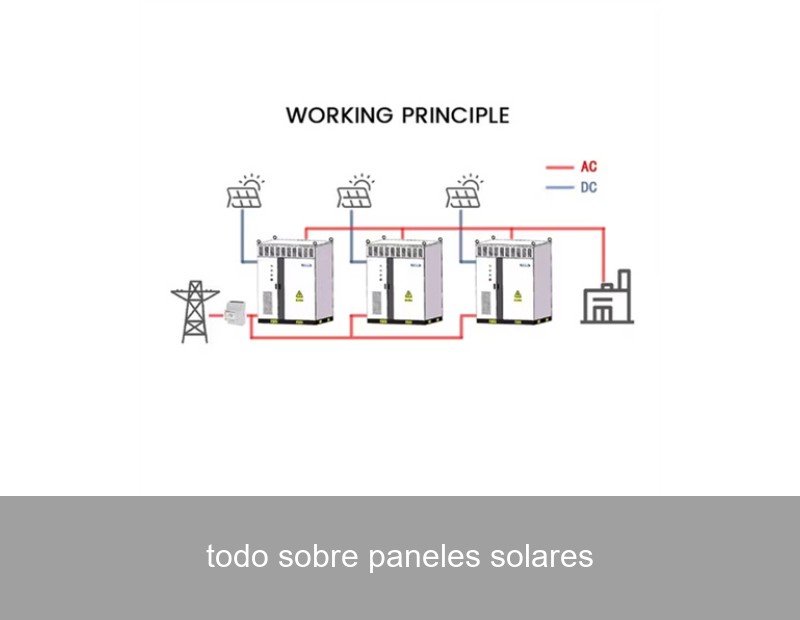
So, you're thinking about going solar? That's fantastic. Whether you're a homeowner in California, a business owner in Germany, or simply curious about todo sobre paneles solares (everything about solar panels), you've likely heard about the promise of clean, independent energy. But as more people adopt solar, a common phenomenon is emerging: generating abundant power when the sun shines, but facing uncertainty when it doesn't. This guide will not only cover the essentials of solar panels but also dive into the critical next step—smart energy storage—ensuring you truly maximize your investment.
Table of Contents
Solar Panel Basics: How They Work
At their core, solar panels, or photovoltaic (PV) modules, convert sunlight directly into electricity. This happens through the photovoltaic effect within silicon-based solar cells. When sunlight photons hit these cells, they knock electrons loose, creating a flow of direct current (DC) electricity. An inverter then converts this DC power into the alternating current (AC) that powers your home or business. It's a beautifully simple process with no moving parts, but the real magic lies in optimizing and managing that energy flow.

Image Source: Unsplash (Photographer: Andreas Gücklhorn)
Key Components of a Modern Solar Energy System
A complete system is more than just panels on your roof. Understanding the ecosystem is key to grasping todo sobre paneles solares. Here are the essential parts:
- Solar Panels: The primary energy harvesters. Monocrystalline panels offer higher efficiency, while polycrystalline provide a cost-effective alternative.
- Inverter: The brain of the operation. It converts DC to AC and is crucial for system performance. Modern systems often use module-level power electronics (MLPEs) like microinverters for better shade tolerance.
- Mounting System & Racking: The secure foundation that withstands weather for decades.
- Monitoring System: Software that provides real-time data on energy production and consumption.
- The Most Important Modern Addition: The Battery Storage System. This component transforms a solar array from a daytime generator into a 24/7 personal power plant.
The Critical Need for Storage: Beyond Generation
Here's the pivotal data point many discover after installation: a typical home solar system without storage only uses 30-50% of the solar energy it produces directly. Why? Because generation peaks during midday when consumption is often low. The excess is fed back to the grid, often for minimal feed-in tariffs, and you draw expensive power from the grid in the evening. This mismatch is the central challenge of modern solar adoption.
This is where Battery Energy Storage Systems (BESS) become non-negotiable for a truly resilient and economical setup. A high-quality BESS stores your surplus solar energy for use at night, during peak tariff periods, or during grid outages. It's the final piece that unlocks true energy independence.
Real-World Impact: A Case Study from Spain
Let's look at a concrete example. A medium-sized winery in the Andalusia region of Spain installed a 100 kW solar array. While their daytime energy costs dropped, they faced high demand charges and had no power security for critical refrigeration during occasional grid fluctuations. By integrating a Highjoule HES-200 commercial battery system (232 kWh capacity), they achieved remarkable results within the first year:
| Metric | Before Storage | After Highjoule BESS Integration |
|---|---|---|
| Self-Consumption of Solar Energy | 41% | 92% |
| Grid Energy Purchased During Peak Hours | 75% of total need | 12% of total need |
| Estimated Annual Savings | €18,000 | €48,000+ |
| Power Backup for Critical Loads | 0 hours | Up to 8 hours |
This case, typical for commercial and industrial applications across Southern Europe and sun-rich US states, demonstrates that solar panels alone are just the beginning. The full value is realized through intelligent storage and energy management. You can read more about the importance of storage in grid stability from the International Renewable Energy Agency (IRENA).
Choosing the Right System for Your Needs
Selecting components isn't one-size-fits-all. Consider this a decision ladder:
- Assess Your Energy Profile: Analyze your utility bills. What's your consumption pattern? Do you have time-of-use rates? This dictates system size.
- Panel Quality vs. Budget: Higher efficiency panels produce more power in limited space but come at a premium.
- Inverter Strategy: String inverters are cost-effective for simple roofs; microinverters optimize for shade or complex layouts.
- The Storage Decision: This is paramount. Capacity (kWh), power rating (kW), battery chemistry (LiFePO4 is now the safety and longevity standard), and cycle life are critical. The system's intelligence—how it learns and adapts to your usage—is what separates basic storage from a smart energy asset.
How Highjoule Integrates Solar and Storage for Maximum Value
Since 2005, Highjoule has been at the forefront of solving this exact energy puzzle. We understand that todo sobre paneles solares must include a seamless, intelligent storage solution. Our approach isn't just about adding a battery; it's about creating a fully integrated energy ecosystem.
For residential clients, our EcoHome PowerStack series features modular LiFePO4 batteries with built-in hybrid inverters. They are designed to seamlessly integrate with new or existing solar arrays, offering scalable capacity from 10 kWh upwards. The system's AI-driven energy management software learns your habits, automatically shifting between solar, battery, and grid power to minimize costs and maximize self-consumption.

Image Source: Unsplash (Photographer: American Public Power Association)
For commercial and industrial applications, like the Spanish winery, our HES Series provides containerized or rack-mounted solutions. These systems offer advanced features like peak shaving, demand charge management, and black start capability, turning a significant energy expense into a controllable, optimized asset. Our microgrid controllers can also island sections of a facility, ensuring operational continuity.
Highjoule's global service network provides monitoring, maintenance, and performance guarantees, ensuring your investment is protected for the long term. For the latest independent research on battery technologies, the National Renewable Energy Laboratory (NREL) offers excellent resources.
Future Trends: What's Next for Solar and Storage?
The technology continues to evolve rapidly. Bifacial solar panels that capture light from both sides are gaining traction. More importantly, we're seeing the rise of virtual power plants (VPPs), where networks of distributed home batteries (like Highjoule systems) are aggregated to support the grid during stress, creating potential revenue streams for homeowners. Furthermore, new battery chemistries promise even longer lifespans and faster charging. The line between energy consumer and prosumer is blurring forever.
Your Energy Future Starts with a Question
We've covered a lot—from the fundamentals of photovoltaic cells to the transformative power of integrated storage. Understanding todo sobre paneles solares is no longer just about the panels on the roof; it's about the intelligent system that manages that power within your walls. Given your specific energy goals and local conditions, what would be the first load you'd want to secure during a power outage, and how would that shape the size of the system you envision?
 Inquiry
 Online Chat