


How Do Solar Panels Store Electricity? Unlocking True Energy Independence
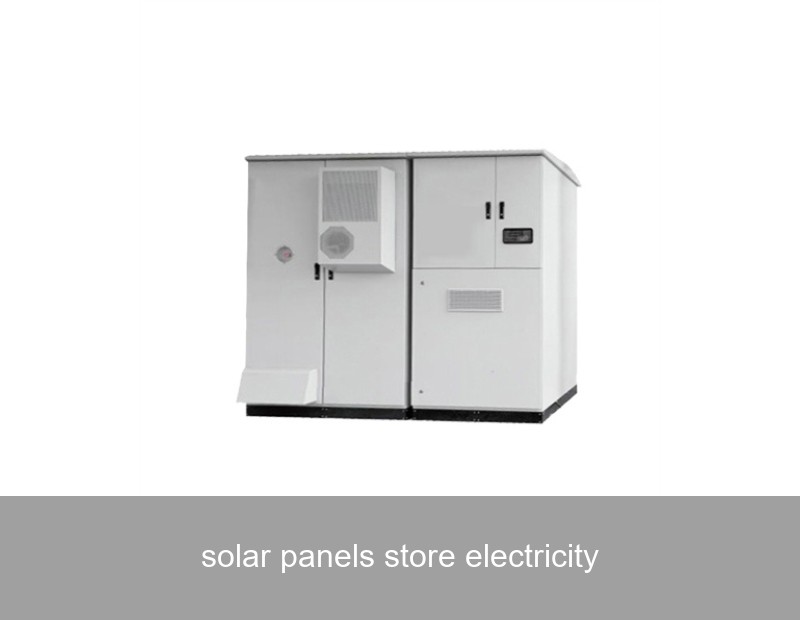
You've seen them on rooftops everywhere, silently converting sunlight into power. But here's a question that often puzzles homeowners and businesses alike: how do solar panels store electricity for use at night or on cloudy days? The truth is, they don't—at least not by themselves. This gap between solar generation and energy demand is the central challenge of the renewable age, and solving it is the key to unlocking a resilient, cost-effective, and sustainable energy future. Let's demystify the process and explore the intelligent systems that make true solar energy independence a reality.
Table of Contents
- The Generation-Storage Gap: Solar's Fundamental Phenomenon
- The Heart of Storage: How Battery Systems Work with Solar
- The Data Dive: Why Storage is No Longer Optional
- Case Study: A U.S. Manufacturing Plant's Journey to Resilience
- Beyond the Basics: Intelligent Energy Management
- Highjoule's Role: Tailored Solutions for Every Need
- The Future Horizon: What's Next for Solar and Storage?
The Generation-Storage Gap: Solar's Fundamental Phenomenon
Solar panels are brilliant generators. When photons from sunlight hit the photovoltaic cells, they knock electrons loose, creating a flow of direct current (DC) electricity. This happens only when the sun is shining. The immediate phenomenon homeowners face is a mismatch: peak production often occurs in the middle of the day when energy consumption might be low, while demand soars in the evening when production plummets. Without a means to capture that midday surplus, it's either sent back to the grid (often for minimal compensation) or, in some cases, curtailed and wasted. This is the critical "duck curve" challenge that grid operators now manage, as detailed in a report by the National Renewable Energy Laboratory (NREL).
Image Source: Unsplash - Solar panels generate power during the day, but storage is needed for the night.
The Heart of Storage: How Battery Systems Work with Solar
So, if panels can't store power, what does? The answer is the solar-plus-storage system. Here's a simplified breakdown of the key components:
- Solar Panels: Generate DC electricity.
- Inverter: Converts DC electricity from the panels into usable alternating current (AC) for your home or business. In advanced systems, a hybrid inverter manages both solar and battery storage.
- Battery Storage System (BSS): This is the actual "storage" unit. It stores excess DC or AC electricity for later use.
- Energy Management System (EMS): The brain of the operation. It intelligently decides when to charge the batteries, when to power your home from the batteries, and when to draw from or export to the grid.
When your solar panels produce more electricity than you need, the surplus doesn't just vanish. Instead, the EMS directs it to charge your battery bank. Once the batteries are full, excess can be exported to the grid. When the sun goes down or during a power outage, the system seamlessly switches to draw power from the batteries, keeping your lights on and operations running.
Lithium-ion: The Current Standard
Today, most residential and commercial systems use lithium-ion batteries, similar to those in electric vehicles but engineered for stationary storage. They offer high energy density, long cycle life, and decreasing costs. However, not all battery systems are created equal. Factors like depth of discharge (DoD), round-trip efficiency, and thermal management are critical for performance and safety.
The Data Dive: Why Storage is No Longer Optional
The logic for adding storage is moving beyond emergency backup and becoming a compelling financial and operational strategy. Consider this data:
| Driver | Impact | Data Point / Trend |
|---|---|---|
| Rising Electricity Costs | Maximizes self-consumption of cheap solar power, reducing grid imports during high-rate periods. | U.S. average electricity rates rose over 4% year-over-year in 2023 (EIA). |
| Grid Instability & Outages | Provides instantaneous backup power, crucial for businesses and areas prone to wildfires or extreme weather. | The U.S. experienced a 78% increase in major power outages from 2011-2021 (Climate Central). |
| Changing Net Metering Policies | Makes exporting solar less profitable, increasing the value of storing excess on-site. | States like California have shifted to Net Billing Tariffs (NBT), reducing compensation for exported solar. |
Case Study: A U.S. Manufacturing Plant's Journey to Resilience
Let's look at a real-world example. A mid-sized automotive parts manufacturer in Ohio had a 500 kW rooftop solar array. Despite significant generation, they faced two problems: high demand charges from short peaks in usage and vulnerability to grid outages that could halt production lines costing thousands per minute.
Their solution was integrating a Highjoule C&I PowerStack battery storage system with a capacity of 750 kWh. The system was configured for peak shaving and backup power. Here are the results after one year:
- Demand Charge Reduction: The system intelligently discharged during short periods of peak grid demand, reducing their monthly demand charges by an average of 28%.
- Enhanced Resilience: During a planned grid maintenance outage, the facility operated critical loads for 4 hours with zero interruption.
- Increased Self-Consumption: The facility's consumption of its own solar power increased from 35% to over 80%, drastically reducing grid purchases.
- ROI: The combined savings from demand charge reduction and increased self-consumption projected a payback period of under 6 years.
This case illustrates that for commercial and industrial entities, the question isn't just "how do solar panels store electricity?" but "how can we store and manage our solar energy most intelligently to cut costs and ensure continuity?"

Image Source: Unsplash - Commercial battery storage systems provide resilience and cost savings.
Beyond the Basics: Intelligent Energy Management
The most advanced storage solutions go beyond simple charge-and-discharge. They use sophisticated software to optimize for multiple value streams simultaneously—a concept known as value stacking. For instance, a single Highjoule system can be programmed to:
- Perform peak shaving to lower demand charges.
- Provide backup power during outages.
- Participate in a grid services program (where available), where the utility can call on distributed batteries for support, generating revenue for the owner.
- Optimize for time-of-use rates, charging from solar or the grid when rates are low and discharging when they are high.
Highjoule's Role: Tailored Solutions for Every Need
Since 2005, Highjoule has been at the forefront of answering the storage challenge. We don't just sell batteries; we provide intelligent, integrated energy ecosystems. Our expertise lies in designing systems that align precisely with your energy profile and goals.
For residential customers, our Home Energy Hub offers a sleek, all-in-one solution with integrated hybrid inverter and scalable battery capacity. Its AI-driven learning adapts to your household's patterns, maximizing savings and comfort.
For commercial & industrial clients, our modular PowerStack series can be scaled from 100 kWh to multi-megawatt installations. Coupled with our JouleMind OS energy management platform, it delivers the granular control needed for financial optimization and operational resilience.
For microgrids and utility-scale projects, we deliver turnkey storage solutions that stabilize grids, integrate renewable farms, and provide critical infrastructure support.
The Future Horizon: What's Next for Solar and Storage?
Technology continues to evolve. Solid-state batteries, flow batteries, and even new chemistries promise higher safety, longer lifespans, and lower costs in the coming decade. Furthermore, the integration of electric vehicles as bidirectional storage assets (vehicle-to-home or V2H) is on the horizon, potentially turning your car into a mobile battery for your home.
The fundamental relationship between solar generation and storage will only deepen. As grid dynamics shift and the push for decarbonization intensifies, the ability to store your self-generated solar electricity will transition from a premium option to a standard component of any intelligent energy system.
Your Energy, Your Control
Understanding how solar energy is stored empowers you to make informed decisions about your energy independence. It’s about taking control, achieving resilience, and participating in a more sustainable energy landscape. So, as you consider your next step with solar, the pivotal question becomes: How will you manage and maximize the clean power you generate?
 Inquiry
 Online Chat