


Trinabess Hybrid Battery: The Next Evolution in Home Energy Management
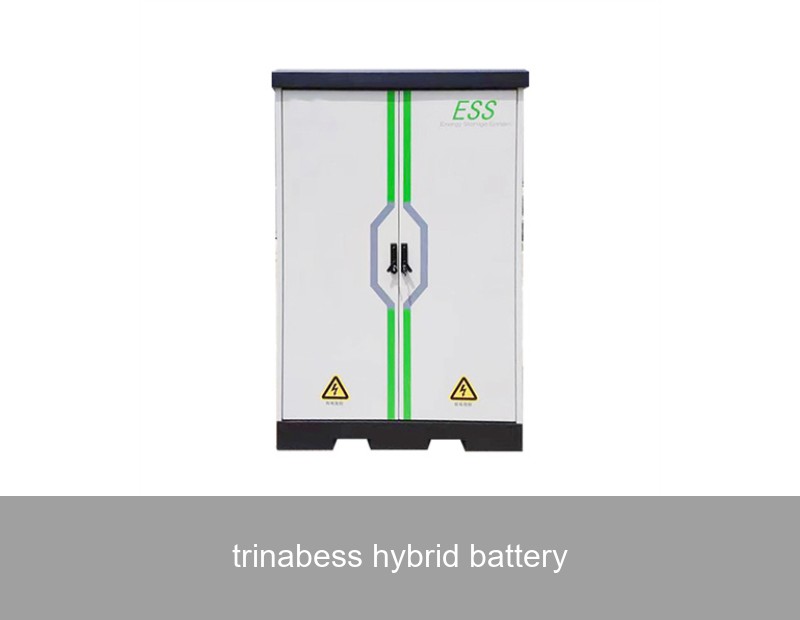
Have you ever watched your electricity meter spin with a sense of helplessness, especially during peak rate hours? Or wondered how to maximize the solar panels on your roof when the sun isn't shining? If these questions sound familiar, you're not alone. Homeowners across Europe and the US are increasingly seeking intelligent solutions to gain energy independence and reduce costs. This is where advanced energy storage, particularly the Trinabess hybrid battery system, comes into play. Unlike traditional setups, a hybrid battery is a versatile powerhouse that can simultaneously connect to solar panels and the grid, intelligently managing multiple energy flows to optimize self-consumption, provide backup power, and unlock significant savings. As a leader with nearly two decades of experience, Highjoule has been at the forefront of this evolution, designing integrated systems that turn these complex concepts into simple, reliable reality for homes and businesses.
Table of Contents
- The Problem: Rising Costs and Grid Uncertainty
- The Data: Why Hybrid is Outpacing Traditional Storage
- The Solution: How a Trinabess Hybrid Battery Works
- Highjoule's Role: Engineering Intelligent Energy Ecosystems
- Key Considerations Before Choosing a Hybrid System
- The Future: Your Home as a Smart Energy Hub
The Problem: Rising Costs and Grid Uncertainty
Let's face it, the traditional relationship with the grid is becoming increasingly one-sided and costly. In many parts of Europe and the United States, homeowners are caught in a perfect storm: volatile energy prices, the phase-out of favorable solar feed-in tariffs, and growing concerns about grid resilience during extreme weather events. You might have solar panels, but without storage, excess energy generated on a sunny afternoon is sold back to the grid at a low rate, only for you to buy it back at a much higher price in the evening. This model no longer makes economic sense. Furthermore, power outages, whether from storms or grid overload, disrupt daily life. The fundamental need has shifted from just generating green energy to controlling it—storing, managing, and using it on your own terms.
The Data: Why Hybrid is Outpacing Traditional Storage
The market trend clearly validates the shift towards integrated solutions. According to the International Energy Agency (IEA), global battery storage capacity is set to multiply exponentially, with residential systems leading a significant portion of this growth. Industry analyses consistently show that hybrid systems, which combine solar, storage, and grid interaction in one unit, are becoming the preferred choice over retrofitting batteries to existing AC-coupled solar systems. Why? Because an integrated Trinabess hybrid battery system reduces energy conversion losses, offers more seamless backup power transition, and provides a unified management platform. The data points to a simple conclusion: for new installations or major upgrades, a purpose-built hybrid system delivers superior efficiency, cost-effectiveness, and simplicity.

Image: A modern home energy setup featuring solar generation and battery storage. Credit: Unsplash.
The Solution: How a Trinabess Hybrid Battery Works
Think of a Trinabess hybrid battery system as the intelligent conductor of your home's energy orchestra. At its core is a hybrid inverter, the crucial component that traditional battery systems lack. Here’s a simplified breakdown of its operation:
- Multi-Mode Management: The system intelligently switches between or blends different modes: solar self-consumption, battery charging/discharging, grid import/export, and backup power.
- DC Coupling: Solar panels generate DC electricity, which can directly charge the DC batteries with minimal conversion loss. The hybrid inverter then converts only the needed power to AC for home use.
- Time-of-Use Optimization: You can program the system to charge the batteries from the grid during ultra-low overnight rates or from excess solar, and then discharge during expensive peak hours, slashing your bills.
- Seamless Backup: During a grid outage, the system can island itself, automatically providing backup power to critical loads from the battery and solar, often in less than a heartbeat.
This integrated approach eliminates the need for multiple, separate inverters, leading to a cleaner installation, higher overall system efficiency, and more granular control.
Highjoule's Role: Engineering Intelligent Energy Ecosystems
At Highjoule, we don't just supply components; we provide complete, intelligent energy ecosystems. Our expertise, honed since 2005, lies in integrating advanced hardware with sophisticated energy management software. For homeowners considering a Trinabess hybrid battery solution, Highjoule offers the Highjoule H-Series Home Energy Hub. This system embodies the hybrid principle perfectly:
- All-in-One Unit: Combines a hybrid inverter, lithium-ion battery bank (with scalable capacity), and advanced management system in a compact, wall-mounted design.
- AI-Powered Energy OS: Our proprietary software learns your consumption patterns, weather forecasts, and utility rate schedules to automatically optimize energy flow for maximum savings and comfort.
- Grid-Support Ready: In certain markets, with your consent, the system can participate in grid services, potentially generating revenue by providing stability during high demand.
- Professional Integration: We work with a certified network of installers to ensure your system is perfectly sized, correctly installed, and compliant with all local regulations and incentives.
Our focus is on delivering a solution that is powerful yet simple for the user—managed via an intuitive app that gives you full visibility and control over your energy destiny.
A Real-World Case Study: The Schmidt Family Home, Bavaria, Germany
Let's look at a concrete example. The Schmidt family, living in a single-family home in Bavaria, installed a 10 kWp solar array in 2020. While it reduced their bills, they were still exporting over 60% of their summer production. In early 2023, they upgraded to a Highjoule H-Series system with a 15 kWh Trinabess hybrid battery.
| Metric | Before Hybrid Battery (2022) | After Hybrid Battery (2023) | Change |
|---|---|---|---|
| Grid Electricity Purchased | 3,200 kWh/year | 850 kWh/year | -73% |
| Solar Self-Consumption Rate | 35% | 92% | +57% points |
| Annual Electricity Cost | €1,250 | €280 | -€970 (78% savings) |
| Backup Power Available | None | Essential circuits for up to 24+ hrs | Full backup capability |
Data Source: Highjoule customer performance monitoring (shared with consent). Assumes typical German household consumption and 2023 energy prices. The Schmidts now achieve near-total energy independence from April to October and have peace of mind during winter storms. Their system is on track to pay for itself in under 8 years, a timeline accelerated by rising energy costs.
Key Considerations Before Choosing a Hybrid System
Investing in a hybrid battery system is a significant decision. Here are key factors to discuss with your provider:
- System Sizing: This is critical. Your battery capacity (kWh) and inverter power (kW) must be matched to your daily energy consumption, solar production, and backup needs. An oversized system is unnecessarily expensive; an undersized one won't meet your goals.
- Battery Chemistry & Warranty: Most modern systems like Highjoule's use Lithium Iron Phosphate (LFP) chemistry, known for its safety, long cycle life (often 6,000+ cycles), and stability. Look for a performance warranty that guarantees a certain capacity (e.g., 70%) after 10 years.
- Software & Connectivity: The hardware is only as good as its brain. Ensure the energy management software is user-friendly, receives regular updates, and offers the control features you want (e.g., time-based control, grid-charging settings).
- Local Incentives & Regulations: In the US, the federal Investment Tax Credit (ITC) now applies to standalone storage and storage paired with solar. Many European countries and utilities also offer grants or low-interest loans. Compliance with grid connection codes (like VDE-AR-N 4105 in Germany or UL 9540 in the US) is non-negotiable for safety and permission to operate.

Image: Monitoring and controlling energy flow via a digital interface is key to a hybrid system's value. Credit: Unsplash.
The Future: Your Home as a Smart Energy Hub
The journey towards a Trinabess hybrid battery system is more than an upgrade; it's a step into the future of energy. We are moving towards a model where every home can act as a resilient node in a smarter, more decentralized grid. With the rise of electric vehicles (which are essentially batteries on wheels), the potential for integration grows further. Imagine your Highjoule system intelligently charging your EV with surplus solar, or even using the EV's battery to power your home during an extended outage—concepts already being piloted.
The technology is here, proven, and economically viable. The question is no longer "if" but "how" to make the transition. What specific energy goal is most pressing for your household—is it achieving total bill independence, ensuring resilience against outages, or simply maximizing your investment in renewable generation?
 Inquiry
 Online Chat