


UPS Energy Storage Cabinet: The Unsung Hero of Modern Power Resilience
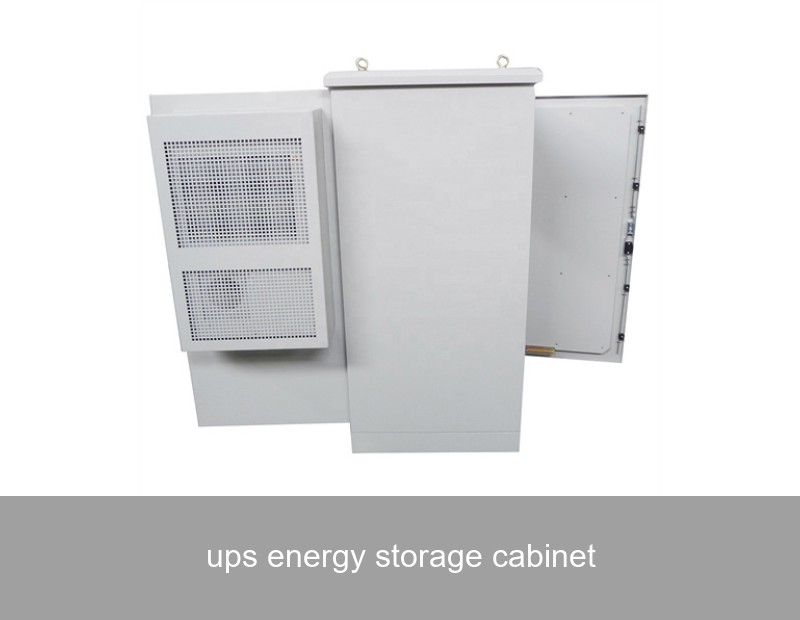
Imagine this: a critical server farm in Frankfurt experiences a millisecond power dip. In a hospital in California, surgical lights flicker during a procedure. For decades, the immediate defense against such disruptions was the traditional Uninterruptible Power Supply (UPS). But what if that essential backup power could do more than just bridge a few minutes? Enter the UPS energy storage cabinet – a transformative evolution that merges instantaneous power protection with long-duration, intelligent energy storage. This isn't just a battery backup; it's the cornerstone of a resilient, efficient, and sustainable energy strategy for businesses and institutions across Europe and the US.
The Silent Grid Strain and the Reactive UPS
Our reliance on digital infrastructure and precise manufacturing has never been higher. Simultaneously, power grids in both Europe and North America are facing unprecedented strain from extreme weather, aging infrastructure, and the variable input of renewable sources. The U.S. Energy Information Administration (EIA) notes that the average U.S. electricity customer experienced just over 5 hours of power interruptions in 2021. Traditional UPS systems react to these events—they wait for a failure, then engage. Their lead-acid batteries offer short-term protection, often just long enough to safely shut down equipment or start a diesel generator. This is a passive, single-use asset sitting idle 99% of the time.
What is a UPS Energy Storage Cabinet?
Think of a UPS energy storage cabinet as the fusion of a high-performance UPS and a scalable battery energy storage system (BESS). It's a self-contained, modular unit that houses advanced lithium-ion battery modules, sophisticated battery management systems (BMS), power conversion systems (PCS), and thermal management—all in a secure, often rack-mountable enclosure. Unlike its predecessor, it's designed for daily, active use. Its core function is dual: provide instantaneous uninterruptible power and act as a controllable energy asset.

Image Source: Unsplash (Representative image of industrial battery storage)
Key Benefits Beyond Backup: From Cost Center to Revenue Asset
The intelligence of a modern energy storage cabinet turns a passive device into a strategic tool. Here’s how:
- Peak Shaving & Demand Charge Reduction: Commercial and industrial users often pay high "demand charges" based on their peak power draw. The cabinet can discharge during these short peak periods, lowering the draw from the grid and significantly reducing monthly bills.
- Energy Arbitrage: In markets with time-of-use (TOU) rates, the system charges from the grid or on-site solar when electricity is cheap, and discharges when it's expensive.
- Enhanced Renewable Integration: For sites with solar PV, the cabinet stores excess solar generation for use at night, maximizing self-consumption and reducing grid dependence.
- Grid Services & Revenue: In some regions, aggregated storage systems can provide frequency regulation services to the grid, creating a potential revenue stream.
- Superior Reliability & Longevity: Lithium-ion chemistry, managed by an advanced BMS, offers faster response, longer cycle life, and a smaller footprint than traditional valve-regulated lead-acid (VRLA) batteries.
A Real-World Case Study: Manufacturing Plant in Bavaria
Let's look at a concrete example. A mid-sized automotive parts manufacturer in Bavaria, Germany, faced two challenges: frequent micro-dips affecting sensitive robotic welding arms and crippling demand charges that comprised 40% of their electricity bill. Their old UPS system was nearing end-of-life.
The Solution & Data: They replaced their legacy setup with a modular UPS energy storage cabinet system sized at 500 kWh / 250 kW. Here’s the impact after one year of operation:
| Metric | Result | Financial Impact |
|---|---|---|
| Demand Charge Reduction | Peak load reduced by 22% | €18,000 annual savings |
| Power Quality Events | Zero production stoppages | Estimated €50,000 in avoided downtime |
| Solar Self-Consumption | Increased from 35% to 78% | €8,000 annual savings |
| Backup Duration | Extended from 15 min to over 2 hours | Priceless resilience |
This case, mirrored by many in the US industrial sector, shows the tangible multi-faceted ROI. The system paid for itself in under 4 years through savings alone, not even accounting for the value of uninterrupted production.
Highjoule's Intelligent Approach: The H-Cube Energy Storage Cabinet
At Highjoule, we've been at the forefront of this convergence since our founding in 2005. Our H-Cube series energy storage cabinet is engineered specifically for the dual-role demands of modern facilities. It's not an adapted UPS or a simplified grid battery; it's a purpose-built platform.
What sets the H-Cube apart is its deep integration and software intelligence. Each cabinet features our proprietary Adaptive Cell Management (ACM) system, which extends battery life by actively balancing temperature and charge at the individual cell level. More crucially, it's managed by our Highjoule Energy Operating System (HEOS). This AI-driven platform doesn't just react to outages; it proactively optimizes your energy flow 24/7. HEOS analyzes weather forecasts, utility rate schedules, and your facility's load patterns to autonomously decide when to charge, discharge, or hold—all while guaranteeing a reserved energy buffer for critical backup.

Image Source: Unsplash (Representative image of engineer monitoring battery systems)
For businesses, this means seamless integration into commercial, industrial, and microgrid applications. Whether you need to secure a hospital's power, enable a factory to operate independently during grid outages, or maximize the return on a rooftop solar investment, the H-Cube provides a scalable, future-proof foundation.
The Technology Inside: Safety and Scalability
- Modular Design: Start with a single cabinet and scale capacity by adding battery modules, not entire new systems.
- Lithium Iron Phosphate (LFP) Chemistry: We utilize LFP batteries for their superior safety profile, long cycle life (6,000+ cycles), and thermal stability, a critical consideration for indoor installations.
- Grid-Interactive Capabilities: Built to IEEE 1547 standards for the US and relevant grid codes in Europe, allowing for safe, certified interconnection.
The Future Role: Central to Decarbonization and Resilience
As grids decarbonize, the UPS energy storage cabinet becomes the essential buffer that manages intermittency. The International Renewable Energy Agency (IRENA) highlights energy storage as a key technology for the energy transition. For a corporation, it's the tool that turns energy from a volatile cost into a manageable, even profitable, asset. It ensures that the lights—and the servers, the production lines, and the life-support systems—stay on, while actively contributing to a more stable and sustainable grid for everyone.
So, the question isn't just "How long do I need my backup to last?" The strategic questions for any facility manager or business leader today are: How can my backup power also cut my operational costs? How can it help me meet my sustainability goals? And how can it transform my energy infrastructure from a passive utility into an active, intelligent asset? The modern UPS energy storage cabinet is the answer, and it's redefining resilience one intelligent cycle at a time.
 Inquiry
 Online Chat