


Where to Buy Solar Panels in Malaysia: Your Guide to Smarter Energy Independence
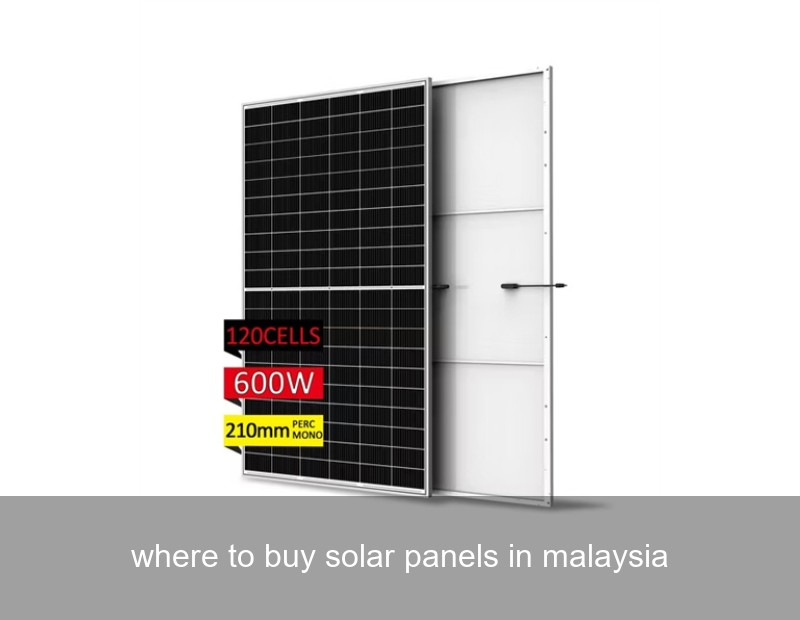
So, you're asking the pivotal question: where to buy solar panels in Malaysia? It's a fantastic starting point, driven by rising electricity bills, a desire for sustainability, or simply the appeal of energy independence. But as a product technology expert in the renewable energy sector, let me offer a crucial perspective upfront: you're not just shopping for hardware. You're investing in a complete, intelligent power generation and storage system that must perform reliably for 25 years or more. The "where" is deeply connected to the "what" and "who" – what technology you need, and who will design, install, and support it for decades. Let's navigate this journey together.
The Phenomenon: Malaysia's Solar Surge
Across Malaysia, from residential rooftops in Subang Jaya to the vast roofs of industrial plants in Pasir Gudang, a quiet revolution is underway. The tropical sun, once just a source of heat, is now being harnessed as a prime asset. This isn't just about environmental consciousness; it's a profound economic shift. Businesses are seeing solar as a strategic tool to lock in long-term energy costs, while homeowners are taking control of their power supply. The question of "where to buy solar panels in Malaysia" is, therefore, a symptom of a larger movement towards energy resilience and smart financial planning.
By the Numbers: Why Solar Makes Sense in Malaysia
Let's look at the data that makes Malaysia a prime solar candidate. The country enjoys a high solar irradiance averaging 4.5-5.2 kWh/m²/day, comparable to other solar leaders in the region. According to the International Energy Agency (IEA), Malaysia has set ambitious targets in its Renewable Energy Roadmap. Furthermore, mechanisms like the Net Energy Metering (NEM) program allow you to sell excess solar power back to the grid, improving your return on investment. For a commercial entity, the savings are substantial. We're not just talking about minor bill reductions; we're discussing slashing operational costs by 30-60% over the system's lifetime, a compelling case for any CFO.
| Factor | Data / Range | Implication |
|---|---|---|
| Average Daily Solar Irradiance | 4.5 - 5.2 kWh/m²/day | High energy yield potential |
| Typical Commercial System Payback Period | 4 - 7 years | Strong financial return |
| System Lifespan (Panels) | 25+ years | Long-term asset |
| Potential Reduction in Operational Energy Cost | 30% - 60% | Major cost savings |
Where to Buy Solar Panels in Malaysia: A Buyer's Guide
Now, to the core of your query. You have several avenues, each with its own pros and cons.
Authorized Distributors & Manufacturers
Many global panel brands (like LONGi, JinkoSolar, Canadian Solar) have authorized distributors in Malaysia. This is a direct route to guaranteed, warranty-backed products. However, remember you're only sourcing the panels. You'll still need to find a separate, competent party for the other system components (inverters, mounting) and installation. It's like buying a premium car engine—you still need the rest of the car and a skilled mechanic.

Image Source: Unsplash (Professional solar installation is key to system performance)
Specialized Solar System Integrators
This is often the most recommended path. A reputable integrator or EPC (Engineering, Procurement, and Construction) company doesn't just sell you panels; they provide a turnkey solution. They assess your site, design the system, source quality components (panels, inverters, mounting), handle permits, install, and commission. They are your single point of contact. When evaluating them, look for their track record, certifications (from SEDA Malaysia), and portfolio of completed projects. They answer "where to buy solar panels in Malaysia" with "we provide the entire system, and here's the optimal panel for your specific needs."
Online Retailers & E-commerce
Platforms like Lazada or Shopee may list solar panels. While this offers convenience and price comparison, extreme caution is advised. You risk receiving counterfeit or underperforming products with no valid local warranty. Crucially, solar is not a DIY plug-and-play purchase. The integration, electrical work, and grid connection require licensed professionals. The potential savings are negated by safety risks and system failure.
Case Study: A Factory's Transformation in Selangor
Let's ground this with a real-world example. A medium-sized food processing factory in Selangor was facing monthly electricity bills consistently above RM 85,000. Their operations were energy-intensive, and tariff hikes directly impacted their bottom line. They partnered with a qualified solar integrator who conducted a detailed energy audit.
- System Installed: A 750 kWp rooftop solar PV system.
- Key Components: Tier-1 bifacial solar panels, string inverters, and a dedicated monitoring platform.
- Outcome: The system now meets approximately 40% of the factory's daytime energy demand. They achieved a 35% reduction in their monthly electricity costs, saving roughly RM 30,000 every month. The project had a payback period of just under 5 years. Beyond savings, they've significantly reduced their carbon footprint and gained a powerful marketing story for eco-conscious clients.
Notice that the factory owner didn't ask "where to buy solar panels"; they sought a "solution to high and unpredictable energy costs." The right partner provided exactly that.
The Critical Insight: You're Not Just Buying Panels, You're Investing in a System
Here's the expert insight: the panel is just one component. The inverter that converts DC to AC power, the smart energy management system, and—increasingly—the battery energy storage system (BESS) are what transform sunlight into reliable, usable, and resilient power. A BESS allows you to store excess solar energy for use at night or during grid outages, maximizing self-consumption and providing backup power. This is where system intelligence becomes paramount.

Image Source: Unsplash (Battery storage is key for energy independence)
How a Global Expert like Highjoule Complements the Malaysian Market
This is where a global leader like Highjoule plays a vital role. While you will procure and install your solar panels locally in Malaysia, the heart of a truly advanced and resilient system often lies in the storage and intelligence layer. Since 2005, Highjoule has been at the forefront of this very technology, providing intelligent, efficient BESS and integrated energy management solutions for commercial, industrial, and microgrid applications worldwide.
Think of it this way: your local Malaysian solar integrator is your expert in capturing the sun. Highjoule partners with such integrators to provide the core technology to harness and optimize that energy intelligently. Our containerized or modular battery systems, like the Highjoule CORE series, are designed for seamless integration with new or existing solar arrays. They come with our proprietary energy management system (EMS) that acts as the brain of your installation, deciding when to store, when to discharge, and how to optimize for cost or resilience. For a factory or large business in Malaysia looking not just to save money but to ensure uninterrupted operations, this combination is unbeatable.
Your Solar Journey Starts with the Right Questions
So, as you refine your search from "where to buy solar panels in Malaysia" to "how do I build a future-proof energy system," what specific challenges are you hoping to solve? Is it purely financial savings, or is ensuring 24/7 power for a critical operation equally important? How much of your energy consumption do you aim to control directly?
 Inquiry
 Online Chat