


Utility Scale Battery Storage: The Backbone of a Modern, Resilient Grid
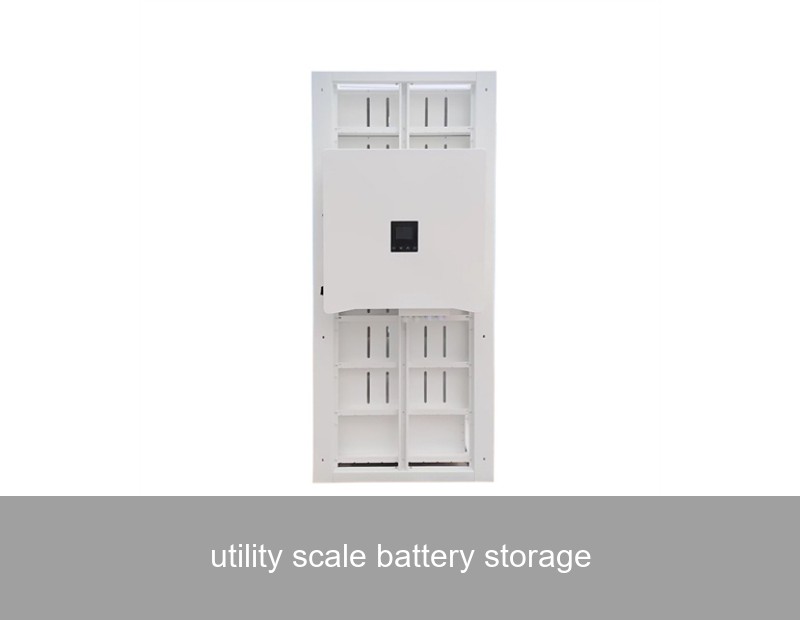
Imagine a power grid that doesn't just deliver electricity, but intelligently manages it—smoothing out the peaks and valleys of supply and demand, integrating vast amounts of renewable energy, and standing ready to prevent outages in an instant. This isn't a vision of the distant future; it's the reality being built today with utility scale battery storage. These massive battery systems, often the size of warehouses or container yards, are rapidly transforming from a niche technology into a critical grid asset. For grid operators, utilities, and communities, understanding this shift is no longer optional; it's essential for ensuring reliability, affordability, and sustainability in the energy transition.
Table of Contents
- What is Utility Scale Battery Storage?
- The Grid Challenge: From Steady Supply to Variable Renewables
- Key Benefits: More Than Just Backup Power
- A Real-World Case Study: Stabilizing the UK Grid
- Highjoule's Role: Engineering Intelligent Grid-Scale Solutions
- The Future Outlook and Your Next Step
What is Utility Scale Battery Storage?
When we talk about utility scale battery storage, we're referring to large-scale energy storage systems (ESS) directly connected to the transmission or distribution network. Unlike a home battery that might store 10-20 kWh, these behemoths typically have capacities starting at tens of megawatt-hours (MWh) and can scale up to hundreds or even thousands of MWh. Think of them as the grid's "shock absorbers" and "strategic reserves." They are deployed and managed by utilities, independent power producers, or specialized energy service companies to provide services that keep the entire electricity system stable and efficient.

Image: A modern utility-scale battery storage installation. Source: Unsplash (Representative image)
The Grid Challenge: From Steady Supply to Variable Renewables
The traditional power grid was designed around predictable, dispatchable power sources like coal, gas, or nuclear plants. Grid operators could turn generation up or down to match the daily demand curve. The explosive growth of wind and solar power, while environmentally crucial, introduces a new layer of complexity: variability. The sun sets, and the wind calms, but demand for electricity continues.
This mismatch creates two fundamental problems:
- The Duck Curve: In markets with high solar penetration (like California), net demand plummets during sunny afternoons and then rapidly ramps up as the sun sets. This steep ramp requires fast-responding resources to avoid blackouts.
- Renewable Curtailment: Grids sometimes have to "curtail" or waste renewable energy because it's produced when demand is too low. The U.S. Department of Energy notes that curtailment is a sign of grid constraints.
This is where the data becomes compelling. According to BloombergNEF, global energy storage installations are set to hit a staggering 1,200 GWh by 2030, with the bulk being utility-scale projects. This investment, projected to exceed $262 billion, is a direct response to these grid challenges.
Key Benefits: More Than Just Backup Power
The value of utility scale battery storage extends far beyond simple energy backup. They are multi-talented assets that provide a suite of critical grid services, often simultaneously.
| Service | Function | Grid Value |
|---|---|---|
| Frequency Regulation | Injecting or absorbing power in milliseconds to maintain grid frequency (e.g., 50 Hz in EU, 60 Hz in US). | Prevents equipment damage and cascading outages. |
| Renewables Firming & Ramp Management | Smoothing the output of wind/solar farms and managing the steep evening demand ramp. | Enables higher renewable penetration, reduces curtailment. |
| Energy Arbitrage | Storing energy when prices are low (e.g., midday solar surplus) and discharging when prices are high. | Lowers wholesale electricity costs, benefits consumers. |
| Deferred Grid Investment | Providing peak power locally, delaying the need for expensive substation or transmission upgrades. | Saves utility and ratepayer capital. |
| Black Start Capability | Restoring power to a grid section after a complete blackout. | Enhances grid resilience and recovery speed. |
A Real-World Case Study: Stabilizing the UK Grid
Let's look at a concrete example. In 2016, a major frequency event on the UK grid caused widespread disruption. This highlighted a vulnerability as older thermal plants retired. In response, the UK's National Grid ESO pioneered a "Frequency Response" market.
One of the early success stories is the Minety battery storage project in Wiltshire. At 100 MWh/50 MW, it was one of Europe's largest when commissioned. During a frequency dip, such a facility can respond in under a second, injecting power to stabilize the grid. Projects like Minety have proven so effective that the UK now has one of the world's most advanced markets for grid-balancing services, with batteries providing a majority of the dynamic containment response. This real-world application demonstrates how utility scale battery storage directly replaces fossil-fueled peaker plants for critical reliability services, but with zero emissions and far faster response times.

Image: Control and monitoring are key for utility-scale storage operations. Source: Unsplash (Representative image)
Highjoule's Role: Engineering Intelligent Grid-Scale Solutions
Building a reliable utility scale battery storage system is about more than just stacking battery cells. It requires deep system integration, advanced power conversion, and sophisticated energy management software. This is where Highjoule's nearly two decades of expertise comes into play.
Since 2005, Highjoule has been at the forefront of designing and deploying advanced battery energy storage systems (BESS). For utility-scale applications, our approach is holistic:
- Highjoule H-Mega BESS Platform: Our flagship product for large-scale applications is engineered for safety, longevity, and ease of deployment. It features our proprietary thermal management system and cell-level monitoring to ensure optimal performance over a 20+ year lifespan.
- GridForming Inverter Technology: Moving beyond traditional grid-following inverters, our systems can provide "grid-forming" capabilities. This means they can help stabilize voltage and frequency autonomously, acting as a foundational pillar for a grid with high inverter-based resources (like wind and solar)—a critical feature for future grid stability.
- AI-Powered Energy Management System (EMS): The true brain of the operation. Our Apex EMS doesn't just charge and discharge batteries. It continuously analyzes market prices, grid conditions, weather forecasts, and asset health to optimize every kilowatt-hour for maximum value—whether for energy arbitrage, frequency regulation, or capacity services.
For a developer in Texas looking to pair storage with a solar farm, or a municipal utility in Germany seeking to defer a costly grid upgrade, Highjoule provides the complete, integrated solution—from initial feasibility and design to commissioning and long-term performance monitoring.
The Future Outlook and Your Next Step
The trajectory is clear. As noted by the International Energy Agency (IEA), energy storage is indispensable for secure electricity transitions. We are moving towards grids where utility scale battery storage, combined with renewables, forms the majority of new capacity. The next frontier includes longer-duration storage technologies (8-12+ hours) and the seamless orchestration of millions of distributed assets—from grid-scale batteries to home systems—into virtual power plants.
For utility executives, city planners, and renewable energy developers, the question is no longer if battery storage will play a role in your strategy, but how and when. The economics and grid needs are aligning faster than many anticipate.
Is your organization currently evaluating how utility-scale storage can address a specific grid constraint, integrate a new renewable project, or create a new revenue stream? What is the biggest hurdle you see in making the business case for a large-scale battery storage project in your region?
 Inquiry
 Online Chat