


California Battery Storage 2025: Powering the Golden State's Clean Energy Future
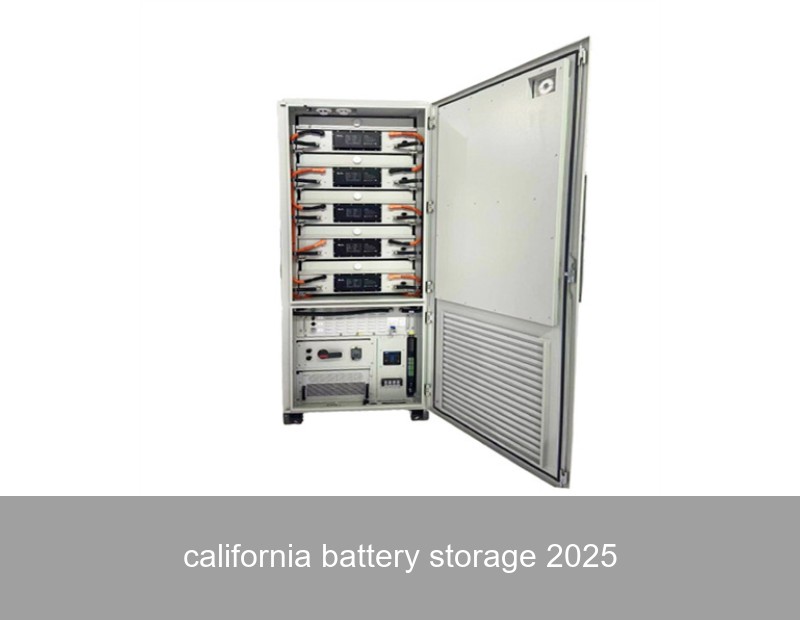
If you've been following California's energy landscape, you've likely heard the ambitious goals: 100% clean electricity by 2045, millions of electric vehicles on the roads, and a grid resilient enough to withstand heatwaves and wildfire threats. But how do we get there? The conversation increasingly centers on one critical technology: battery energy storage systems (BESS). As we look toward 2025, California's battery storage capacity is set for a monumental leap, transforming from a supportive player to a cornerstone of grid reliability. This isn't just about storing sunshine; it's about building the intelligent, responsive backbone for a modern, sustainable power system. Companies like Highjoule, with nearly two decades of expertise in advanced storage solutions, are at the forefront of this transformation, providing the smart technology needed to make this vision a reality.
Table of Contents
- The Push: Why California is Betting Big on Batteries
- By the Numbers: California's 2025 Storage Landscape
- Case Study: Grid Stability in Action - The Moss Landing Effect
- Beyond the Megawatt: The Intelligence Inside Modern Storage
- Highjoule's Role: Delivering Intelligent Storage for California's Needs
- Looking Ahead: Challenges and Opportunities for 2025 and Beyond
The Push: Why California is Betting Big on Batteries
The drive for massive battery storage deployment in California is fueled by a perfect storm of necessity and opportunity. First, the state's incredible success in solar generation has created the famous "duck curve"—a deep dip in net demand during sunny afternoons when solar floods the grid, followed by a steep ramp-up as the sun sets and people return home. This rapid ramp strains traditional power plants and creates a pressing need for stored solar energy to be dispatched in the evening. Second, the increasing frequency of extreme weather events and Public Safety Power Shutoffs (PSPS) has made local resilience and backup power a top priority for communities and businesses alike. Storage acts as a buffer, keeping critical facilities online and mitigating blackout risks.
By the Numbers: California's 2025 Storage Landscape
The data paints a picture of explosive growth. According to the California Energy Commission (CEC) and the California Independent System Operator (CAISO), the state had approximately 6,600 MW of battery storage capacity online by the end of 2023. The trajectory points to a staggering increase, with expectations to exceed 15,000 MW by the end of 2025. To put that in perspective, 15,000 MW is enough to power roughly 11.25 million homes for four hours during peak demand. This growth is supported by state mandates, like the CPUC's order for utilities to procure 11,500 MW of new clean energy resources by 2026, with a significant portion expected to be storage. This isn't just an infrastructure project; it's the fastest re-architecting of a major grid in modern history.
| Year | Operational Capacity (MW) | Key Driver |
|---|---|---|
| 2020 | ~500 MW | Early grid-scale pilots |
| 2023 | ~6,600 MW | Response to grid emergencies |
| 2025 (Projected) | >15,000 MW | CPUC mandates & resource adequacy |
Case Study: Grid Stability in Action - The Moss Landing Effect
Real-world examples demonstrate the transformative power of storage. Consider the Moss Landing Energy Storage Facility in Monterey County, currently one of the world's largest. During a critical heatwave in September 2022, California's grid was pushed to its limits. As demand soared, the Moss Landing batteries, with a capacity of 750 MW / 3,000 MWh, discharged massive amounts of stored energy to the grid for several hours, effectively preventing rolling blackouts. CAISO reported that batteries across the state provided over 3,300 MW of instantaneous power during the peak of that crisis—a service that would have been impossible with traditional power plants alone. This case underscores a vital point: modern battery storage isn't just an energy resource; it's a critical grid stability asset that responds in milliseconds to fluctuations in supply and demand.
You can read more about CAISO's analysis of battery performance during extreme events in their 2022 report.

Large-scale battery storage systems are becoming a common sight alongside solar farms, storing excess daytime generation for evening use.
Beyond the Megawatt: The Intelligence Inside Modern Storage
While capacity (MW) grabs headlines, the true value of a storage system lies in its intelligence and adaptability. A "dumb" battery simply charges and discharges. A smart battery storage system, however, is a multi-talented grid citizen. It must:
- Optimize for Multiple Value Streams: Should it store solar for evening use, provide frequency regulation to the grid, or hold reserve power for emergencies? Advanced energy management systems (EMS) make these decisions in real-time to maximize economic and grid benefits.
- Ensure Safety and Longevity: Sophisticated battery management systems (BMS) monitor thousands of data points within each cell, managing temperature, state of charge, and health to prevent thermal runaway and ensure a 15-20 year lifespan.
- Integrate Seamlessly: The system must communicate flawlessly with solar inverters, grid operators, and building management systems. This interoperability is key to creating a cohesive, resilient energy network.
Highjoule's Role: Delivering Intelligent Storage for California's Needs
This is where Highjoule's nearly 20 years of specialization becomes crucial. As California races toward its 2025 storage targets, simply installing containerized batteries is not enough. The need is for integrated, intelligent, and safe systems that can perform reliably day in and day out. Highjoule's solutions are engineered for this exact challenge.
For commercial and industrial (C&I) customers in California, Highjoule's H-Series C&I ESS provides more than just backup power. Its AI-driven platform allows businesses to perform sophisticated energy arbitrage—charging when grid electricity is cheap (and green) and discharging during expensive peak periods—dramatically reducing demand charges and energy bills. For a manufacturing plant or a cold storage facility, this can translate to hundreds of thousands of dollars in annual savings while contributing to grid stability.
On a larger scale, Highjoule's Utility-Scale Platform is designed for the rigors of front-of-the-meter applications. Featuring industry-leading safety protocols with multi-level protection and a modular design for scalable deployment, these systems are built to meet the stringent requirements of California utilities and CAISO. Highjoule's proprietary JouleMind OS acts as the brain of the installation, enabling participation in CAISO markets for frequency regulation and resource adequacy, turning a capital asset into a continuous revenue generator.

Advanced energy management systems, like Highjoule's JouleMind OS, are essential for optimizing battery performance and grid services.
The Community and Microgrid Solution
Beyond large grid and C&I applications, Highjoule is also powering California's community resilience. In wildfire-prone areas, the company's integrated solar-plus-storage microgrid solutions allow critical facilities—like fire stations, community centers, and hospitals—to island from the main grid during PSPS events and maintain uninterrupted, clean power. This localized approach to energy independence is a vital component of California's adaptive strategy for 2025 and beyond.
Looking Ahead: Challenges and Opportunities for 2025 and Beyond
Reaching and integrating 15,000+ MW of storage by 2025 is not without hurdles. Interconnection queue backlogs, supply chain dynamics, and the need for streamlined permitting are real challenges. Furthermore, as noted by the National Renewable Energy Laboratory (NREL), the future will require advancements in long-duration storage (8+ hours) to manage multi-day weather events, an area where innovation is accelerating.
The opportunity, however, is a cleaner, more resilient, and more affordable grid. As battery costs continue to decline and software intelligence grows, the business case for storage only strengthens. For a homeowner, this might mean a seamless backup system. For a factory, major operational savings. For the state, it means the reliable clean power needed to meet its climate goals.
As California builds this storage-powered future, the question shifts from "if" to "how best to implement." What specific energy resilience or cost-saving challenge could a smart, integrated battery storage system solve for your business or community as we approach 2025?
 Inquiry
 Online Chat