


VH Global Energy Infrastructure plc: Powering the Future with Smart Energy Assets
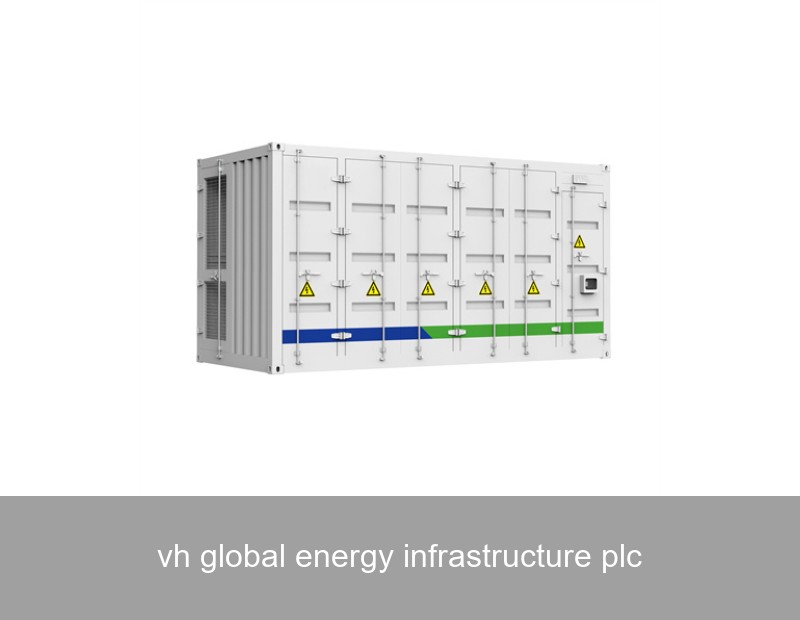
Have you ever wondered where the power for your home or business actually comes from in today's world? It's increasingly flowing through sophisticated funds and infrastructure projects that are reshaping our energy landscape. One key player you might have encountered is VH Global Energy Infrastructure plc (VH-GEIP), an investment company focused on the energy infrastructure of tomorrow. But what does this shift mean for the ground-level reality of energy security and sustainability? Let's explore how the move towards decentralized, renewable-powered systems is creating a new paradigm, and how companies like Highjoule are providing the physical technology that turns these financial investments into tangible, resilient power.
Table of Contents
The Great Energy Shift: From Centralized Grids to Distributed Assets
For decades, global energy infrastructure followed a simple model: large, centralized power plants (often fossil-fueled) sent electricity over vast networks to passive consumers. Investment funds like VH Global Energy Infrastructure plc traditionally focused on these large-scale generation and transmission assets. However, a powerful trifecta of climate urgency, economic pressure, and technological innovation is disrupting this model. The new infrastructure isn't just about massive power lines; it's about intelligent, localized systems that generate, store, and manage power right where it's used.
This is where the concept of the "energy asset" changes. A solar-plus-storage installation at a factory isn't just a cost; it's a strategic infrastructure asset that provides price stability, operational continuity, and carbon reduction. It's these very types of assets that are becoming integral to a modern energy portfolio.

Credit: Photo by American Public Power Association on Unsplash. Modern distributed energy assets, like commercial solar, are key components of new energy infrastructure.
The Data Behind the Demand: Why Infrastructure is Evolving
The transition isn't theoretical; it's driven by hard data. According to the International Energy Agency (IEA), global renewable capacity additions grew by almost 50% in 2023, hitting a record 510 gigawatts, with solar PV accounting for three-quarters of this expansion (IEA Report, 2024). This explosive growth creates a dual challenge: intermittency and grid congestion.
Consider these points:
- Grid Stability: High penetrations of variable renewables require fast-responding storage to balance supply and demand.
- Commercial Energy Costs: In markets like Germany and parts of the US, volatility in wholesale power prices makes fixed-cost self-consumption economically attractive.
- Reliability Expectations: A 2023 survey by Deloitte found that 88% of industrial businesses consider a reliable power supply critical to their operations, with many exploring on-site generation and storage.
This data paints a clear picture: the next generation of energy infrastructure, which funds like VH Global Energy Infrastructure plc invest in, must be smart, flexible, and storage-integrated.
Case Study: A European Logistics Hub's Journey to Resilience
Let's make this concrete. A major logistics company operating a 100,000 sq. meter distribution center in the Netherlands faced soaring energy costs and stringent corporate decarbonization targets. Their operations, running 24/7, were also vulnerable to grid fluctuations. They needed an infrastructure upgrade that was both an economic and environmental asset.
The Solution: They deployed a 2.5 MW rooftop solar array coupled with a 4.8 MWh battery energy storage system (BESS). The BESS was programmed for multiple value streams:
| Function | Operational Benefit | Financial Impact |
|---|---|---|
| Solar Self-Consumption Optimization | Stores excess solar generation for use at night | Reduced grid purchases by 68% |
| Peak Shaving | Discharges battery during high grid demand/price periods | Lowered peak capacity charges by 40% |
| Backup Power | Provides critical load coverage during short grid outages | Eliminated risk of spoilage for cold storage units |
The Outcome: The project achieved a return on investment in under 6 years and increased the site's renewable consumption to over 80%. It transformed a cost center into a controlled, predictable, and modern energy asset—precisely the kind of infrastructure that is defining the future.
The Highjoule Role: Bridging Investment with Intelligent Technology
This is where Highjoule's expertise becomes critical. While financial entities like VH Global Energy Infrastructure plc identify and fund the opportunities, the physical realization depends on robust, intelligent technology. Since 2005, Highjoule has been at the forefront of designing and deploying advanced battery energy storage systems (BESS) that make these modern infrastructure projects not only possible but also profitable and reliable.
For commercial and industrial (C&I) clients, as well as microgrid developers, Highjoule provides the essential "brains and muscle":
- Highjoule H-Series C&I Solutions: Scalable, containerized or modular BESS units with integrated energy management software (EMS). These systems are the workhorses for peak shaving, solar smoothing, and backup power, directly translating financial models into operational savings.
- Intelligent Grid Services Platform: For larger assets, our systems can be configured to participate in grid-balancing markets (like Frequency Response), creating an additional revenue stream for asset owners and investors, thereby enhancing the project's overall return profile.
- Full Lifecycle Support: From initial feasibility and design to long-term performance monitoring and maintenance, Highjoule ensures the energy infrastructure asset performs optimally over its entire 15-20 year lifespan, protecting the underlying investment.

Credit: Photo by Kindel Media on Pexels. Advanced BESS technology, like Highjoule's H-Series, forms the core of modern distributed energy infrastructure.
Think of it this way: the capital allocates the resources, but the right technology determines the success. Highjoule's systems are the engineered solution that turns a funded project into a high-performing, resilient energy asset.
Future-Proofing Your Energy Infrastructure
The trajectory is clear. Whether you are an investor evaluating an infrastructure fund's portfolio, a business owner managing operational costs, or a community planning a microgrid, the integration of renewable generation and advanced storage is no longer a "nice-to-have"—it's the cornerstone of modern energy infrastructure.
It requires a shift in perspective. We must view on-site energy systems not as expenses but as strategic capital investments that deliver energy security, cost control, and sustainability. The question is no longer if this transition will happen, but how quickly and how effectively you can participate in it.
So, as you consider the evolving landscape shaped by funds like VH Global Energy Infrastructure plc, ask yourself: What is the true resilience and economic potential of your own energy infrastructure, and what role could intelligent storage play in unlocking it?
 Inquiry
 Online Chat