


Welcome to Power Electric Inverters: The Heartbeat of Modern Energy Systems
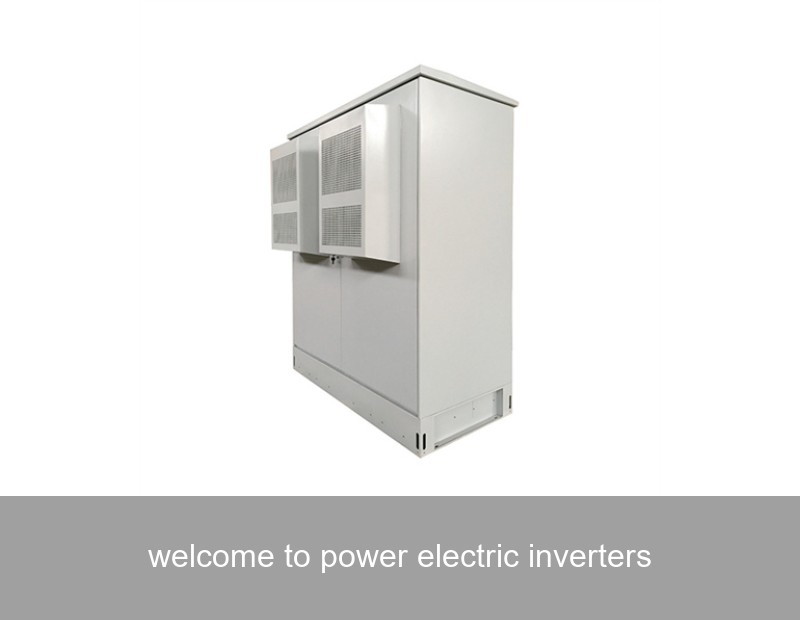
If you're exploring the world of solar panels or battery storage, you've likely heard the term "inverter." But what exactly is this crucial piece of technology? Simply put, to truly welcome to power electric inverters is to understand the intelligent translator and manager of your energy system. They are the unsung heroes that convert the raw, direct current (DC) power from your solar panels or batteries into the usable alternating current (AC) power that runs your home and business. As global energy demands shift towards resilience and sustainability, the role of the inverter has evolved from a simple converter to the brain of a smart, efficient power ecosystem.
Table of Contents
- What is an Inverter and Why Does It Matter?
- The Inverter Family: String, Micro, and Hybrid
- Beyond Conversion: Key Features of Modern Inverters
- Case Study: Overcoming Shade in a German Commercial Rooftop
- Highjoule's Approach: Intelligent Inversion for a Sustainable Future
- The Future of Inverter Technology
What is an Inverter and Why Does It Matter?
Imagine your solar panels are fluent in "DC" language, but your home appliances only understand "AC." The inverter is the expert interpreter in the middle, ensuring seamless communication. Without it, the energy harvested from the sun would be utterly useless for our grids and devices. But today's advanced inverters do far more. They perform maximum power point tracking (MPPT) to squeeze every possible watt from your panels, even as weather changes. They provide grid support functions, like frequency regulation, and are the cornerstone of any battery energy storage system (BESS), deciding when to store energy and when to release it for maximum economic and practical benefit.

Image Source: Unsplash - A modern power inverter, the central hub of a renewable energy system.
The Inverter Family: String, Micro, and Hybrid
Not all inverters are created equal. Choosing the right type is critical for system performance.
- String Inverters: The most common and cost-effective option. Panels are connected in a series "string," and the DC power is fed to a single, central inverter. Ideal for large, unshaded roofs with uniform panel orientation.
- Microinverters: These are small units attached to each individual solar panel. They convert DC to AC right at the source, allowing each panel to operate independently. This maximizes output if some panels are shaded or dirty, a common scenario on residential roofs with chimneys or trees.
- Hybrid Inverters (or Battery-Ready Inverters): This is the all-in-one solution for systems that have or plan to add battery storage. They can manage power flow from solar panels, the grid, and the battery bank simultaneously. When you welcome to power electric inverters of the hybrid variety, you're investing in a platform for energy independence.
| Inverter Type | Best For | Key Advantage | Consideration |
|---|---|---|---|
| String Inverter | Large, unshaded commercial/industrial roofs | Lower cost per watt, simpler maintenance | Performance can be limited by the weakest panel in a string |
| Microinverter | Residential roofs with complex shapes or shading | Panel-level optimization, enhanced safety, detailed monitoring | Higher initial cost, more components on the roof |
| Hybrid Inverter | Any system targeting energy storage and backup power | Integrated control, future-proofing, enables off-grid capabilities | Requires compatible battery technology; often a larger upfront investment |
Beyond Conversion: Key Features of Modern Inverters
When evaluating inverters, look beyond the basic specs. Modern units from leading providers like Highjoule offer a suite of intelligent features:
- Advanced Grid Services: Inverters can now help stabilize the grid by providing voltage support and frequency response, a capability increasingly valued by utilities in Europe and the U.S.
- Smart Energy Management: Integrated software learns your consumption patterns and automatically optimizes for self-consumption, time-of-use rate arbitrage, or backup readiness.
- Robust Monitoring & Diagnostics: Real-time, cloud-based platforms allow you to track system health and performance from your smartphone, identifying issues before they lead to significant losses.
- Safety & Reliability: Features like rapid shutdown (mandated in the U.S. NEC) and arc-fault protection are now standard, ensuring system safety for firefighters and homeowners.
Case Study: Overcoming Shade in a German Commercial Rooftop
Let's look at a real-world challenge. A mid-sized logistics company in Bavaria, Germany, wanted to install a 250 kW solar array on its warehouse roof. The roof, however, had several large ventilation units casting moving shadows across the panels throughout the day. A traditional string inverter solution was projected to lose over 15% of annual yield due to this shading.
The Solution: The system integrator chose to deploy a solution powered by Highjoule's distributed power optimizer technology, coupled with high-efficiency string inverters. Power optimizers were installed on each panel, performing MPPT at the module level to mitigate shading losses, while the central inverter handled the conversion.
The Data-Driven Result: Post-installation monitoring over 12 months showed a performance increase of 14% compared to the estimated string inverter-only output. This translated to an additional 42,000 kWh of clean energy generated annually, significantly improving the project's return on investment and meeting the company's sustainability targets ahead of schedule. This case perfectly illustrates why understanding and selecting the right inverter technology is not just technical—it's financial.

Image Source: Unsplash - Commercial rooftop solar installation, a common application for advanced inverter systems.
Highjoule's Approach: Intelligent Inversion for a Sustainable Future
Since 2005, Highjoule has been at the forefront of intelligent energy conversion. We don't just see inverters as a commodity component; we view them as the central nervous system of a resilient power network. Our product suite is designed to meet the diverse needs of the global market:
- For Homes: Our H-series Hybrid Inverters offer seamless integration with leading battery technologies, providing homeowners with backup power, bill savings, and full control through an intuitive app.
- For Business & Industry: The I-series Commercial String Inverters boast industry-leading efficiency and robust design for large-scale PV plants, featuring advanced grid-support functions required in modern interconnection agreements.
- For Microgrids & Utilities: Highjoule's M-grid Central Inverters are the workhorses for utility-scale storage and islandable microgrids, featuring black-start capabilities and sophisticated grid-forming technology that can act as a stable voltage and frequency source.
Our systems are built with a core principle: to extract maximum value from every kilowatt-hour, whether it's from the sun, the wind, or the grid. By choosing Highjoule, you're not just buying hardware; you're partnering for a smarter, more adaptive energy infrastructure. For more on how grid-forming inverters are revolutionizing power systems, see this primer from the National Renewable Energy Laboratory (NREL).
The Future of Inverter Technology
So, what's next? The inverter's evolution is accelerating. We're moving towards grid-forming inverters that can essentially "create" a grid from scratch, a critical feature for community resilience and off-grid applications. Artificial intelligence is being integrated for predictive maintenance and even more precise energy forecasting and dispatch. Furthermore, standards like the SunSpec Alliance are driving interoperability, ensuring inverters from different manufacturers can communicate seamlessly for grid services.
The journey to truly welcome to power electric inverters is an ongoing one. It's about recognizing that this technology is the key enabler for a decentralized, democratic, and decarbonized energy future. The question is no longer just about converting DC to AC; it's about how intelligently we can manage, store, and share energy.
Is your current energy system equipped with an inverter that simply converts, or one that intelligently optimizes and prepares you for the energy landscape of tomorrow? What would energy independence look like for your home or business?
 Inquiry
 Online Chat