


Where to Buy a Solar Generator: Your Guide to Smart, Sustainable Power
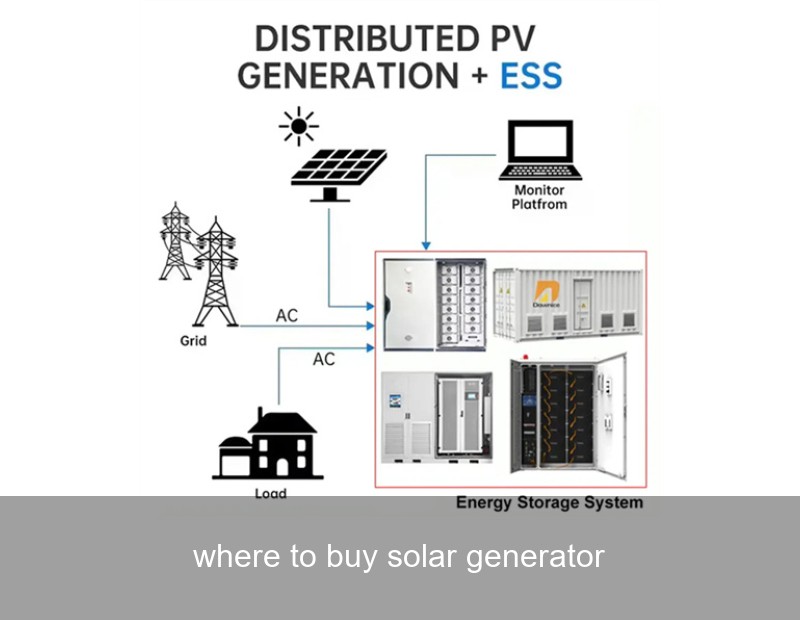
You've seen the headlines about power outages, felt the pinch of rising electricity bills, and perhaps you're eager to reduce your carbon footprint. The solution you keep coming back to is a solar generator. But then the real question hits: where do you even begin to buy a solar generator that's reliable, efficient, and truly fit for purpose? The market is flooded with portable power stations and vague promises. This guide cuts through the noise. We'll explore not just where to buy, but what to look for, using real-world data and case studies to guide your decision towards a resilient energy future.
Table of Contents
- Understanding Modern Solar Generators
- Key Considerations Before You Buy
- Where to Purchase: Pros and Cons
- Case Study: A Real-World Application
- Highjoule's Integrated Energy Solutions
- Making the Right Choice for Your Needs
Understanding Modern Solar Generators: More Than Just a Battery Box
Let's clarify terminology. A "solar generator" is typically an all-in-one system comprising a battery storage unit, a charge controller, and an inverter, designed to be paired with solar panels. Unlike noisy gas generators, they are silent, emission-free, and require minimal maintenance. The core of its value lies in transforming intermittent sunlight into dependable, usable AC power for your home, business, or outdoor adventures.

According to the International Energy Agency (IEA), global renewable capacity is set to expand by 2.5 times by 2030, with solar PV accounting for three-quarters of this growth. This surge is driven by both policy support and rising consumer demand for energy independence.
Key Considerations Before You Buy
Jumping straight to a retailer is a mistake. First, define your needs. Ask yourself these questions:
- Purpose: Is this for emergency home backup, daily off-grid living, powering a remote worksite, or recreational use?
- Power Requirements (Wattage): List the essential devices you need to run and their starting/running watts. A refrigerator might need 2000W to start but only 200W to run.
- Capacity (Watt-hours): How long do you need to power those devices? This determines your battery size.
- Scalability: Can the system grow? Will you be able to add more solar panels or battery capacity later?
- Grid Interaction: Do you want a simple backup system, or one that integrates with the grid to save on bills (like time-of-use optimization)?
Understanding these factors will transform you from a confused shopper into an informed buyer, ready to evaluate solutions on their technical merits.
Where to Purchase: Navigating the Marketplace
Once you know what you need, you can effectively explore where to buy a solar generator. Each channel serves a different customer profile.
| Purchase Channel | Pros | Cons | Best For |
|---|---|---|---|
| Big-Box Retailers & Online Marketplaces (Amazon, Home Depot) | Convenience, fast shipping, competitive pricing on known brands, easy returns. | Limited expert advice, primarily smaller portable units, lack of customized system design, minimal post-sales support for integration. | Portable power for camping, RVs, or very small-scale emergency backup. |
| Specialized Renewable Energy Online Retailers | Broader selection of components, better product information, some technical support. | Still requires significant DIY knowledge, system integration responsibility falls on you, warranty claims can be complex. | Technically-inclined DIYers building a custom system from components. |
| Authorized System Providers & Integrators (Like Highjoule) | Expert needs assessment, custom system design, professional installation, comprehensive warranty, ongoing monitoring & support, grid interconnection assistance. | Higher initial investment, involves a consultation process. | Homeowners seeking whole-home backup, businesses ensuring continuity, and reliable off-grid/microgrid solutions. |
For anything beyond a portable device, partnering with a specialist is not an expense—it's an investment in safety, performance, and long-term peace of mind.
Case Study: Ensuring Business Continuity in California
Let's look at real data. A mid-sized winery in Napa Valley, California, faced recurring threats from Public Safety Power Shutoffs (PSPS) to prevent wildfires. A single day without power during critical fermentation or cooling processes could ruin hundreds of thousands of dollars in product.
The Problem: 48+ hour grid outages threatening critical refrigeration and production systems.
The Solution & Data: The winery partnered with an authorized integrator to install a 150 kWh battery energy storage system (BESS) coupled with a 100 kW solar carport. The system was designed for seamless backup.
- Outcome: During a 3-day PSPS event in 2023, the winery operated at 100% capacity. The system powered critical loads, saving an estimated $320,000 in potential product loss.
- Additional Benefit: The system's intelligent software engages in daily energy arbitrage, reducing the winery's overall electricity costs by an average of 18%, as reported by the National Renewable Energy Laboratory (NREL) in similar commercial applications.
This case highlights that the right purchase decision is about more than hardware—it's about the solution's design and intelligence.
Highjoule's Approach: Beyond the Generator, Towards Intelligent Energy Management
At Highjoule, we view the question of "where to buy a solar generator" as the first step toward a larger conversation about energy resilience. Since 2005, we have evolved from a component supplier to a global provider of integrated, smart storage solutions.
Our product suite, like the Highjoule H-Series Commercial BESS and the ResilientHome™ Residential System, is built on a philosophy of intelligent integration. These are not just boxes you plug in; they are adaptive energy hubs.
- AI-Powered Energy Orchestrator: Our systems don't just store and release power. They forecast weather, learn your consumption patterns, and optimize for self-consumption, cost savings, or backup readiness.
- Scalable & Modular Design: Start with what you need and expand effortlessly. Our modular battery architecture allows capacity to grow with your demands.
- Global Support & Monitoring: Every Highjoule system comes with 24/7 cloud-based monitoring. Our team and partners across Europe and the U.S. provide local support, from permitting to maintenance.

For a business, this means operational continuity. For a homeowner, it means never worrying about a blackout. For a community microgrid, it means stable, clean power.
Making the Right Choice for Your Energy Future
So, where should you buy a solar generator? If your goal is simply to power a few gadgets on a weekend trip, a consumer portable unit from a major retailer may suffice. But if you are serious about protecting your home, business, or achieving true energy independence, the path leads to experts who offer a complete service.
The future of energy is decentralized, digital, and sustainable. Your power system should be a smart asset, not a passive appliance. It should be tailored, supported, and ready to evolve.
Ready to Define Your Power Resilience Strategy?
What is the one critical load in your home or business that, if lost to a power outage, would be most costly or disruptive? Identifying that is the perfect first step toward designing your ideal solar and storage solution. Contact a Highjoule-authorized partner in your region today for a free, no-obligation energy assessment. Let's discuss how to turn sunlight into your most reliable utility.
 Inquiry
 Online Chat