


Where to Get Solar Cells: Your Guide to Sourcing for a Sustainable Future
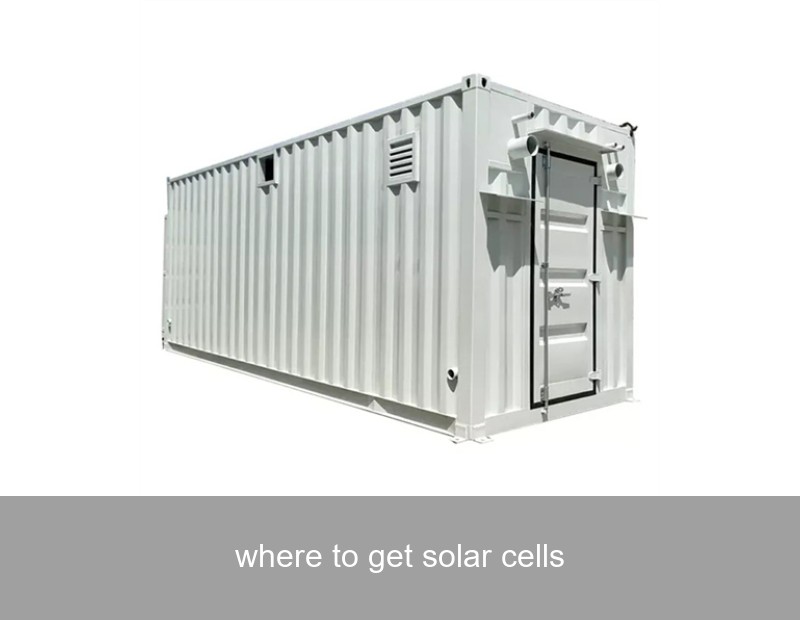
So, you've decided to harness the power of the sun. Whether you're a homeowner looking to cut energy bills, a business aiming for energy independence, or a project developer, the first logical question is: where to get solar cells? The journey from a bright idea to a functioning solar array involves navigating a landscape of manufacturers, technologies, and integrators. This guide will illuminate your path, not just to a source of components, but to a complete, intelligent energy solution.
Table of Contents
Understanding Solar Cells vs. Complete Systems
First, let's clarify terminology. A solar cell (or photovoltaic cell) is the basic unit, typically made of silicon, that converts sunlight into electricity. You rarely buy individual cells. Instead, they are assembled into solar panels (modules). But here's the crucial insight: a panel alone is just one piece of the puzzle. Asking "where to get solar cells" is often the starting point for a broader need: a reliable, efficient, and bankable energy system. This includes inverters, mounting structures, wiring, and critically—an advanced Battery Energy Storage System (BESS) to store excess power for use when the sun isn't shining.
Primary Sourcing Options: Where to Get Solar Cells and Panels
Your sourcing strategy depends on your project scale, expertise, and goals.
1. Direct from Manufacturers (Tier 1 & Specialized)
For large-scale commercial or industrial projects, sourcing directly from established manufacturers is common. These are often "Tier 1" brands, recognized for their bankability and scale. Think of companies like LONGi, JinkoSolar, or REC. While this route can offer competitive pricing for bulk orders, it requires significant technical expertise in logistics, system design, and integration. You are essentially becoming the system integrator yourself.
2. Through Distributors and Wholesalers
For installers and medium-sized projects, distributors act as a vital link. They aggregate products from multiple manufacturers, offering a range of options and simplifying procurement. This provides more flexibility than a single manufacturer but still places the onus of system design and component compatibility on the buyer.
3. From Full-Service System Providers (The Integrated Solution)
This is where the market is evolving for most end-users. Instead of asking "where to get solar cells," forward-thinking businesses and homeowners are asking, "who can provide a guaranteed, high-performance energy outcome?" This is the domain of advanced providers like Highjoule. Since 2005, Highjoule has moved beyond simply supplying components to delivering intelligent, integrated storage-first systems. We source premium solar panels from trusted partners and seamlessly combine them with our core expertise: cutting-edge, AI-optimized battery storage and energy management software. You get a single point of responsibility for performance, safety, and ROI.

Credit: Unsplash / American Public Power Association. Modern commercial solar installations require seamless integration, not just panels.
Key Considerations Before You Buy
Your checklist should extend beyond price-per-watt.
- Efficiency & Degradation Rates: Higher efficiency panels produce more power in limited space. A lower annual degradation rate (e.g., 0.25% vs. 0.5%) means better long-term yield.
- Warranties: Look for robust product (10-12 years) and performance warranties (25+ years guaranteeing 80-92% output).
- Storage Integration: This is non-negotiable for modern systems. Can the panels be seamlessly integrated with a high-cycle life, safe battery system? Highjoule's systems, for instance, use LiFePO4 chemistry for safety and longevity, coupled with an inverter designed for dynamic grid interaction.
- Compliance & Standards: In the EU and US, ensure products have IEC, UL, or other regional certifications. They are markers of safety and reliability.
- After-Sales Support & Monitoring: Who will monitor system health, provide OTA updates, and handle maintenance? A provider like Highjoule offers 24/7 cloud-based monitoring and proactive support for the entire system lifecycle.
Case Study: Sourcing for Maximum ROI - A Bavarian Industrial Park
Let's look at real data from a project in southern Germany. A mid-sized manufacturing plant wanted to reduce its grid dependency and rising energy costs. Their initial question was, "where can we get high-efficiency solar cells?"
| Approach Considered | Projected Outcome | Challenge |
|---|---|---|
| Sourcing Panels Only (DIY Integration) | ~40% self-consumption | Excess midday solar would be exported at low feed-in tariffs, missing optimization. |
| Panels + Generic Storage | ~70% self-consumption | Battery-inverter communication issues led to suboptimal cycling and unclear long-term performance. |
| Integrated Highjoule Solution (Sourced Panels + Highjoule BESS + AI Manager) | 94% self-consumption | Required a trusted partner for full system design and long-term service. |
The plant chose the integrated Highjoule solution. The result? A 2.1 MWp solar carport system paired with a 1.2 MWh Highjoule CubeStack battery system. The AI-driven energy management software forecasts production and load, dynamically deciding when to store, consume, or sell. In the first 18 months, they achieved a 94% self-consumption rate of solar power and reduced their grid energy purchases by 68%. The question shifted from "where to get cells" to "how to maximize the value of every electron," and the integrated system provided the answer. (Data sourced from internal Highjoule project monitoring portal, 2023).
The Highjoule Approach: Beyond Just "Where to Get Solar Cells"
At Highjoule, we believe your goal isn't to acquire components; it's to achieve energy resilience and sustainability. As a global leader since 2005, we provide a holistic answer:
- Product Ecosystem: We offer the Highjoule PowerStack for residential and small commercial needs, the scalable CubeStack for C&I applications, and the MegaGrid solution for utility-scale microgrids. Each is designed to integrate perfectly with solar PV.
- Intelligent Software: Our Highjoule Neuron platform is the brain of the operation, using machine learning to optimize energy flows, participate in demand response programs (key in the US and EU markets), and ensure every kWh of your sourced solar is used optimally.
- End-to-End Service: From initial consultancy and system design using our sourced, certified panels, through installation support, to lifelong monitoring and maintenance, we are your single partner.
Credit: Unsplash / ThisisEngineering. Advanced storage systems, like Highjoule's CubeStack, require sophisticated monitoring and integration.
Why This Matters for Your Sourcing Decision
Choosing an integrated provider mitigates risk. According to a 2023 NREL report on PV system reliability, integration and commissioning issues are a leading cause of underperformance. By partnering with a specialist like Highjoule, you ensure that the solar cells you source operate at their peak potential as part of a cohesive system for decades.
Making Your Final Choice
So, where should you get solar cells? If you are a procurement expert for a multi-MW solar farm, direct manufacturer relationships are key. For most seeking sustainable power for their business, home, or community, the modern answer lies with technology-integrated system providers.
Your journey shouldn't end with the delivery of panels. It should begin with a clear vision of energy independence. The right partner doesn't just supply a component; they provide the intelligence to make your entire energy ecosystem work harder and smarter.
What is the primary energy challenge for your property or project that a truly intelligent solar-plus-storage system could solve?
 Inquiry
 Online Chat