


Finding Reliable Tubular Batteries Suppliers for Long-Term Energy Storage
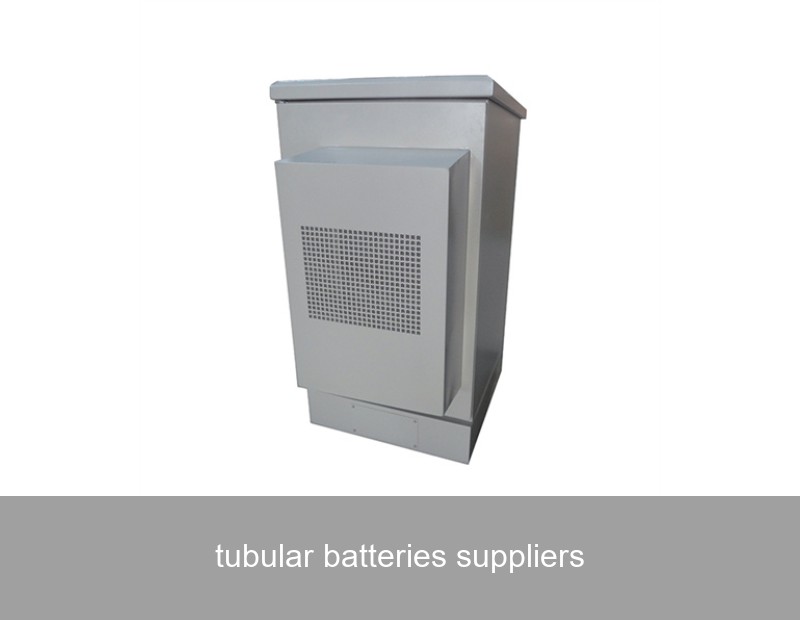
If you're managing a solar installation, an off-grid system, or a critical backup power setup, you've likely encountered the term "tubular battery." More than just a product category, choosing the right tubular batteries suppliers is a strategic decision that impacts your system's reliability, total cost of ownership, and sustainability goals. This article will guide you through why tubular plate technology remains a cornerstone for demanding applications and how to partner with suppliers who deliver not just products, but intelligent energy solutions.
Table of Contents
- What Are Tubular Batteries and Why Do They Last Longer?
- Key Applications: Where Tubular Batteries Excel
- Beyond Price: 5 Critical Criteria for Evaluating Tubular Batteries Suppliers
- Case Study: A European Agri-Solar Project's Reliance on Tubular Technology
- The Future of Tubular Batteries in an Advanced Energy Ecosystem
What Are Tubular Batteries and Why Do They Last Longer?
At its heart, a tubular battery is a type of lead-acid battery, but with a crucial design difference that sets it apart from standard flat-plate batteries. Imagine the positive plate not as a solid grid but as a series of vertical spines. Each spine is housed inside a tubular sleeve, typically made from a woven polyester or similar material. This sleeve is packed with active material (lead oxide).
This ingenious design solves a classic problem: active material shedding. In flat-plate batteries, the active material can gradually dislodge from the grid with repeated charging and discharging cycles, leading to capacity loss. The tubular design physically contains the active material, dramatically reducing shedding. The result? Significantly longer cycle life and deeper discharge recovery. While a standard flat-plate battery might offer 300-500 deep cycles, a well-maintained tubular battery can deliver 1200 to 1500+ cycles at 80% depth of discharge (DoD). For systems that cycle daily, this translates to years of additional service.

Image Source: U.S. Department of Energy - Public domain illustration on battery cycle life comparison.
The Technology Behind the Tube
The durability comes from the structure. The tubular plate allows for a thicker, more robust active mass. Furthermore, the design promotes better electrolyte circulation, reducing stratification—a condition where acid concentration varies from top to bottom, which can harm battery life. This makes tubular batteries exceptionally suited for renewable energy storage, where daily, deep cycling is the norm.
Key Applications: Where Tubular Batteries Excel
Not every application needs the ruggedness of a tubular battery. However, in specific scenarios, they are the undisputed workhorse. Here’s where partnering with experienced tubular batteries suppliers becomes essential:
- Solar Energy Storage (On & Off-Grid): Daily charging from panels and discharging at night demands a battery built for cycling. Tubular batteries are a cost-effective, reliable choice for residential solar-plus-storage and larger commercial solar installations.
- Telecom and UPS for Critical Infrastructure: For base stations or data center backup where power quality and reliability are non-negotiable, the long float life and deep discharge capability of tubular batteries provide critical security.
- Electric Mobility and Traction: In forklifts, golf carts, and renewable-powered vehicles, the high cycling capability and ability to withstand partial state-of-charge operation are key benefits.
- Microgrids & Industrial Backup: In remote or industrial settings where the grid is unstable or absent, tubular batteries form the resilient backbone of the energy storage system, often paired with generators and renewables.
Beyond Price: 5 Critical Criteria for Evaluating Tubular Batteries Suppliers
Choosing a supplier on price alone is a common pitfall. The true cost encompasses longevity, maintenance, and system integration. Here’s what to look for:
| Criteria | Why It Matters | Questions to Ask Suppliers |
|---|---|---|
| 1. Technical Support & System Design | A battery doesn't operate in a vacuum. It needs to be correctly sized and integrated with charge controllers, inverters, and BMS. | Do you offer free system sizing or consultancy? Can your batteries interface with common inverter/BMS protocols? |
| 2. Product Transparency & Certifications | Certifications (like IEC, UL, CE) are baseline indicators of safety and quality. Demand detailed datasheets with cycle life graphs at specific DoD. | Can you provide certified test reports for cycle life and performance? Are your batteries compliant with regional safety standards? |
| 3. Warranty Structure & After-Sales Service | A strong warranty reflects manufacturer confidence. Look for a clear, pro-rata warranty that spans 5+ years and includes local service support. | What is the exact warranty period and terms? Is there a local technical team for troubleshooting? |
| 4. Sustainability & Recycling Commitment | Lead-acid batteries have a >99% recycling rate. Responsible suppliers have a clear take-back program, closing the material loop. | Do you operate or partner with a certified battery recycling program? Can you document the recycling chain? |
| 5. Manufacturing Depth & R&D | Suppliers with in-house plate manufacturing and active R&D have better quality control and can offer product innovations. | Do you manufacture the tubular plates yourselves? Are you investing in improvements to electrolyte or grid alloys? |
This is precisely the philosophy at Highjoule. Since 2005, we have evolved from a tubular batteries supplier to a comprehensive advanced energy storage provider. Our HJT Series Tubular Batteries are engineered in-house for maximum cycle life and are a core component in our tailored solutions. But more importantly, we provide the smart energy management software and system integration expertise that ensures these robust batteries perform optimally within a commercial, industrial, or residential storage system, delivering true long-term value.
Case Study: A European Agri-Solar Project's Reliance on Tubular Technology
Let's look at a real-world example from Southern Spain, a region with high solar irradiation and a significant agricultural sector.
Phenomenon: A large almond farm operation relied on diesel generators to power irrigation pumps and processing facilities. High fuel costs, carbon emissions, and noise were persistent issues. They installed a large-scale solar PV array but needed reliable storage to shift solar energy for use during evening irrigation cycles and overnight processing.
Data & Solution: The system required a battery bank capable of a daily cycle of 40 kWh discharge at a 70% depth of discharge. The key criteria were cost-effectiveness over a 7-year horizon, high cycle life, and tolerance to high ambient temperatures. After analysis, a solution centered on a 48V string of Highjoule HJT-4000 tubular batteries was selected, coupled with a smart hybrid inverter and Highjoule's GridShield™ monitoring platform.
Outcome & Data: The system has been operational for over 3 years. Monitoring data shows the battery bank consistently delivers the required daily throughput. Performance analysis indicates less than 8% capacity degradation to date, aligning with the projected cycle life that made the tubular technology the most economical choice. The farm has reduced its diesel consumption by over 85%, turning a significant operational cost into a fixed, predictable investment. This case underscores that in demanding, daily-cycling renewable applications, advanced tubular batteries remain a technically and financially sound choice. You can explore more on the importance of storage in agri-solar from the International Renewable Energy Agency (IRENA).

Image Source: Farm Energy Extension - Example of agri-solar integration (representative image).
The Future of Tubular Batteries in an Advanced Energy Ecosystem
With the rise of lithium-ion, some may question the future of tubular lead-acid technology. The reality is one of coexistence and specialization. Lithium-ion excels in high power-density, weight-sensitive applications. Tubular batteries offer unparalleled cost-per-cycle in high-cycle, stationary applications, along with inherent safety and recyclability.
The future lies in intelligent hybridization and smarter management. At Highjoule, we see this evolution firsthand. Our Energy Operating System (EOS) can manage multi-technology storage fleets. Imagine a microgrid where lithium handles rapid grid stabilization, while a bank of intelligently managed tubular batteries provides the daily bulk energy cycling for solar load shifting. This optimizes both capital expenditure and system lifespan. Research into advanced lead-carbon additives and improved grid alloys continues to push the performance envelope of tubular technology, as noted in studies from institutions like the Advanced Lead-Acid Battery Consortium (ALABC).
Highjoule's Integrated Approach
As a global provider, Highjoule doesn't just supply batteries; we supply certainty. For clients whose needs align with the strengths of tubular technology, we offer the complete package: High-performance HJT Series batteries, compatible bi-directional inverters, and our cloud-based EOS for proactive health monitoring, state-of-charge optimization, and warranty validation. This integrated approach transforms a commodity purchase into a guaranteed performance outcome.
So, as you evaluate your next energy storage project and assess potential tubular batteries suppliers, what will be the decisive factor for you: the lowest upfront cost, or the highest certainty of achieving your total cost of ownership and sustainability targets over the next decade?
 Inquiry
 Online Chat