


Which is the Best Solar Generator? A Guide to Smart, Sustainable Power
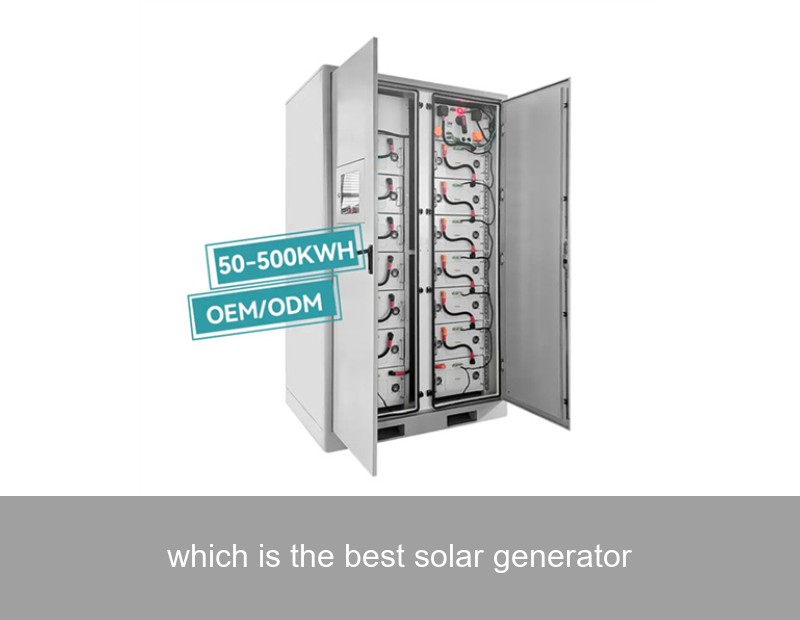
You've probably seen the compact, portable "solar generators" – essentially large power banks with foldable panels – marketed for camping or emergency backup. But when homeowners and business owners ask, "which is the best solar generator?", they're often looking for something more. They seek a resilient, intelligent, and scalable energy solution that can truly power their daily lives or operations, reduce grid dependency, and maximize solar investment. This quest leads us beyond the portable box to integrated solar-plus-storage systems: the true modern "solar generators" for homes and businesses.
This article will guide you through the essential criteria that define a superior solar energy storage system. We'll move from common power anxieties to tangible data, explore a real-world example, and provide the insights you need to make an informed decision for your sustainable energy future.
Key Criteria: What Makes the Best Solar Generator?
Choosing the right system isn't about finding a single "best" product, but the best fit for your specific energy profile, goals, and location. Let's break down the non-negotiable factors.
1. Power & Capacity: The Heart of the System
Think of capacity (kWh) as the size of your fuel tank and power (kW) as the size of the engine. A system with high capacity but low peak power might not start your well pump or air conditioner. Conversely, high power with low capacity will drain quickly.
- Continuous & Surge Power: Ensure the inverter can handle your base loads (e.g., fridge, lights) and the momentary surge of motor-driven appliances.
- Usable Capacity: Not all battery capacity is available. Look for a high Depth of Discharge (DoD) percentage. A 10kWh battery with 90% DoD gives you 9kWh of usable energy.
For whole-home backup or significant commercial load shifting, modular systems that allow you to expand capacity and power over time offer the greatest long-term value.
2. Solar Charging & Efficiency: Harnessing Every Photon
The best system wastes as little solar energy as possible. This comes down to component quality and system integration.
| Efficiency Factor | Why It Matters |
|---|---|
| Solar Panel Efficiency | Higher efficiency panels (22%+) produce more power in limited roof space. |
| Inverter Efficiency | Look for peak efficiencies over 97%. Losses here mean lost power. |
| Round-Trip Efficiency | For the battery, this is the % of energy put in that you can get out. 95%+ is excellent. |
Furthermore, a system with MPPT (Maximum Power Point Tracking) solar charge controllers optimizes the harvest from your panels throughout the day, especially in non-ideal weather.

Image: A modern home solar-plus-storage installation. Source: Unsplash
3. Durability, Safety & Intelligence: Built to Last and Think
This is where premium systems separate themselves. Key considerations include:
- Battery Chemistry: Lithium Iron Phosphate (LFP) is now the benchmark for residential and commercial storage due to its longer lifespan (6,000+ cycles), superior thermal stability, and safety compared to older NMC chemistries. (U.S. Department of Energy on battery chemistries).
- Cycles & Warranty: The warranty (often 10+ years) and guaranteed end-of-warranty capacity (e.g., 70% remaining) are critical indicators of long-term value.
- Software & Grid Services: The "best solar generator" is a smart energy manager. Can it learn your consumption patterns? Can it be configured for time-of-use optimization, or participate in utility demand response programs? Intelligent software turns your system from a backup into a grid-interactive asset.
From Theory to Practice: A German Case Study
Let's ground these criteria in reality. Consider a mid-sized bakery in Bavaria, Germany. Their challenge: high afternoon energy costs, a need for uninterrupted refrigeration, and a desire to utilize their large rooftop solar array more effectively.
Phenomenon: High grid tariffs during peak hours were eroding profits. Solar overproduction at midday was being exported at low feed-in tariffs, while they bought expensive power later.
Data & Solution: They installed a 25 kWh integrated LFP battery storage system paired with their existing 30 kWp solar array. The system was configured for self-consumption optimization and peak shaving.
Result: Within a year:
- Grid electricity consumption during peak hours reduced by 82%.
- Self-consumption of solar power increased from 35% to over 80%.
- The system provided seamless backup during two grid outages, preventing thousands of euros in spoiled inventory.
- Projected payback period: 6-7 years, thanks to high German electricity prices and intelligent software controls. (Fraunhofer ISE on levelized cost of electricity).
Insight: The "best" system for this business wasn't the largest or cheapest. It was the one that integrated seamlessly, offered robust software for economic optimization, and provided the reliability essential for their operations.
The Highjoule Difference: Engineered for Reliability and Intelligence
At Highjoule, with nearly two decades of experience since 2005, we've engineered our HPS (Highjoule PowerStack) series for customers who view energy storage not as a commodity, but as a critical infrastructure investment.
Our systems are designed to excel in the criteria that matter most for long-term performance:
- Uncompromising Core: We use premium LFP cells in a modular, rack-mountable design, allowing capacity from 10 kWh to multi-megawatt scales. Our HPS systems boast a round-trip efficiency of >96% and are backed by a 10-year warranty with guaranteed end-of-warranty capacity.
- Grid Intelligence: The Highjoule Energy Operating System (EOS) is the brain of the system. It doesn't just store and release energy; it learns, forecasts (using weather data), and automatically chooses the most economical mode—whether it's maximizing self-consumption, charging during low-cost periods, or providing backup power.
- Professional Integration: We provide our systems through a global network of certified installers, ensuring proper design, permitting, and commissioning for commercial, industrial, residential, and microgrid applications. Our focus is on delivering a complete, code-compliant power solution, not just hardware in a box.

Image: Example of a professional, large-scale battery storage installation. Source: Unsplash
Your Energy, Your Choice: What's Your Priority?
The journey to answering "which is the best solar generator?" starts by clearly defining your own priorities. Is it ultimate off-grid resilience for a remote home? Maximizing financial return from a commercial solar array? Or simply ensuring your family's comfort and safety during increasingly common grid disruptions? (IEA on grid-scale storage needs).
The landscape of energy storage is evolving rapidly. What will your energy independence look like five years from now, and what step will you take today to build it?
 Inquiry
 Online Chat