


Which Solar Battery is Best for Home? Your Guide to Energy Independence
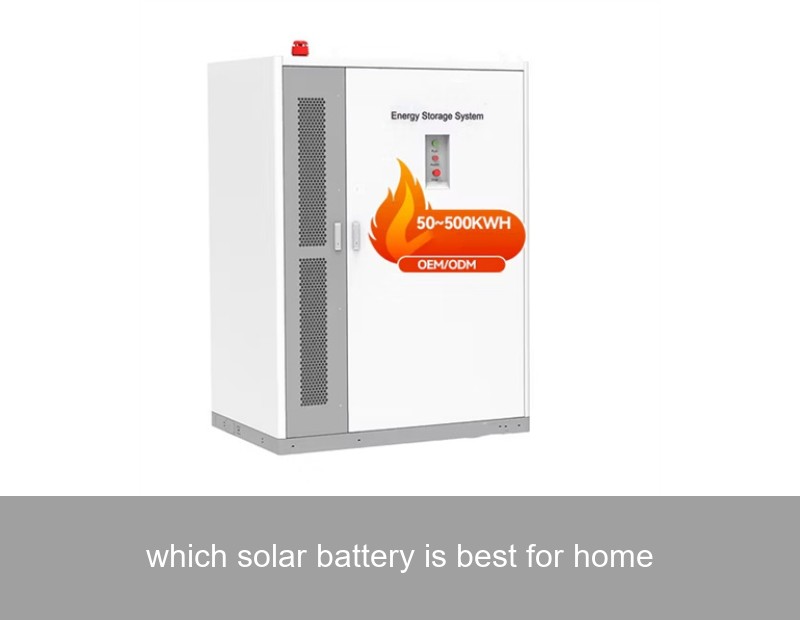
You've made the smart decision to install solar panels. Now, you're watching the sun power your home during the day, but what happens when the sun sets or the grid goes down? This is the crucial moment where the question which solar battery is best for home becomes paramount. A home battery storage system is the missing piece that transforms your solar array from a daytime saver into a 24/7 power station, maximizing self-consumption, providing backup security, and truly unlocking energy independence. But with so many options on the market, from well-known brands to emerging technologies, how do you navigate this complex landscape? Let's break down the essentials to find the perfect energy storage partner for your home.
Key Factors for Choosing the Best Home Solar Battery
Selecting a battery isn't about finding the single "best" product for everyone; it's about finding the best fit for your specific energy profile, home, and goals. Think of it like buying a car—you consider range, power, features, and reliability differently if you have a long commute versus just need city runabouts. Here are the critical specifications you need to understand.
1. Capacity & Power: The "Tank" and the "Hose"
These are the two most fundamental metrics, and confusing them is a common pitfall.
- Usable Capacity (kWh): This is the size of your energy "tank." It tells you how much electricity the battery can store. A 10 kWh battery can, in theory, power a 1 kW appliance for 10 hours. To size this, look at your nightly energy consumption or the amount of excess solar you typically send to the grid.
- Continuous Power (kW): This is the width of the "hose." It dictates how many appliances you can run simultaneously from the battery. A 5 kW system might run your fridge, lights, and Wi-Fi easily, but it may struggle if your air conditioner (which can draw 3-4 kW on startup) kicks on while other loads are running.
High-performing systems, like the Highjoule ResiCore Series, are engineered to excel in both areas, offering high capacity alongside robust peak power output to handle demanding startup loads from well pumps or HVAC systems seamlessly.
2. Depth of Discharge (DoD) & Battery Life
Not all of a battery's rated capacity should be used daily. Depth of Discharge (DoD) indicates the percentage of the battery you can safely use without significantly degrading it. A 10 kWh battery with a 90% DoD gives you 9 kWh of usable energy. A higher DoD means you get more value from your physical battery. Furthermore, look at the warranty: it's typically stated as a guarantee for a certain number of cycles (a full charge and discharge) or years, whichever comes first. A 10-year / 10,000-cycle warranty with 90% capacity retention is a strong indicator of a robust, long-lasting product.
3. Efficiency & Integration
When you store energy, you want to get most of it back. Round-trip efficiency is the percentage of electricity put into the battery that you can later use. Top-tier systems now achieve over 95% efficiency. Equally important is system integration. Is the battery a DC-coupled or AC-coupled system? DC-coupled systems, often integrated with a hybrid inverter, can be more efficient for new solar installations. AC-coupled systems, like many all-in-one solutions, are typically easier to retrofit to existing solar setups. The best choice depends on your specific installation context.

Image: A modern, wall-mounted home battery system. Source: Unsplash
Battery Technologies Compared: Lithium-ion's Dominance
While several chemistries exist, lithium-ion is the undisputed standard for home storage today, primarily due to its high energy density, efficiency, and declining cost. But even within lithium-ion, there are key variations.
| Chemistry | Key Characteristics | Best For |
|---|---|---|
| Lithium Iron Phosphate (LFP) | Excellent safety (thermal stability), long cycle life (6,000+ cycles), high DoD. Slightly lower energy density than NMC. | Homeowners prioritizing safety, longevity, and full daily cycling. The leading choice for sustainable home storage. |
| Nickel Manganese Cobalt (NMC) | High energy density (compact size), good power output. Historically more common but has higher thermal runaway risk than LFP. | Situations where space is extremely limited and high power in a small footprint is critical. |
The industry has seen a decisive shift towards LFP chemistry for residential use, a shift Highjoule championed early. Our ResiCore batteries utilize advanced LFP cells, prioritizing inherent safety—they are far more resistant to overheating—and a lifespan designed to outlast your solar panels. This translates to peace of mind and a lower total cost of ownership over decades.
A Real-World Case Study: From Grid Anxiety to Energy Security
Let's move from theory to practice. Consider the Miller family in California, USA, an area prone to Public Safety Power Shutoffs (PSPS) and rising electricity rates. Their goal: achieve near-total energy self-sufficiency and guaranteed backup power for essential loads.
- Challenge: 8 kW solar system, high evening energy use, frequent grid outages.
- Solution: A 22 kWh LFP battery system with a 7 kW continuous power inverter, installed alongside their existing solar.
- Outcome (Data from first year):
- Self-Consumption Increased from 35% to 85%: They now use the vast majority of the solar energy they produce.
- Grid Independence During Outages: The system provided uninterrupted power during 4 grid outages, the longest lasting 14 hours, keeping lights, refrigeration, and medical equipment running.
- Bill Savings: Combined with solar, their annual electricity bill was reduced by over 92%.
This case, documented in a U.S. Department of Energy report on storage benefits, highlights how the right battery system directly addresses financial, reliability, and resilience concerns. The Millers didn't just buy a battery; they invested in a new, predictable energy reality for their household.
The Highjoule Solution: Engineered for Performance and Simplicity
At Highjoule, with nearly two decades of experience since 2005 powering everything from industrial microgrids to residential communities, we've distilled our expertise into our residential line: the Highjoule ResiCore Energy System. We believe the best home solar battery isn't just about specs on a sheet; it's about integrated intelligence, unwavering safety, and seamless user experience.
Our ResiCore system is a modular, AC-coupled solution built around LFP chemistry. Here’s how it stands out:
- Adaptive AI Energy Management: Our system doesn't just store and release energy. Its brain learns your consumption patterns, weather forecasts, and utility rate schedules (like time-of-use) to autonomously optimize when to charge from solar or the grid and when to discharge, maximizing your savings without you lifting a finger.
- Scalable Modular Design: Start with a base unit and add more battery modules as your needs or budget grow. This future-proofs your investment.
- Professional Monitoring & Support: Through the intuitive Highjoule Home app, you have complete visibility into your energy flows. More importantly, our systems include proactive monitoring, allowing our support team to identify and often resolve potential issues remotely, ensuring optimal performance.

Image: Monitoring and controlling a home energy system via a smartphone app. Source: Unsplash
Making the Right Choice for Your Home
So, which solar battery is best for home? The answer lies in a careful evaluation. Prioritize safety (LFP chemistry), long-term value (warranty and cycle life), and intelligent software that works to save you money daily. Look beyond the sticker price to the total cost of ownership over 10-15 years.
It's also crucial to partner with a certified, experienced installer who can properly assess your home's electrical system and energy needs. They are your key to a safe and compliant installation. You can find excellent technical guidance on system sizing from independent sources like the National Renewable Energy Laboratory (NREL).
Your Next Step Towards Energy Independence
The journey to energy independence is exciting. You've taken the first step by seeking knowledge. Now, we invite you to go deeper. What specific concern keeps you up at night regarding your home's power—is it the unpredictability of your electricity bill, the vulnerability during storms, or simply the desire to make the most of your solar investment? Share your primary goal, and let's discuss how a tailored energy storage solution can make it a reality.
 Inquiry
 Online Chat