


Which Solar Panels Are Best for Your Home or Business? A Clear Guide
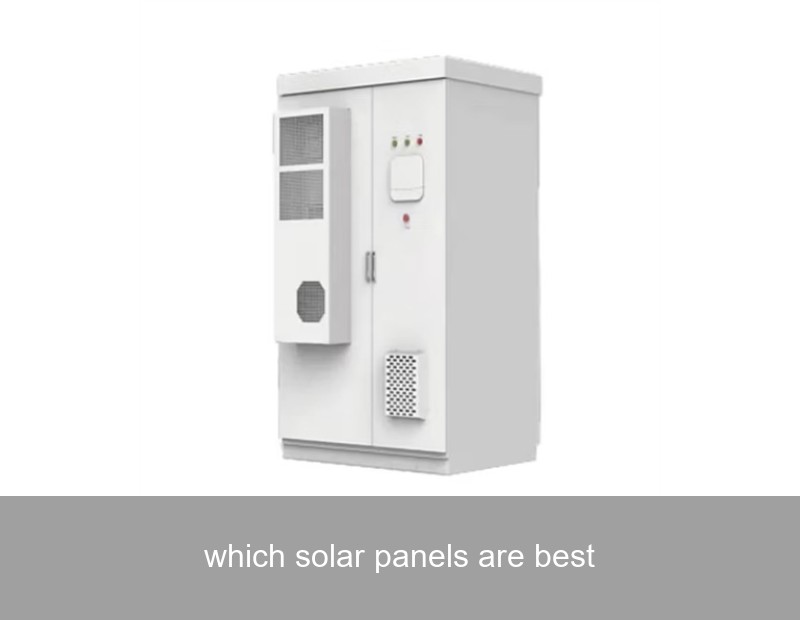
You've decided to make the switch to solar power. It's a brilliant move for your wallet and the planet. But as you start your research, a simple question arises: which solar panels are best? The market is flooded with options—monocrystalline, polycrystalline, PERC, bifacial—each with its own claims of efficiency and durability. It can feel overwhelming. The truth is, the "best" panel isn't a one-size-fits-all answer; it depends on your roof, your energy goals, your location, and how the panels integrate with a complete energy system. Let's demystify the choices and find the optimal solution for you.
The Core Contenders: Understanding Solar Panel Technologies
Think of solar panels like engines: they all convert sunlight into power, but their design and materials determine their performance. Here’s a breakdown of the most common types you'll encounter.
Monocrystalline Solar Panels
Made from a single, pure silicon crystal, these panels are the efficiency champions. You can recognize them by their uniform dark color and rounded cell edges.
- Efficiency: Typically 18-22% or higher. They produce more power per square foot.
- Pros: High efficiency, sleek appearance, long lifespan (often 25+ years), better performance in low-light conditions.
- Cons: Higher cost per panel due to a more complex manufacturing process.
Polycrystalline Solar Panels
These are made from fragments of silicon melted together. They have a blue, speckled look.
- Efficiency: Typically 15-17%.
- Pros: More affordable price point, a robust and proven technology.
- Cons: Lower efficiency and heat tolerance, meaning you might need more roof space for the same output.
Advanced Technologies: PERC and Bifacial
The innovation continues. Passivated Emitter and Rear Cell (PERC) technology adds a layer to the back of monocrystalline cells, boosting efficiency by capturing more light. Bifacial panels can generate power from both sides, capturing sunlight reflected off rooftops or the ground, which can increase energy yield by up to 30% in ideal installations (like ground-mounted systems).
| Type | Average Efficiency | Best For | Considerations |
|---|---|---|---|
| Monocrystalline | 18-22%+ | Limited roof space, maximizing output, long-term value | Higher initial investment |
| Polycrystalline | 15-17% | Budget-conscious projects with ample space | Requires more panels for same output |
| Monocrystalline PERC | 20-23%+ | Those seeking the highest efficiency currently available | Premium pricing |
Beyond the Panel: Why the Full System is Key
Choosing the right panel is crucial, but it's only one piece of the puzzle. The true measure of a solar investment isn't just the panels on your roof—it's the reliable, clean energy you can use, day and night. This is where the conversation shifts from "which solar panels are best" to "which solar energy system is best."
An efficient panel generates power when the sun shines. But what about evenings, cloudy days, or during a grid outage? This is the critical gap that a holistic energy solution fills. The most advanced panels are most valuable when paired with a sophisticated battery storage system and intelligent energy management.
This integrated approach is where Highjoule excels. Since 2005, we've moved beyond just components to deliver complete, smart energy ecosystems. For homeowners and businesses, this means pairing high-efficiency solar panels (from trusted manufacturers we rigorously qualify) with our core strength: the Highjoule Harmony Series battery storage system.
Imagine this: your premium monocrystalline panels produce a surplus at midday. Instead of sending it all back to the grid for minimal credit, the Harmony system stores it intelligently. Then, during the expensive evening peak, your home automatically draws from the battery, slashing your bills. In the event of a power cut, the system can seamlessly keep your essential circuits running. This synergy between generation and storage is what maximizes your return on investment and energy independence.

Image: A modern home energy system featuring solar panels and integrated battery storage. (Source: Unsplash)
Real-World Insights: A Case Study from Hamburg
Let's look at real data. A medium-sized manufacturing workshop in Hamburg, Germany, faced high energy costs and wanted to secure operations against grid instability. They installed a 45 kW rooftop array using high-efficiency monocrystalline PERC panels. But the game-changer was integrating a Highjoule Harmony 30 battery system (30 kWh capacity).
The results over the first year were telling:
- Self-Consumption Boost: The system increased the direct use of solar power on-site from an estimated 35% to over 80%.
- Cost Savings: By avoiding peak grid imports, they reduced their annual energy bill by approximately €6,200.
- Reliability: The system provided backup power during two brief grid outages, preventing production downtime.
The facility manager noted, "Choosing the right panels was important for our limited roof space, but the battery is what made the project economically viable. It turns our solar power into a reliable, 24/7 resource." This case highlights that in markets like Europe and the U.S., with time-of-use rates and increasing grid volatility, storage is no longer an add-on—it's central to the value proposition.
Making Your Choice: Key Questions to Ask
So, how do you navigate your decision? Move beyond the panel spec sheet and ask these broader questions:
- What is my primary goal? (Maximize bill savings, achieve backup power, reduce carbon footprint?)
- What is my available roof space and orientation? (Limited space leans toward higher-efficiency monocrystalline.)
- Does my local utility have net metering, and are there time-of-use charges? (If credits are low or peak rates are high, storage becomes critical.)
- Is the installer proposing an integrated system with storage-ready components? (Future-proofing is essential.)
- What is the total system warranty and performance guarantee? (Look for 25-year panel performance warranties and a 10-year warranty on battery systems, like the one offered with Highjoule Harmony.)
Looking Ahead: The Future of Your Solar Investment
The energy landscape is shifting from a one-way grid to a dynamic, interactive network. Your home or business can become an active node in this network. The most forward-thinking systems, like those designed by Highjoule, incorporate not just storage but also intelligent energy management software that can optimize your usage, participate in grid-balancing programs (where available), and adapt to your evolving needs.
When you ask "which solar panels are best," you're really starting a journey toward energy resilience. The panels are the foundation, but the intelligence and storage capabilities you build upon that foundation determine your ultimate success.

Image: Intelligent energy management software provides real-time insight into solar production and consumption. (Source: Unsplash)
Ready to explore what a truly integrated solar and storage solution could look like for your specific property and energy profile? What's the first energy goal you'd want a smart system to tackle for you?
For more independent information on solar panel technologies and efficiency standards, you can refer to resources from the National Renewable Energy Laboratory (NREL) and the U.S. Department of Energy.
 Inquiry
 Online Chat