


Which Solar Panels Are Better? A Guide to Maximizing Your Energy Independence
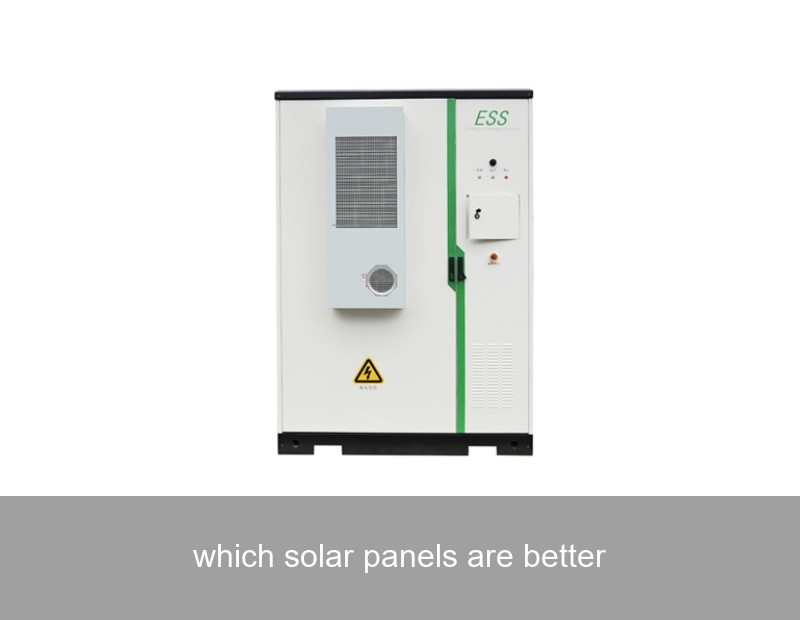
You've decided to harness the sun's power. It's a brilliant move for your wallet and the planet. But now you're faced with a sea of technical specs, brand names, and conflicting advice. The central question looming is: which solar panels are better for my specific needs? It's a common starting point, but here's a professional insight: focusing solely on the panel is like buying a sports car and only asking about the paint color. The panel is crucial, but true energy independence is built on a system—a harmonious integration of panels, inverters, and, most importantly, a smart energy storage solution. Let's navigate this together.
Solar Panel Types Decoded: Monocrystalline vs. Polycrystalline vs. Thin-Film
The first fork in the road is panel technology. Each type has its place, and the "best" one depends on your roof space, budget, and aesthetic preferences.

Image: Visual differences in solar cell structure are key to understanding efficiency and application. Credit: Unsplash.
Monocrystalline Solar Panels
Made from a single, pure silicon crystal, these panels are the efficiency champions. You can recognize them by their uniform dark color and rounded cell edges.
- Efficiency: Typically 20% and above.
- Pros: Highest efficiency, best space-efficiency, longest lifespan (often 25+ years), performs better in low-light.
- Cons: Highest cost per panel.
- Best for: Roofs with limited space, homeowners seeking maximum output, and long-term investment focus.
Polycrystalline Solar Panels
These are made from fragments of silicon melted together. They have a blue, speckled appearance and square cells.
- Efficiency: Generally between 15-17%.
- Pros: More affordable than monocrystalline, simpler manufacturing process.
- Cons: Lower efficiency and heat tolerance, requires more roof space for the same output.
- Best for: Larger roofs where space isn't a constraint, and where the initial budget is a primary concern.
Thin-Film Solar Panels
A different technology altogether, involving layers of photovoltaic material applied to a surface.
- Efficiency: Varies widely (10-13% for residential).
- Pros: Lightweight, flexible, low-cost manufacturing, less affected by high temperatures.
- Cons: Lowest efficiency, degrades faster, requires significant space.
- Best for: Large commercial roofs, unique surfaces where traditional panels can't be mounted, or temporary setups.
| Type | Avg. Efficiency | Cost | Space Needed | Lifespan |
|---|---|---|---|---|
| Monocrystalline | 20%+ | High | Low | 25+ years |
| Polycrystalline | 15-17% | Medium | Medium-High | 20-25 years |
| Thin-Film | 10-13% | Low | Very High | 10-20 years |
So, which solar panels are better from this view? For most residential and commercial projects in Europe and the US where roof space is at a premium, monocrystalline panels offer the best long-term value due to their superior efficiency and durability. But the panel is just the beginning of the story.
Beyond the Panel: The Critical Role of Your Solar Inverter
Your panels produce Direct Current (DC) electricity. Your home uses Alternating Current (AC). The inverter is the brain of your solar array, performing this crucial conversion. There are three main types:
- String Inverters: Cost-effective for simple, unshaded roofs. All panels are connected in a series ("string").
- Microinverters: Attached to each panel. They optimize performance panel-by-panel, ideal for roofs with shading or multiple angles. They also simplify system monitoring.
- Power Optimizers (with a Central Inverter): A hybrid. Optimizers at each panel maximize DC output, then a central inverter converts it to AC. Offers panel-level monitoring and high efficiency.
The choice here directly impacts how much of your precious solar generation you actually get to use. A top-tier panel on a poor inverter setup can lose 10-25% of its potential output due to shading or mismatch. This brings us to the most transformative part of a modern solar system.
The Storage Factor: Why Your Choice of Battery Defines Your Solar Success
Here's the reality check: the sun doesn't shine at night, and your panels are idle then. Without storage, you're still drawing power from the grid when you need it most, often at peak rates. According to the U.S. Department of Energy, pairing storage with solar is key to achieving true resilience and maximizing self-consumption.
This is where the question "which solar panels are better" evolves into "which complete energy system is better?" The battery is the heart of your energy independence. It's not just a box that holds electricity; it's an intelligent energy manager.
At Highjoule, we've spent nearly two decades perfecting this part of the equation. Our HES (Highjoule Energy Stack) is more than just a lithium-ion battery. It's an integrated system featuring:
- Adaptive Battery Management System (BMS): Ensures each cell operates at peak safety, performance, and longevity, far exceeding standard offerings.
- AI-Powered Energy OS: Our software learns your consumption patterns, weather forecasts, and utility rate schedules. It autonomously decides when to store solar energy, power your home, or even sell back to the grid for maximum profit.
- Scalable & Modular Design: Start with what you need and expand capacity seamlessly as your needs grow, from a single residential unit to a full commercial or microgrid installation.
Choosing a Highjoule system means your high-efficiency solar panels are paired with an equally intelligent storage solution, ensuring every kilowatt-hour you produce is used optimally.
Real-World Performance: A Case Study from Sunny Spain
Let's move from theory to data. Consider a commercial winery in Andalusia, Spain. They installed a 100 kW solar array using premium monocrystalline panels.
Initial Setup (Panels Only):
Annual Solar Generation: ~145,000 kWh.
On-site Consumption (daytime): 40%.
Excess Solar Fed to Grid (low tariff): 60%.
Nighttime & Peak Power: Purchased from grid at high rates.
Result: Decent savings, but limited control and ROI stretched over many years.
After Integrating a Highjoule HES-100 Commercial Storage System:
Annual Solar Self-Consumption: Increased to 92%.
Grid Energy Purchases During Peak: Reduced by 85%.
Ability to Participate in Grid Services: Added a new revenue stream.
Result: The payback period for the entire solar + storage system was reduced by an estimated 4 years. The winery now operates its critical cooling facilities almost entirely on its own, resilient to grid fluctuations.
This case shows that the "better" system wasn't defined by a 2% panel efficiency difference, but by the intelligent storage that unlocked the panel's full potential. For deeper insights on system performance metrics, resources like the National Renewable Energy Laboratory (NREL) provide invaluable data.

Image: A modern commercial solar-plus-storage installation. Credit: Unsplash.
Future-Proofing Your Solar Investment
Your energy needs will change. Maybe you'll buy an EV, add a heat pump, or expand your business. A future-proof system is designed with this in mind.
Key Considerations:
- AC-Coupled vs. DC-Coupled Storage: Highjoule's systems are typically AC-coupled, meaning they can be easily retrofitted to existing solar installations or work seamlessly with new ones, offering ultimate flexibility.
- Software Updates: Can your system's intelligence evolve? Our Energy OS receives regular updates, improving algorithms and adding new features like virtual power plant (VPP) participation over time.
- Warranty & Support: Look for comprehensive warranties that cover both performance and parts for 10+ years. Highjoule offers robust warranties and a global support network, ensuring your investment is protected.
So, when you ask, "which solar panels are better," we encourage you to ask a bigger, more powerful question: How can I build a resilient, intelligent energy ecosystem for my home or business?
What energy goal is most critical for you—is it achieving total blackout protection, maximizing financial return, or reducing your carbon footprint to its absolute minimum?
 Inquiry
 Online Chat