


Unlocking Grid Stability: The Critical Role of Wind Turbine Hybrid Energy Storage Cabinets
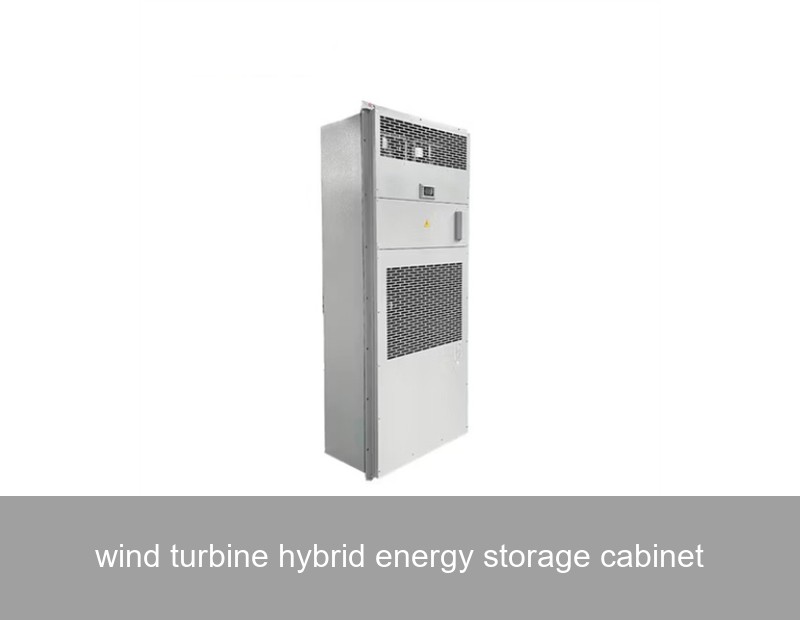
If you're involved in wind energy, you've likely witnessed a frustrating paradox: the wind blows powerfully, but the grid can't always handle the surge. Conversely, on calm days, that clean energy supply vanishes. This isn't just an operational headache; it's a fundamental challenge to our renewable future. The solution emerging at the forefront of innovation is the wind turbine hybrid energy storage cabinet—an integrated system that transforms wind power from an intermittent resource into a reliable, grid-friendly workhorse. Let's explore how this technology works and why it's becoming indispensable for project developers and grid operators, particularly in markets like Europe and the United States.
Table of Contents
The Challenge: Wind's Intermittency Problem
The phenomenon is well-known. A wind farm's output can swing from 10% to 90% of its capacity within hours. For grid operators, these ramps are a balancing nightmare, often requiring fossil-fuel "peaker" plants to quickly compensate. This undermines the decarbonization goal and can lead to curtailment—where wind energy is literally wasted because the grid can't absorb it. In 2022 alone, curtailment rates in key U.S. wind regions like Texas (ERCOT) averaged around 5%, representing significant lost revenue and clean energy.
This volatility also impacts the financials of a wind project. Unpredictable output makes it harder to secure favorable power purchase agreements (PPAs) and can lead to penalties for failing to meet delivery schedules. The question becomes: how do we make wind power behave more like a traditional, dispatchable power plant?

Image Source: Unsplash - Illustrating wind energy's variability.
The Solution: What is a Wind Turbine Hybrid Energy Storage Cabinet?
Enter the wind turbine hybrid energy storage cabinet. This isn't merely a battery placed next to a turbine. It's a sophisticated, containerized system that integrates directly with one or multiple wind turbines. Think of it as a "power manager" for the turbine. Its core function is to store excess energy generated during high-wind periods and then inject that stored energy back into the grid during low-wind periods or peak demand times.
At its heart, the cabinet houses a advanced battery energy storage system (BESS), typically using lithium-ion chemistry for its excellent energy density and response time. But the true intelligence lies in the power conversion system (PCS) and the energy management system (EMS). The PCS efficiently converts power between AC (from the turbine/grid) and DC (for the batteries), while the EMS is the brain, making millisecond-by-millisecond decisions on when to charge, discharge, or hold based on grid signals, market prices, and turbine output.
Key Benefits and How It Works: A Technical Breakdown
So, what does this integration achieve? Let's break it down using a logic ladder from basic to advanced value.
- Ramp Rate Control: The cabinet smooths out the sharp increases and decreases in power output. If wind speed suddenly drops, the storage discharges to fill the gap, preventing a sudden dip in delivered power.
- Frequency Regulation: Grid frequency must stay within a tight band (e.g., 60 Hz in the US). The cabinet's fast-responding batteries can absorb or release tiny amounts of power in sub-second intervals to help maintain this balance, a service often monetized in grid markets.
- Energy Time-Shifting (Arbitrage): This is the core revenue driver. Store cheap energy when wind is high (and sometimes electricity prices are low) and sell it when demand and prices are high.
- Capacity Firming: This transforms the project's profile. A 10 MW wind farm paired with a 2 MW/4 MWh storage cabinet can guarantee a firm, say, 8 MW of output for several hours, making it a far more attractive and bankable asset.
| Challenge | How the Hybrid Storage Cabinet Addresses It | Direct Benefit |
|---|---|---|
| Wind Curtailment | Stores excess energy instead of wasting it. | Increased Revenue, Higher ROI |
| Grid Instability | Provides fast frequency response & ramp control. | Grid Compliance, Ancillary Service Payments |
| Unpredictable Output | Dispatches stored energy on demand. | Firm Power Contracts, Better PPAs |
A Real-World Case Study: Firming Wind in Texas
Let's look at a concrete example from the United States. A mid-sized wind farm in West Texas was experiencing high curtailment during night-time hours when winds were strong but demand was low. Furthermore, its variable output made it difficult to participate in lucrative day-ahead energy markets.
The project developer integrated a wind turbine hybrid energy storage cabinet solution at the edge of the wind farm. The system featured a 3 MW / 6 MWh capacity. Here’s what changed over the first 12 months of operation:
- Curtailment Recovery: The system captured 85% of previously curtailed energy, translating to an additional 2.1 GWh of energy sold annually.
- Market Arbitrage: By shifting energy sales to peak afternoon hours, the average selling price per MWh increased by approximately 40%.
- Ancillary Services: The fast-responding system registered for frequency regulation services with ERCOT, creating a new, steady revenue stream.
The overall result was a project internal rate of return (IRR) improvement of over 4 percentage points, paying back the storage investment in under 5 years. This case, mirrored by many in Europe's ENTSO-E grid, proves the financial and operational viability of hybridization.
The Highjoule Approach: Engineered for Performance and Durability
At Highjoule, with nearly two decades of experience since 2005, we've moved beyond the concept to deliver field-proven, intelligent storage solutions designed specifically for harsh renewable energy environments. Our Hyserve Series Hybrid Energy Cabinet is engineered to be the perfect partner for wind turbines.
What sets our solution apart is its deep integration capability and robust design. The Hyserve cabinet isn't just attached; it communicates directly with the turbine's controller and the plant's SCADA system via standardized protocols like Modbus or DNP3. This allows for truly predictive energy management—our AI-driven EMS can forecast wind patterns and market prices, optimizing the charge/discharge cycle not just reactively, but proactively.

Image Source: Unsplash - Representative of a modern energy storage cabinet in a field setting.
Key features of the Highjoule Hyserve cabinet include:
- All-Climate Resilience: Built to operate reliably from -30°C to 50°C (-22°F to 122°F) with an integrated thermal management system, crucial for exposed wind farm sites in Scandinavia or the American Midwest.
- Safety-First Architecture: Multi-level protection including cell-level fusing, passive venting, and an early warning fire suppression system, adhering to the strictest international standards (UL, IEC).
- Scalable & Modular Design: Start with a single 500 kWh cabinet and scale up to multi-MW installations seamlessly. This reduces upfront capital risk for developers.
- Comprehensive Services: Highjoule provides end-to-end support, from initial feasibility studies and system design to long-term performance monitoring and maintenance, ensuring your hybrid asset performs optimally for its entire lifecycle.
The Future of Hybridized Wind Farms
The trend is clear. Regulatory bodies in both Europe and the U.S. are increasingly incentivizing or even mandating storage pairing for new renewable projects. The UK's grid operator, National Grid ESO, for instance, actively procures flexibility services that hybrid plants are uniquely positioned to provide. The wind turbine hybrid energy storage cabinet is evolving from a niche add-on to a standard component of a competitive wind farm.
Looking ahead, we see these systems incorporating even smarter grid-forming inverters that can help restart the grid after a blackout ("black start capability") and multi-chemistry storage (combining lithium-ion with longer-duration technologies) to manage daily and weekly cycles.
Is your wind project or portfolio fully capitalizing on the value that hybrid storage can unlock? What specific grid challenge or revenue stream would you want a tailored Highjoule Hyserve system to address first?
 Inquiry
 Online Chat