


Powering Your Home: The Ultimate Guide to Choosing a Wind Turbine Kit for Home
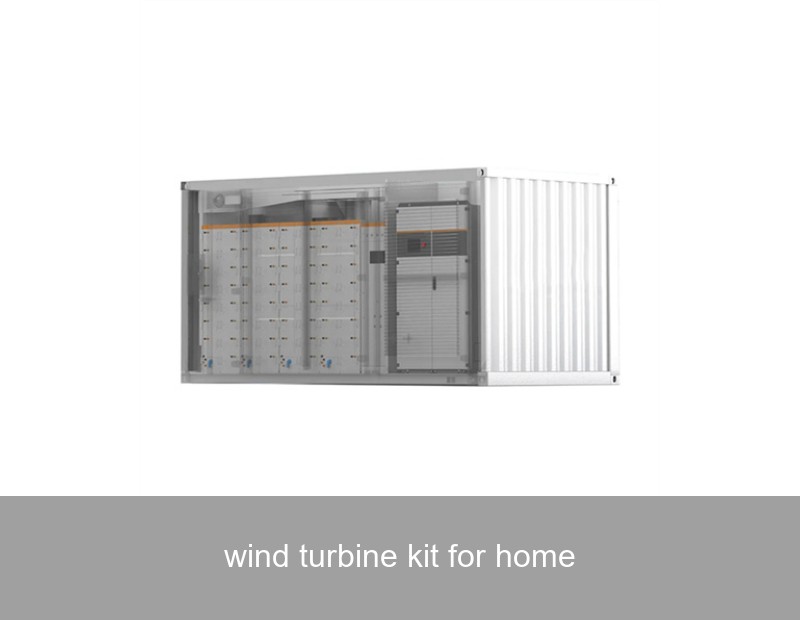
Imagine a quiet hum on a breezy day, not from traffic, but from your own property, generating clean electricity. For homeowners across Europe and the US, the dream of energy independence is increasingly within reach, and a wind turbine kit for home is a compelling piece of that puzzle. But is it right for you? Let's cut through the noise and explore how modern small-scale wind technology, paired with intelligent storage, can transform your relationship with the grid.
Table of Contents
- The Rise of Home Wind Power: More Than Just a Trend
- Key Components of a Modern Wind Turbine Kit for Home
- The Data & Reality: What Can You Really Power?
- Case Study: A Real-World Success in Rural Cornwall, UK
- Beyond the Turbine: The Critical Role of Energy Storage
- How Highjoule Complements Your Home Wind Project
- Making the Decision: Is a Home Wind Kit Right for You?
The Rise of Home Wind Power: More Than Just a Trend
The shift towards decentralized energy isn't just about solar panels. Wind energy, harnessed at a smaller scale, offers a powerful complement, especially in regions with consistent wind resources. Unlike large, utility-scale wind farms, a residential wind turbine kit for home is designed for on-site generation, typically ranging from 400 watts to 10 kilowatts in capacity. The driving forces? Soaring electricity prices, a genuine desire to reduce carbon footprints, and advancements in turbine design that make them quieter and more efficient than ever before.
Key Components of a Modern Wind Turbine Kit for Home
Understanding what's in the box is crucial. A typical kit is more than just the iconic blades.
- The Turbine: Includes blades, a rotor, and a nacelle housing the generator. Modern designs often use vertical-axis (VAWT) or sleek, low-noise horizontal-axis (HAWT) models.
- The Tower: Perhaps the most critical component. Height is king in wind energy, as it allows access to stronger, less turbulent winds. Kits include tilt-up or fixed towers.
- The Controller & Inverter: The brains of the operation. The controller manages the power from the turbine, protecting the battery, while the inverter converts the DC electricity to usable AC for your home.
- Balance of System (BOS): Wiring, circuit breakers, and mounting hardware. Don't underestimate the importance of quality here.
However, there's one pivotal component often sold separately but is essential for true energy independence: the battery storage system.

A small wind turbine installed in a UK garden. Source: Wikimedia Commons (CC BY 2.0)
The Data & Reality: What Can You Really Power?
Let's talk numbers. A well-sited 5 kW wind turbine kit for home in a location with an average annual wind speed of 5 m/s (11 mph) can generate approximately 9,000 - 12,000 kWh per year. For context, the average U.S. household consumes about 10,600 kWh annually (U.S. Energy Information Administration). Sounds perfect, right? But wind is intermittent. Your turbine might be producing surplus energy during a stormy night when your home demand is low, and be still on a calm, hot afternoon when you need power for air conditioning. This mismatch is the fundamental challenge of wind power without storage.
| Turbine Rated Power | Avg. Wind Speed (5 m/s) | Estimated Annual Output | Potential Coverage of Avg. US Home |
|---|---|---|---|
| 2 kW | 5 m/s (11 mph) | 3,600 - 4,800 kWh | ~35-45% |
| 5 kW | 5 m/s (11 mph) | 9,000 - 12,000 kWh | ~85-110% |
| 10 kW | 5 m/s (11 mph) | 18,000 - 24,000 kWh | ~170-225% |
Case Study: A Real-World Success in Rural Cornwall, UK
Consider the real example of a farmstead in Cornwall, UK, an area with strong coastal winds. The homeowners installed a 6 kW wind turbine kit for home but faced the classic problem: energy was being exported to the grid at low rates during windy periods, and they still had to import expensive power during calm spells. Their solution? Integrating a robust 20 kWh battery storage system. Post-installation data over one year showed their grid dependence dropped by over 92%. They could store excess wind-generated power and use it on demand, effectively turning their wind turbine from a grid-feed machine into a personal power plant. Their annual electricity bills transformed from an expense into a minor connection fee, with the system paying for itself in under 8 years, a timeframe accelerated by the volatile energy prices in Europe.
Beyond the Turbine: The Critical Role of Energy Storage
This case study highlights the indispensable partner to a wind turbine kit for home: intelligent energy storage. A battery system acts as a buffer, capturing every kilowatt-hour your turbine produces. This solves the intermittency issue, maximizes self-consumption, and provides backup power during grid outages. The choice of battery technology matters immensely. Lithium iron phosphate (LFP) batteries, for instance, are renowned for their safety, longevity (often over 6,000 cycles), and stable performance, making them ideal for the variable charge/discharge cycles of wind power.

Modern LFP battery modules are key for storing wind energy. Source: Unsplash
How Highjoule Complements Your Home Wind Project
This is where Highjoule's expertise becomes vital. Since 2005, we have specialized in making renewable energy systems reliable and truly sustainable. While we don't manufacture wind turbines, we are global leaders in the advanced battery storage systems that make a wind turbine kit for home truly effective. Our HES-Series Residential Energy Storage systems are engineered for seamless integration with various renewable inputs, including wind.
Our systems feature:
- LFP Battery Technology: For safety, durability, and peace of mind over a 10+ year lifespan.
- Advanced Hybrid Inverters: Capable of intelligently managing power from both wind and solar, the grid, and the battery, prioritizing your self-consumption.
- Smart Energy Management: Our software allows you to monitor your wind generation, consumption, and storage levels in real-time, optimizing when to store wind energy and when to use it.
- Scalable Design: Start with a capacity that fits your budget and expand later as your needs grow.
For homeowners, this means you can invest in a wind turbine with the confidence that no energy will be wasted. Highjoule's system ensures the power you generate is the power you use, maximizing your return on investment and your energy autonomy.
Making the Decision: Is a Home Wind Kit Right for You?
So, should you pursue a wind turbine kit for home? Ask yourself these key questions:
- Wind Resource: Do I have a clear, windy site? A professional site assessment is the essential first step. The U.S. Department of Energy's WINDExchange is a good starting point for preliminary data.
- Space & Zoning: Do I have enough land (typically at least an acre), and are there local height restrictions or noise ordinances?
- Budget & Goals: Am I looking to reduce bills, achieve backup power, or go fully off-grid? Your goal dictates the scale and necessity of storage.
- System Integration: Have I planned for a complete system, including the essential battery storage and smart inverter, like those offered by Highjoule, to ensure efficiency and reliability?
The journey to energy independence is a system-wide endeavor. It's not just about the turbine; it's about capturing, managing, and intelligently using every bit of energy you create. With the right partner for the storage and management side, your home wind project can be a resounding, long-term success.
What's the first step you'll take to assess your home's potential for harnessing the wind?
 Inquiry
 Online Chat