


Understanding the 10000 Watt Solar Inverter: Powering Large-Scale Energy Independence
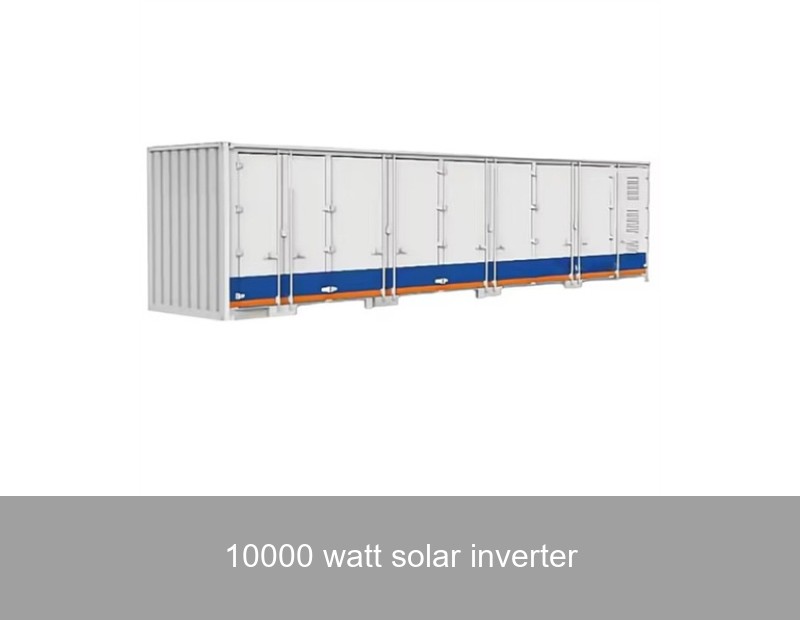
Have you ever wondered how large homes, farms, or small businesses fully transition to solar power? The heart of such a robust system often isn't just the panels on the roof, but a critical piece of technology inside: the 10000 watt solar inverter. As electricity costs remain volatile and the push for sustainability grows, this powerful inverter category is becoming a cornerstone for serious energy independence in both the US and Europe. But what exactly does a 10kW inverter do, and is it the right solution for your high energy needs? Let's demystify this key component and explore how advanced providers like Highjoule are integrating it into smarter, more resilient energy systems.
Table of Contents
- What is a 10000 Watt Solar Inverter?
- Why Consider a 10kW System? The Data Behind the Demand
- Beyond the Inverter: The System Integration Imperative
- A Real-World Case Study: A German Dairy Farm's Success
- Choosing the Right System: Key Technical Considerations
- Future-Proofing Your Investment: Trends and Intelligence
What is a 10000 Watt Solar Inverter?
Simply put, a 10000 watt solar inverter (or 10 kilowatt inverter) is the brain and converter of a sizable solar energy system. Its primary job is to convert the direct current (DC) electricity generated by your solar panels into the alternating current (AC) that powers everything in your home or business. But a 10kW capacity speaks to scale. This inverter can continuously handle up to 10,000 watts of DC power from the panels, making it suitable for systems that produce a significant amount of energy—often between 12kW to 15kW in panel capacity, depending on climate and design.
Think of it this way: if standard string inverters are like compact cars, a robust 10kW inverter is a heavy-duty truck engine, built to manage higher loads, more complex panel arrays, and often, integration with battery storage. It's a popular choice for large residential properties with high consumption (think electric vehicles, pools, and air conditioning), small-to-medium commercial operations, agricultural facilities, and as a building block for microgrids.
Why Consider a 10kW System? The Data Behind the Demand
The move towards larger inverters like the 10kW model isn't accidental. It's a direct response to clear market phenomena and energy data.
Phenomenon: Home and business energy consumption is evolving, not shrinking. The electrification of heat pumps, vehicles, and industrial processes is increasing average load profiles. Simultaneously, grid instability and extreme weather events have heightened the desire for backup power.
Data: According to the U.S. Department of Energy's Solar Futures Study, decarbonizing the U.S. grid will require hundreds of gigawatts of distributed solar. Systems are getting larger to maximize self-consumption. In sunnier parts of the U.S., a well-oriented 10kW inverter system can produce 40-50 kWh of electricity per day—enough to cover the daily needs of a 4,000+ sq. ft. energy-efficient home and charge an EV. In Europe, with favorable feed-in tariffs fading, the economic logic shifts to maximizing the use of every kilowatt-hour generated on-site, making system sizing critical.
This is where a company with deep experience like Highjoule excels. We don't just sell a 10000 watt solar inverter as a standalone component. We analyze your historical consumption, future load projections (like adding an EV charger), and local weather patterns to design a complete, optimized system where the inverter, panels, and potential storage work in perfect harmony.
Beyond the Inverter: The System Integration Imperative
Here’s a crucial insight: the inverter's value is now defined by its connectivity. A modern 10kW inverter must be a multi-port energy manager. Highjoule's HPS Series Hybrid Power Systems are a prime example. These systems are built around intelligent inverters that do far more than just convert DC to AC.
- Dual MPPT Trackers: They allow you to install panels on multiple roof faces with different orientations, maximizing capture without compromising efficiency.
- Seamless Battery Integration: They have built-in circuitry to connect directly to Highjoule's scalable battery cabinets, enabling efficient storage of excess solar for use at night or during outages.
- Grid Services Ready: Advanced models can provide grid-support functions like frequency regulation, a feature increasingly valued by utilities in both the U.S. and EU markets.

Image: A modern hybrid inverter system, like Highjoule's HPS Series, integrates solar conversion, battery management, and grid interaction in one unit. (Source: Unsplash, representative image)
A Real-World Case Study: A German Dairy Farm's Success
Let's look at a concrete example from Bavaria, Germany. A mid-sized dairy farm with high refrigeration loads, milking machines, and general facility operations faced rising energy costs and sought to stabilize its overhead.
Challenge: Erratic energy bills and a desire for backup power during occasional grid outages that threatened refrigeration.
Solution: Highjoule designed a system centered on a high-efficiency 10000 watt solar inverter paired with 14.5kW of rooftop solar and a 20kWh Highjoule lithium-ion battery storage unit. The inverter's hybrid capability was key.
Results (Data from 12-month post-installation monitoring):
| Metric | Result |
|---|---|
| Annual Solar Generation | 15,200 kWh |
| Self-Consumption Rate | Increased from 35% to 82% with battery |
| Grid Energy Purchased | Reduced by 76% |
| Outcomes During Grid Outage | Critical loads (refrigeration, basic lighting) maintained for over 18 hours |
The farm's manager noted: "The system doesn't just save us money. It gives us operational peace of mind. The inverter intelligently prioritizes solar for immediate use, charges the batteries, and only then exports a small surplus." This case underscores the move from mere solar generation to integrated energy management—a core principle behind Highjoule's product philosophy.
Choosing the Right System: Key Technical Considerations
If a 10000 watt solar inverter seems like a potential fit, here are the factors you must discuss with your provider:
- Efficiency (Peak & Euro): Look for peak efficiencies over 98%. European buyers should also consider weighted efficiency (EURO CEC), which better reflects real-world performance.
- Voltage Operating Range: A wider MPPT voltage range allows for more flexible panel stringing and better performance in low-light conditions.
- Grid Standards & Compliance: This is critical. Inverters must meet strict grid codes (like UL 1741 SA in the U.S., VDE-AR-N 4105 in Germany, or G99 in the UK). Highjoule products are pre-certified for major markets, simplifying permitting.
- Monitoring & Software: The inverter should come with a user-friendly, detailed monitoring platform. Highjoule's Energy Insight Portal provides real-time data on production, consumption, battery status, and even carbon savings.
Future-Proofing Your Investment: Trends and Intelligence
The next generation of 10000 watt solar inverters is already evolving. We're seeing a shift towards modular and software-defined architectures. Imagine being able to add extra battery management channels or grid-support features via a software update. Furthermore, as virtual power plants (VPPs) gain traction, your inverter could become a revenue-generating asset by participating in aggregated grid service programs. A report by the International Energy Agency (IEA) highlights the growing value of dispatchable, inverter-based resources for grid security.
Highjoule designs with this future in mind. Our systems are built on open, interoperable standards where possible, allowing for easier integration with smart home ecosystems, EV chargers, and future utility programs. Investing in a sophisticated inverter today is about enabling options for tomorrow.

Image: Future-proof systems integrate solar, storage, EV charging, and home automation for total energy control. (Source: Unsplash, representative image)
So, as you contemplate taking control of your energy footprint with a powerful solar solution, what will be the primary driver for your decision: achieving total energy self-sufficiency, building resilience against grid disruptions, or creating a platform for future smart energy applications? The right 10000 watt solar inverter system, designed and supported by an experienced partner like Highjoule, can be the foundation for all three.
 Inquiry
 Online Chat