


Unlocking Grid Independence: The Power of a 1.5 MW Hybrid Solar Energy Storage Cabinet
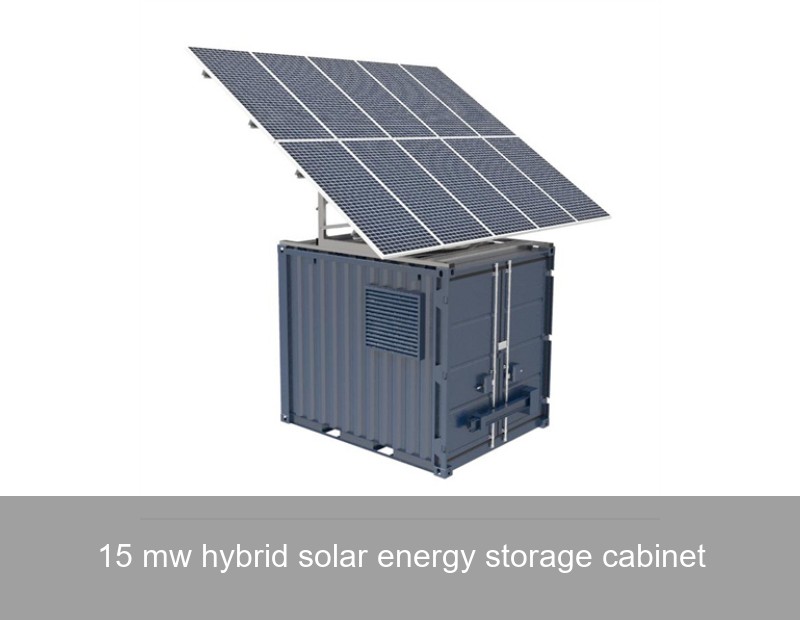
Imagine a power system that not only captures the sun's abundant energy but also intelligently stores it, dispatching electricity precisely when your facility needs it most—during peak demand charges, grid outages, or after sunset. This isn't a vision of the distant future; it's the reality delivered by today's advanced 1.5 MW hybrid solar energy storage cabinet. For commercial and industrial operators across Europe and the US, this integrated solution is transforming energy from a volatile cost center into a predictable, strategic asset. Let's explore how this technology works and why it's becoming a cornerstone of modern energy management.
What is a 1.5 MW Hybrid Solar Energy Storage Cabinet?
At its core, a 1.5 MW hybrid solar energy storage cabinet is a pre-engineered, containerized system that combines three critical components: a large-scale solar photovoltaic (PV) array, a high-capacity battery energy storage system (BESS), and sophisticated power conversion and control software. The "1.5 MW" denotes the power rating—its ability to deliver up to 1.5 megawatts of instantaneous power, enough to support a medium-sized factory, a large commercial complex, or a community microgrid. The term "hybrid" is key; it signifies the seamless integration of generation and storage, managed by a single, smart brain that optimizes every kilowatt-hour.

Image: A modern industrial solar installation paired with a containerized storage unit. Credit: Unsplash
The Challenge: Intermittency & Rising Energy Costs
Solar power has a well-known phenomenon: it's variable. Cloud cover reduces output, and production drops to zero at night. Meanwhile, energy demand profiles for businesses often peak in the early evening when solar generation is waning. This mismatch creates a dual problem. First, it limits the self-consumption of solar energy, forcing facilities to buy expensive power from the grid. Second, it fails to address utility demand charges—fees based on the highest 15-30 minute power draw in a billing cycle—which can constitute up to 50% of a commercial electricity bill.
The Data: Quantifying the Need for Storage
The economic argument is compelling. According to the U.S. Department of Energy's Solar Futures Study, achieving high levels of solar deployment will require a massive expansion of energy storage to maintain grid reliability. In markets like California (CAISO) and Germany, the "duck curve"—which charts the net load depression caused by midday solar—illustrates the urgent need for storage to shift excess solar to peak evening hours. For a business, this isn't just an academic graph; it's a map of financial opportunity. By storing cheap, self-produced midday solar and using it during expensive peak periods, a 1.5 MW hybrid system can slash both energy consumption charges and demand charges simultaneously.
The Highjoule Solution: Intelligence in a Cabinet
This is where Highjoule's expertise comes into play. As a global leader in advanced energy storage since 2005, we don't just sell components; we deliver turnkey, intelligent power solutions. Our HPS Series Hybrid Power Station, particularly in the 1.5 MW class, embodies this philosophy. It's more than a cabinet; it's an integrated ecosystem designed for commercial and industrial resilience.
- Advanced Battery Technology: Utilizing high-cycle-life lithium-ion phosphate (LFP) batteries, known for their safety and longevity, configured to meet the precise energy capacity (MWh) needs of the project.
- Bi-Directional Inverter System: High-efficiency inverters that manage AC/DC conversion, allowing for seamless charging from solar or the grid and discharging to the facility.
- Highjoule Energy Management System (EMS): The true intelligence. Our proprietary EMS uses real-time data and predictive algorithms to decide, moment-by-moment, whether to store solar energy, dispatch it to shave peaks, provide backup power, or even participate in grid services like frequency regulation.
- Scalable & Containerized Design: The system is pre-assembled in a robust, weatherproof cabinet or container, simplifying installation, reducing on-site labor, and allowing for future capacity expansion.
For businesses, this means Highjoule provides a single point of responsibility—from design and financing support to installation, commissioning, and long-term performance monitoring.
Case Study: A European Manufacturing Plant
Let's look at a real-world application. A mid-sized automotive parts manufacturer in Bavaria, Germany, faced steep energy costs and sought to improve its sustainability profile. Their existing 2 MW rooftop solar array was exporting significant power to the grid at low feed-in tariffs during midday, while purchasing expensive power during morning and evening operational peaks.
The Solution: Highjoule deployed a 1.5 MW / 3 MWh hybrid solar energy storage cabinet alongside their existing PV system. The HPS Series was configured to prioritize self-consumption and demand charge management.
The Results (12-Month Period):
| Metric | Before Installation | After Installation |
|---|---|---|
| Solar Self-Consumption | 35% | 85% |
| Peak Demand from Grid | 1.8 MW | 1.1 MW |
| Annual Energy Cost Savings | Baseline | €182,000 |
| CO2 Emissions Reduction | Baseline | 720 tonnes |
The system paid for itself in under 5 years. Furthermore, by configuring the system for UPS-like transitional backup, the plant now maintains critical processes during brief grid disturbances, avoiding costly production halts. This case exemplifies the multi-faceted ROI of a well-designed hybrid system, a principle supported by analysis from the International Renewable Energy Agency (IRENA) on falling storage costs.

Image: Technician monitoring an advanced energy storage control system. Credit: Unsplash
Key Benefits Beyond Backup
While emergency backup is a valuable feature, the primary value of a 1.5 MW hybrid cabinet is daily financial optimization and sustainability.
- Demand Charge Management: The system anticipates your facility's load spikes and seamlessly discharges the battery to "shave" the peak draw from the grid, directly reducing the most burdensome part of your bill.
- Arbitrage: In regions with time-of-use (TOU) rates, the system stores energy when grid prices are low (often at night or midday from excess solar) and uses it when prices are high.
- Grid Services Revenue (Future-Proofing): In some markets, aggregated storage systems can provide valuable services to grid operators, such as frequency response. Highjoule's EMS is designed to enable such participation, opening a potential revenue stream.
- Sustainability & ESG Goals: Maximizing self-consumption of renewable energy dramatically reduces your carbon footprint and Scope 2 emissions, a key metric for investors and customers.
The Future Outlook for Hybrid Systems
The integration of solar and storage is inevitable for a resilient, decarbonized grid. Policies like the U.S. Inflation Reduction Act (IRA) and the EU's Green Deal are accelerating adoption through tax credits and incentives. The technology itself continues to evolve, with battery energy densities improving and system costs declining. The next frontier is the integration of artificial intelligence for even more precise forecasting and optimization, a development Highjoule is actively pioneering in its next-generation EMS platforms.
So, the question for facility managers, energy directors, and business owners isn't whether hybrid solar energy storage makes sense, but rather how to implement it effectively. It requires a partner who understands both the complex technology and the nuanced economics of your local energy market.
Ready to Model Your Savings?
What would a 1.5 MW hybrid solar and storage system do for your specific facility's load profile and bottom line? The first step is a detailed analysis. Highjoule's team of experts can provide a complimentary feasibility study, modeling your energy usage, solar potential, and local utility rates to project your savings and ROI. Could your peak demand charges be cut by 40% or more? Let's find out.
 Inquiry
 Online Chat