


Demystifying the 150 kW Solar Power Plant Cost: A Comprehensive Investment Guide
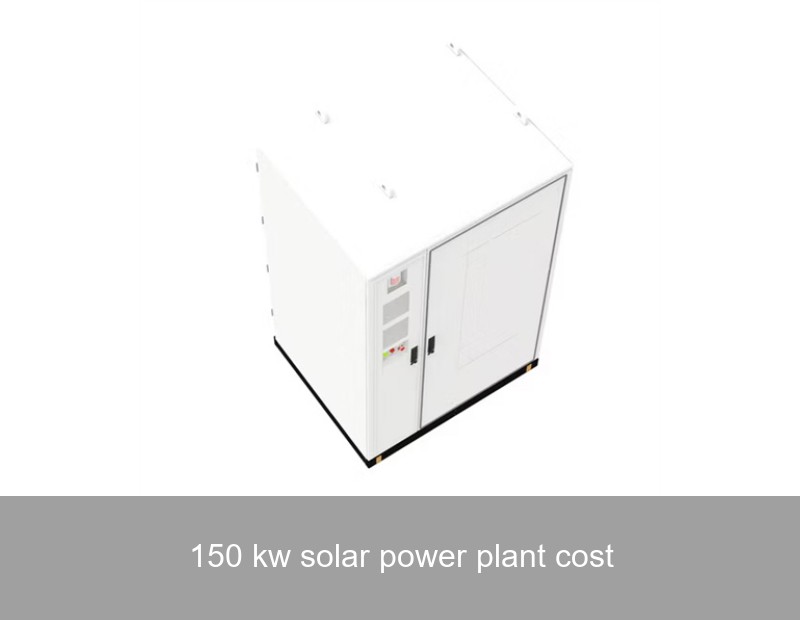
So, you're considering harnessing the sun's power with a 150 kW solar power plant. It's a significant and commendable step towards energy independence and sustainability. But let's address the elephant in the room upfront: "What's the total 150 kW solar power plant cost, and what factors truly drive that number?" You've likely encountered a wide range of figures online, leaving you more confused than informed. The truth is, the final investment is more than just panels on a roof; it's a sophisticated energy system where components like inverters, mounting, and critically, energy storage, play pivotal roles in long-term value. This article will cut through the noise, using a data-driven approach to unpack the costs, showcase real-world applications, and highlight how modern technology from leaders like Highjoule can optimize your return on investment.
Table of Contents
- The 150 kW Solar System Cost Breakdown: Beyond the Panels
- Key Factors Influencing Your Total Investment
- The Game Changer: Integrating Energy Storage
- A Real-World Case Study: Commercial Operations in Germany
- How Highjoule's Solutions Enhance Project Viability
- Making the Investment Decision: Next Steps
The 150 kW Solar System Cost Breakdown: Beyond the Panels
A 150 kW solar installation is typically considered a commercial or small industrial-scale project. In markets like the US and Europe, the total installed cost is rarely a single price-per-watt figure due to regional differences in labor, regulations, and equipment preferences. However, we can establish a clear framework.
As of 2024, for a turnkey 150 kW solar photovoltaic (PV) system without storage, you can expect a gross cost range between $180,000 and $300,000 in the United States, and €135,000 to €240,000 in the European Union. This translates to approximately $1.20 - $2.00 per watt (or €0.90 - €1.60 per watt). Let's break down where this money goes:
| Component/Service | Approximate Cost Share | Description |
|---|---|---|
| Solar Panels (Modules) | 25-30% | The heart of the system. Higher efficiency panels cost more but may require less roof space. |
| Inverters & Power Electronics | 15-20% | Converts DC solar power to usable AC power. Central or string inverters are common for this scale. |
| Mounting System & Racking | 10-15% | Structural hardware that secures panels to the roof or ground. Crucial for longevity and warranty. |
| Installation Labor & Electrical Work | 20-25% | Costs vary significantly by region and project complexity (roof type, wiring distance). |
| Permits, Grid Connection, & Soft Costs | 15-20% | Engineering studies, interconnection fees, permits, and installer overhead. |
It's vital to view these figures as a starting point. The real conversation begins when we ask: "What do you want this system to achieve?" Merely offsetting daytime grid consumption is one goal; achieving true resilience and maximizing self-consumption is another, which introduces the most impactful variable: battery storage.
Key Factors Influencing Your Total Investment
Why does the cost range seem so broad? Several tangible factors are at play:
- Location & Solar Resource: A sunnier location (higher irradiance) means you might need fewer panels for the same output, potentially lowering hardware costs. However, labor rates in that area could be higher.
- Site-Specific Challenges: Is it a simple, flat commercial roof, or a complex ground-mount with difficult terrain? Roof penetrations, required structural reinforcements, and long wiring runs add cost.
- Equipment Tier & Efficiency: Premium, high-efficiency modules and renowned inverter brands (like those often integrated with Highjoule systems) command a higher price but offer better performance, longer warranties, and higher reliability.
- Regulatory Landscape: In the US, the Federal Investment Tax Credit (ITC) can reduce system cost by 30%. In Europe, national subsidies and feed-in tariff schemes vary greatly, directly affecting payback periods.
The Game Changer: Integrating Energy Storage
This is where the modern energy paradigm shifts. A solar-only 150 kW system exports surplus midday power to the grid, often at a low rate, and leaves you vulnerable to evening price spikes and outages. Adding a Battery Energy Storage System (BESS) transforms the economics and capability of your plant.
Think of it this way: storage acts as a financial and operational buffer. It allows you to store excess solar generation for use during peak tariff periods, a strategy known as arbitrage. It provides backup power during grid failures. Most importantly, it dramatically increases your self-consumption rate—the percentage of solar energy you use directly—which is key to maximizing savings as grid feed-in tariffs decline worldwide.
Adding a scalable 100-200 kWh battery system to your 150 kW solar plant might increase the initial capital outlay by 40-70%. However, when factoring in the ITC (which in the US also applies to storage when paired with solar), accelerated savings from peak shaving, and added resilience, the net present value of the project often improves significantly. The National Renewable Energy Lab (NREL) has extensively documented the value stacking potential of solar-plus-storage for commercial entities.
A Real-World Case Study: Commercial Operations in Germany
Let's ground this in reality. Consider a mid-sized dairy processing plant in Bavaria, Germany. They installed a 150 kW rooftop solar array in 2022. Their initial goal was to reduce operating costs.
- Phenomenon: High energy consumption during morning and evening peaks (refrigeration, lighting), while solar overproduction at midday was sold to the grid at a low €0.08/kWh. They purchased evening power at €0.32/kWh.
- Data & Solution: In 2023, they retrofitted a 120 kWh DC-coupled battery storage system. The battery is programmed to store midday surplus and discharge during the 5 PM to 9 PM peak window.
- Result: Their direct self-consumption of solar power rose from 35% to over 80%. They now avoid buying approximately 65% of their peak-time grid electricity. Projected payback time for the combined solar-plus-storage system is under 7 years, compared to over 10 years for solar alone, thanks to the massive arbitrage gain and reduced grid dependence.

Image: A commercial solar installation similar to our case study. Source: Unsplash (Credit: American Public Power Association)
How Highjoule's Solutions Enhance Project Viability
As a global leader in advanced energy storage since 2005, Highjoule directly addresses the core challenges highlighted in our case study. For a 150 kW solar power plant, the initial 150 kw solar power plant cost is just one part of the lifetime equation. Operational intelligence is the other.
Highjoule's H-Series Commercial Energy Storage Systems are designed for seamless integration with new or existing solar arrays of this scale. Our DC-coupled architecture, which we often recommend for retrofits and new builds alike, is highly efficient as it allows solar power to charge the batteries directly without multiple power conversions. For a 150 kW solar plant, a modular Highjoule H-100 system can be configured to provide 150-300 kWh of storage capacity, precisely sized to cover evening load shifts or provide critical backup.
What truly sets our solution apart is the Highjoule AI Energy Manager. This proprietary software doesn't just store and release energy; it learns your facility's consumption patterns, weather forecasts, and utility rate schedules. It autonomously makes decisions to optimize financial return—automatically deciding when to store solar energy, when to discharge to avoid peak tariffs, and when to participate in grid services where available. This intelligent layer turns a capital asset into a dynamic revenue and savings optimizer, fundamentally improving the ROI beyond the base hardware.

Image: Interior of a modern battery energy storage system. Source: Unsplash (Credit: Andreas Gücklhorn)
Making the Investment Decision: Next Steps
Evaluating a 150 kW solar power plant cost is no longer a simple hardware quote exercise. It's a strategic energy planning process. The most forward-thinking businesses are now asking: "How do we build a system that not only saves money today but also protects us from volatile energy markets and provides resilience for decades to come?"
This requires a partner who understands both solar generation and smart storage economics. Highjoule's team of product and technical experts works with developers and business owners to model scenarios, accurately forecast savings with storage, and design systems that deliver on both financial and operational goals. We provide the technology that bridges the gap between solar generation and reliable, cost-effective power availability.
Is your organization ready to move beyond a basic solar quote and explore how intelligent storage can redefine the economics of your 150 kW project? What would a 50% reduction in your peak demand charges do for your annual operating budget?
 Inquiry
 Online Chat