


Is Ammonia Energy for Sale a Viable Piece of the Clean Power Puzzle?
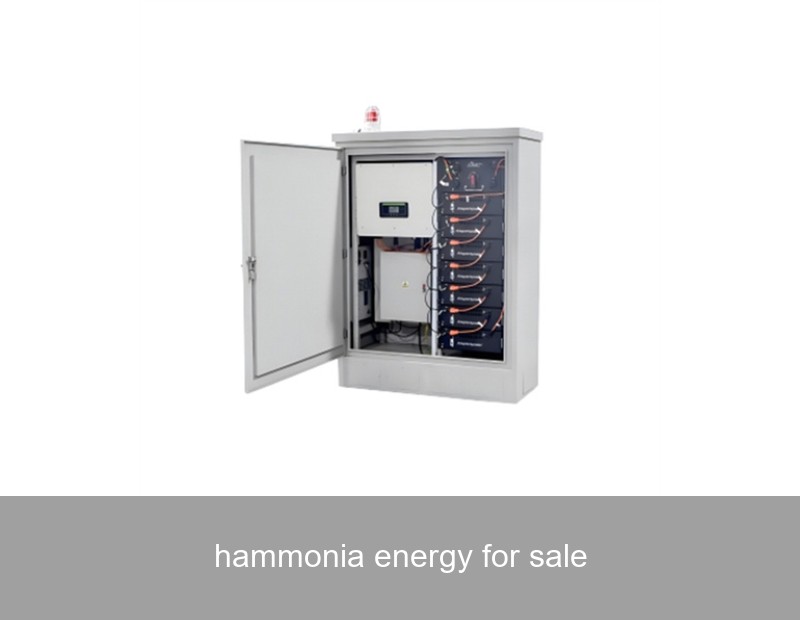
You've likely heard the buzz around hydrogen, solar, and wind. But recently, a different term is gaining traction in energy circles: ammonia energy for sale. It sounds like a chemical from a high school lab, not a future fuel. Yet, from industrial boardrooms in Germany to research hubs in Texas, experts are asking: could ammonia be the missing link for a fully decarbonized world? This article cuts through the hype to explore the reality of ammonia as an energy carrier, its potential role in your energy strategy, and the practical solutions available today to bridge the gap to tomorrow's fuels.
Table of Contents
- What Exactly is "Ammonia Energy"?
- The Core Problem: Storing Renewable Energy at Scale
- Why Ammonia? The Potential Advantages
- Ammonia for Sale Today: The Current Reality
- Bridging the Gap with Proven Storage: The Highjoule Approach
- Case Study: A Microgrid's Path to Resilience
- The Future Energy Landscape: A Hybrid Approach
What Exactly is "Ammonia Energy"?
First, let's clarify. When we talk about ammonia energy for sale, we're not discussing the common fertilizer component (NH3) in its traditional role. We're referring to its potential as a zero-carbon energy carrier. The concept is twofold: "Green ammonia" is produced using renewable electricity to split water for hydrogen, then combine it with nitrogen from the air. This ammonia can then be transported and, at the point of use, either burned in specially adapted turbines or "cracked" back into hydrogen to power fuel cells. Its appeal lies in its density and ease of transport compared to pure hydrogen.
The Core Problem: Storing Renewable Energy at Scale
Here's the fundamental challenge driving the search for solutions like ammonia: renewable energy is intermittent. The sun sets, the wind calms. For grids and industries to run on 100% renewables, we need to store excess energy generated on sunny, windy days for use during lulls. This isn't just about powering a home overnight; it's about powering entire cities, ports, and manufacturing plants for days or even seasons. Lithium-ion batteries, while excellent for short-duration storage (hours), become prohibitively expensive and resource-intensive for the multi-day or seasonal storage required for full decarbonization.

Image Source: Unsplash - Highlighting the scale of renewable generation that requires storage.
Why Ammonia? The Potential Advantages
So, why is ammonia a candidate? Let's break down its potential benefits:
- High Energy Density: Liquid ammonia carries more energy per volume than liquid hydrogen, making storage and transport more practical.
- Established Infrastructure: A global supply chain already exists for producing, shipping, and storing ammonia for fertilizer, with ports and terminals worldwide.
- Zero-Carbon Potential: When produced with renewable energy ("green ammonia"), its entire lifecycle can be carbon-free.
- Versatility: It can be used directly for power generation, as a marine fuel, or as a hydrogen carrier for industry.
However, it's crucial to understand this is largely a future potential. The market for ammonia energy for sale as a mainstream fuel is in its infancy.
Ammonia for Sale Today: The Current Reality
Today, virtually all ammonia produced globally (over 200 million tons annually) is "grey ammonia," made from fossil fuels like natural gas, contributing significantly to CO2 emissions (IEA, 2021). Green ammonia projects are emerging but remain pilot-scale and face major hurdles:
| Challenge | Description |
|---|---|
| Production Cost | Green ammonia is currently 2-4x more expensive to produce than grey ammonia. |
| Efficiency Losses | The process of creating hydrogen, then ammonia, then converting it back to power involves significant energy losses. |
| Combustion Technology | Burning ammonia in turbines without producing harmful NOx emissions requires advanced, still-developing technology. |
So, while the vision is compelling, the commercially viable, at-scale ammonia energy for sale for power generation is likely a decade or more away for most users.
Bridging the Gap with Proven Storage: The Highjoule Approach
This gap between today's needs and tomorrow's fuels is where companies like Highjoule operate. While the industry researches future vectors like ammonia, businesses and communities need reliable, clean, and cost-effective storage today. Highjoule's philosophy is to deploy advanced, intelligent battery energy storage systems (BESS) that provide immediate decarbonization and grid resilience while building a platform compatible with future energy carriers.
Our H-Series Commercial & Industrial ESS and Grid-Scale Megapack solutions are not just batteries; they are integrated energy management hubs. They store excess solar or wind power, provide critical backup during outages, and enable participation in grid services for revenue. More importantly, their advanced power conversion and control systems are designed with future energy ecosystems in mind, potentially interfacing with hydrogen or ammonia-based generators when they become commercially viable. We provide the reliable, proven storage backbone that allows you to decarbonize now while keeping your options open for the future.

Image Source: Unsplash - Representative of modern industrial battery storage systems.
Case Study: A Microgrid's Path to Resilience
Consider a real-world scenario that mirrors challenges across Europe and the US. A food processing plant in Northern Germany aimed for 100% renewable power and independence from volatile gas prices. Their initial analysis considered a future hydrogen system but faced the high cost and timeline uncertainty.
Their solution, implemented with Highjoule in 2023, was a phased approach:
- Phase 1 (Present): A 2 MWh Highjoule H-Series BESS integrated with a new 1.5 MW rooftop solar array. The system manages daily solar charging/discharging, cuts peak demand charges by 30%, and provides 4 hours of backup for critical refrigeration.
- Phase 2 (Future-Proofing): The system design included space, grid connections, and controller capabilities to add an electrolyzer for green hydrogen production (potentially for ammonia synthesis) when the economics improve, using the same BESS for load balancing.
The result? An immediate 65% reduction in grid electricity consumption and a secure, clean power supply. The plant's manager noted, "We stopped waiting for a distant future solution. Highjoule's system gave us control and savings today, with a clear roadmap to integrate future fuels like green ammonia when they're ready." This pragmatic, stepwise approach is key for businesses navigating the energy transition.
The Future Energy Landscape: A Hybrid Approach
The future of clean energy won't be a single winner-takes-all technology. It will be a hybrid, resilient network. Lithium-ion and emerging battery chemistries will handle frequency regulation and daily cycling. For seasonal and long-duration storage, solutions like green ammonia, compressed air, or flow batteries may play a crucial role. The intelligence will lie in how these systems are integrated and managed.
Highjoule's AI-powered Energy Management System (EMS) is central to this vision. It doesn't just manage batteries; it's a platform that can optimize a portfolio of assets—solar, battery storage, backup generators, and eventually, ammonia or hydrogen-based systems—to maximize economics, sustainability, and reliability based on real-time data and weather forecasts.
So, What Should You Do Now?
The search for ammonia energy for sale symbolizes our collective push for deep decarbonization. It's a promising horizon. But the most strategic move you can make today is to build a flexible, intelligent energy foundation. Deploying a scalable storage solution from a provider like Highjoule delivers immediate financial and environmental benefits while positioning your operation to seamlessly adopt the green ammonia or other fuels of tomorrow. The question isn't whether to wait for ammonia or act today. It's how to act today in a way that makes integrating ammonia easier tomorrow.
Is your organization evaluating long-duration storage options while needing to achieve sustainability and cost goals this year? What would a phased energy independence plan look like for your facility?
 Inquiry
 Online Chat