


Navigating the Landscape: Your Guide to a Reliable 150V Battery Supplier for Modern Energy Systems
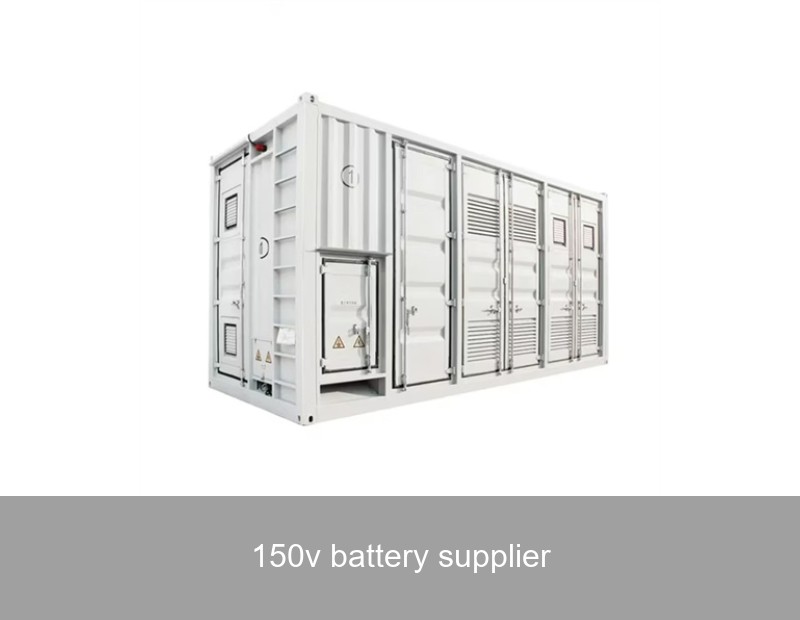
If you're specifying a commercial solar-plus-storage project or designing an industrial backup power system, you've likely encountered a critical technical parameter: the 150V battery system. This isn't just a random number; it represents a sweet spot in the balance of efficiency, safety, and scalability. But finding the right 150V battery supplier is about more than just voltage. It's about partnering with a provider whose technology, expertise, and support can ensure your project's success for decades to come. Let's explore why this voltage class is so pivotal and what you should look for in a supplier.
Table of Contents
Why the 150V Battery Platform is a Game-Changer
You might wonder, "Why 150V?" In the world of battery energy storage systems (BESS), system voltage is a fundamental design choice with cascading effects. Lower voltages (like 48V) require very high currents to deliver significant power, leading to thicker, more expensive cables and higher energy losses. Much higher voltages (e.g., 1000V+) introduce more stringent safety regulations and component costs.
The 150V DC platform sits in a powerful middle ground. For commercial and industrial (C&I) applications, it offers substantial advantages:
- Reduced Balance of System (BOS) Costs: Higher voltage means lower current for the same power output. This translates directly to savings on copper wiring, conduit, and switching components.
- Enhanced Efficiency: Lower current reduces resistive losses (I²R losses) in cables and connections, putting more of your stored energy to work.
- Simplified System Design: It integrates seamlessly with many common 3-phase inverter topologies, avoiding the need for complex step-up transformers or multiple string combiners.
- Inherent Safety: While all high-voltage systems demand respect, 150V is below the threshold where arc flash risks increase dramatically, making it safer to install and maintain.
As the National Renewable Energy Laboratory (NREL) notes, optimizing system voltage is a key lever for reducing the levelized cost of storage (LCOS). The 150V trend is a direct response to this engineering and economic imperative.
Beyond Voltage: 5 Critical Criteria for Your 150V Battery Supplier
Choosing a supplier based solely on a product spec sheet is a common pitfall. The battery is the heart of your system, and its performance depends on the ecosystem around it. Here’s what to evaluate:
| Criteria | Why It Matters | Key Questions to Ask |
|---|---|---|
| 1. Cell Chemistry & Proven Longevity | Lithium Iron Phosphate (LFP) is the industry standard for stationary storage due to its safety and cycle life. Not all LFP is equal. | What is the guaranteed cycle life (e.g., 6,000 cycles at 80% DoD)? Is the degradation curve data-backed and publicly available? |
| 2. System Intelligence & Software | A battery is only as good as its brain. Advanced Battery Management Systems (BMS) and energy management software are crucial. | Does the BMS offer cell-level monitoring and balancing? Can the software integrate with grid services or building management systems? |
| 3. Thermal Management | Temperature consistency is the #1 factor in battery lifespan and safety. Passive cooling is often insufficient for C&I duty cycles. | Is the system actively cooled (liquid/air)? How uniform is the cell temperature in operational data? |
| 4. Scalability & Serviceability | Your needs will evolve. Can the system grow? Can a single module be serviced without taking the entire array offline? | Is it a modular design? What is the Mean Time To Repair (MTTR), and what does the service network look like in my region? |
| 5. Compliance & Local Support | Standards like UL 9540, IEC 62619, and UN38.3 are non-negotiable. Local engineering support is invaluable. | Can you provide full certification documentation? Do you have application engineers in my country who speak my language? |
From Theory to Reality: A 150V BESS in Action
Let's ground this discussion with a real-world example. A mid-sized fruit packing facility in California's Central Valley was facing two major challenges: crippling demand charges from the utility and unreliable grid power during heatwaves that threatened their refrigeration loads.
The Solution: They partnered with a system integrator who deployed a 250 kWh / 500 kW storage system built on a 150V battery platform. The system was configured for peak shaving and backup power.
- Technical Choice: The 150V architecture allowed for a simpler, more efficient string design that connected directly to their existing 480V AC distribution without massive DC cabling runs.
- Results (18-month data):
- Demand Charge Reduction: 32% average monthly savings.
- Backup Uptime: Provided 4 hours of critical refrigeration during two separate grid outages.
- System Efficiency: Achieved a round-trip efficiency (AC to AC) of 92.5%, attributable in part to the low-loss 150V DC design.
This case, documented in a Lawrence Berkeley National Lab performance summary, underscores how the right technical foundation—starting with the battery platform—enables tangible financial and operational resilience.
Highjoule's Approach: Intelligent 150V Solutions for a Demanding Market
At Highjoule, with nearly two decades of experience since 2005, we've seen the evolution of storage technology firsthand. Our engineering philosophy is to build systems that solve real-world problems, not just meet a spec. For the 150V class, this means our H-Series Commercial Battery System is designed from the ground up for the rigors of C&I and microgrid applications.
What sets our offering apart for project developers and facility managers seeking a top-tier 150V battery supplier?
- Proprietary Adaptive Thermal Core: Unlike simple fans or external chillers, our integrated liquid cooling system maintains every LFP cell within a ±2°C window. This precise control is why we can confidently offer a 10-year, end-of-warranty capacity guarantee of 70%.
- Distributed Intelligence Architecture: Our BMS operates on three levels (cell, module, system) with redundant communication. This allows for real-time health diagnostics and predictive maintenance alerts, reducing unplanned downtime.
- Seamless Grid Interaction: The H-Series is pre-configured for advanced functions like frequency regulation and voltage support, ready to participate in grid service markets where available, turning your storage asset into a revenue stream.
- Global Support, Local Presence: With technical hubs in both the EU and North America, our teams provide direct, localized support from the design phase through commissioning and the entire operational life.

Image Source: Unsplash (Representative of a professional C&I battery installation)
Our role is to be more than a component vendor. We act as a technical partner, ensuring your 150V storage solution is optimized for your specific load profile, tariff structure, and resilience goals.
What's Next for 150V and Beyond?
The energy landscape is dynamic. While 150V is ideal for many of today's C&I projects, we are already seeing the emergence of 300V and 600V class systems for larger, utility-scale applications. The core principles remain the same: safety, efficiency, and total cost of ownership. The future lies in smarter, more integrated systems where the BESS acts as the central nervous system for a site's energy flow, interacting autonomously with solar, wind, and the grid.
As you consider your next project, ask yourself this: Is your chosen 150V battery supplier building for yesterday's needs, or are they innovating for the grid architectures of tomorrow? What specific site challenge—be it demand charge volatility, renewable curtailment, or critical load protection—should be the primary driver for your system's sizing and intelligence features?
 Inquiry
 Online Chat